Blog

  • Smile Across America: Skagway’s Junior Ranger Day Invites Families to Make a Day of It

    Smile Across America: Skagway’s Junior Ranger Day Invites Families to Make a Day of It

    Smile Across America is our look at real, welcoming things happening in communities around the country. This is a preview based on the National Park Service announcement; Smile News has not attended the event.

    On the next stop of our imaginary minivan map, the road runs north to Skagway, Alaska, where Klondike Gold Rush National Historical Park is inviting families to a free Junior Ranger Day on Thursday, July 30.

    The park says the celebration will mix hands-on activities, live entertainment and a chance for visitors to earn a Junior Ranger badge. The plan includes performances by the Chilkat Dancers of Klukwan and Haines, a visit with live raptors from the American Bald Eagle Foundation, historic costumes, ice-cream making, an obstacle course and a live musical performance. The schedule also lists an appearance by Nuggets the Bear and a group Junior Ranger swearing-in ceremony.

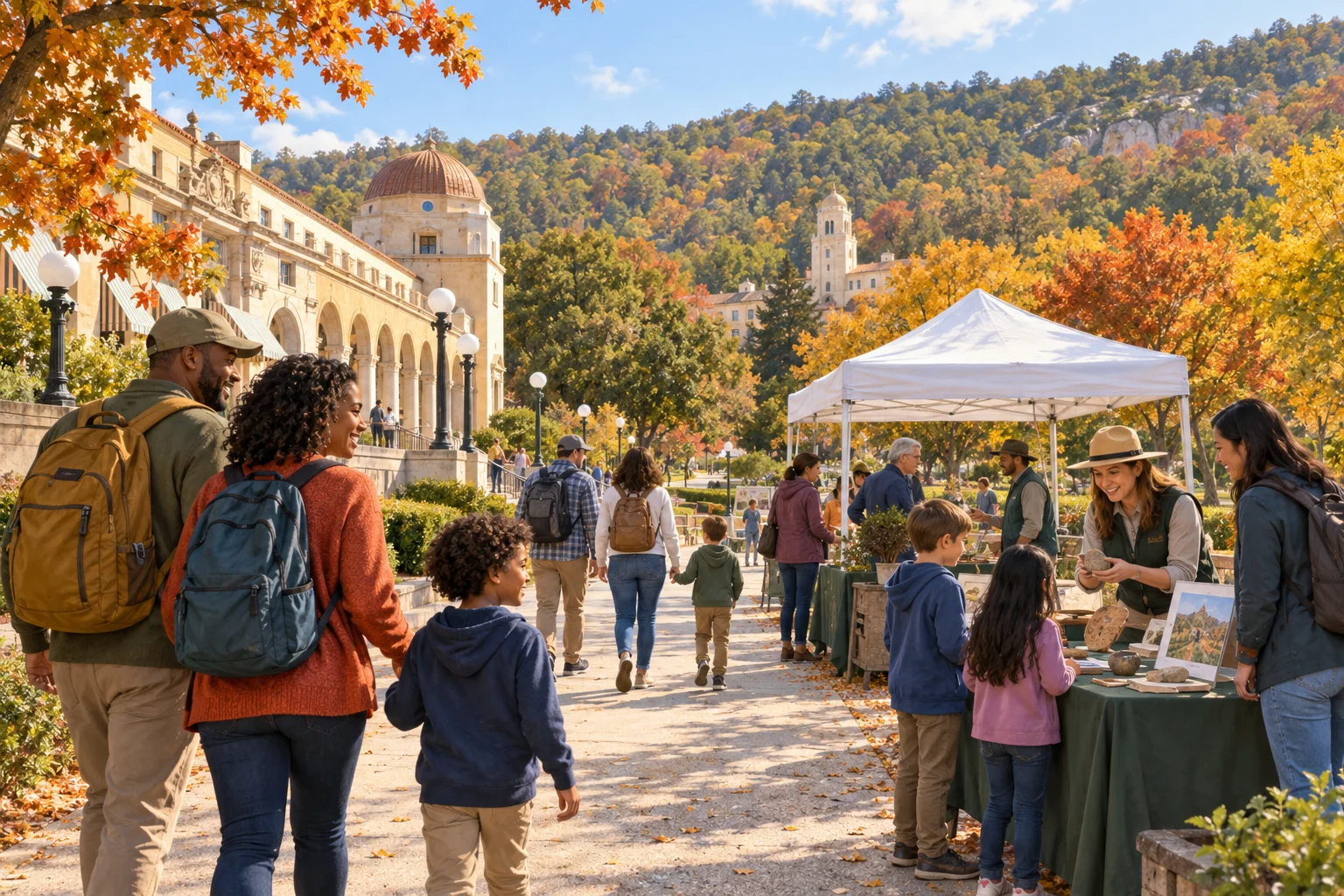
    Editorial illustration of a family meeting a ranger in an Alaska gold-rush-era town with mountains behind them.
    Editorial illustration, created for Smile News. Editorial illustration.

    A day built for curious visitors

    For families, the appeal is less about checking off a list than having several easy ways to join in: meet park staff, try an activity, listen to music, watch a performance, or simply make a little room in the day for an Alaska history lesson with a side of ice cream.

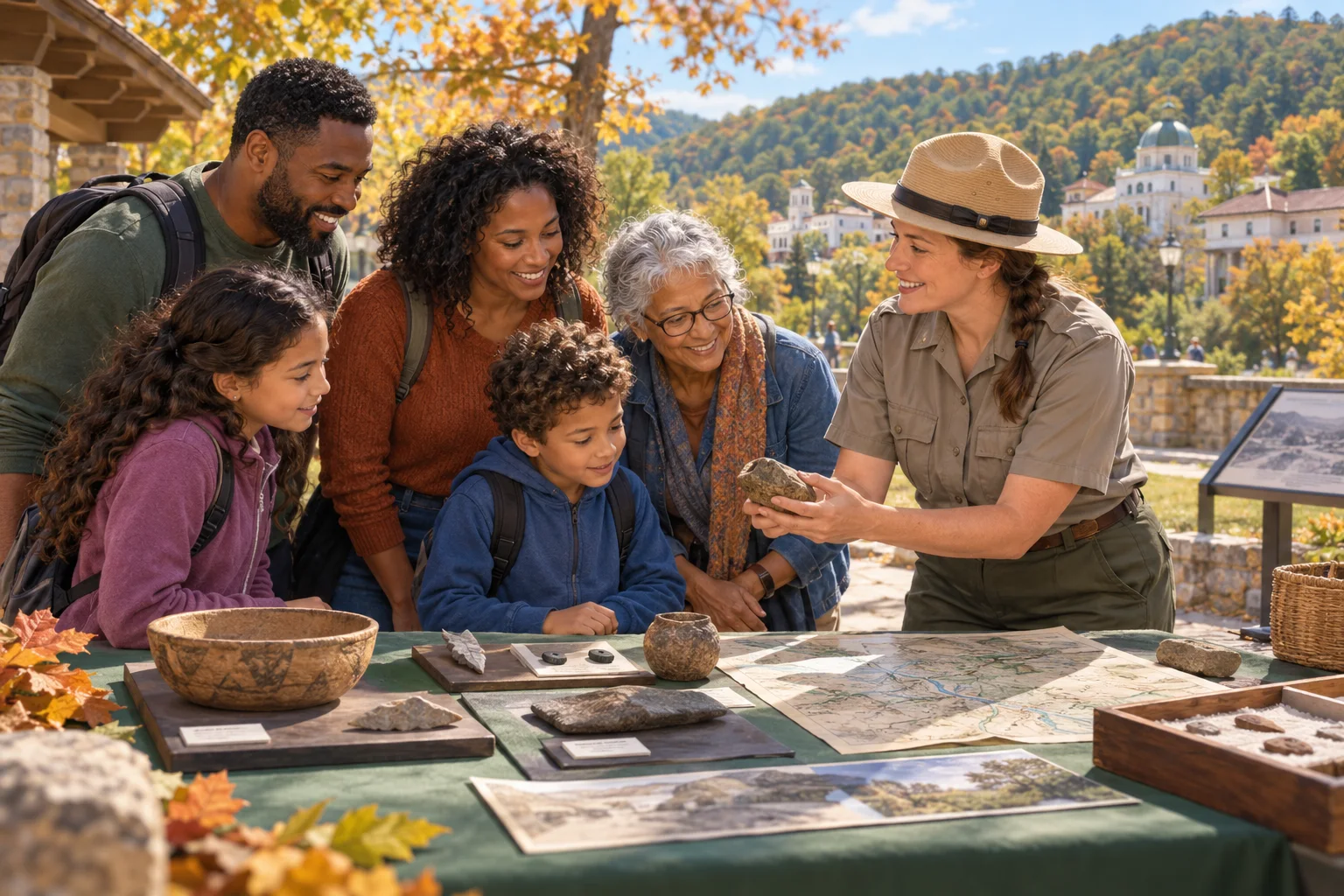
    The National Park Service says the Junior Ranger Activity Center in the historic Pantheon building at Broadway and Fourth Avenue will also be open. Visitors can explore hands-on exhibits, talk with rangers and work through a Junior Ranger book there.

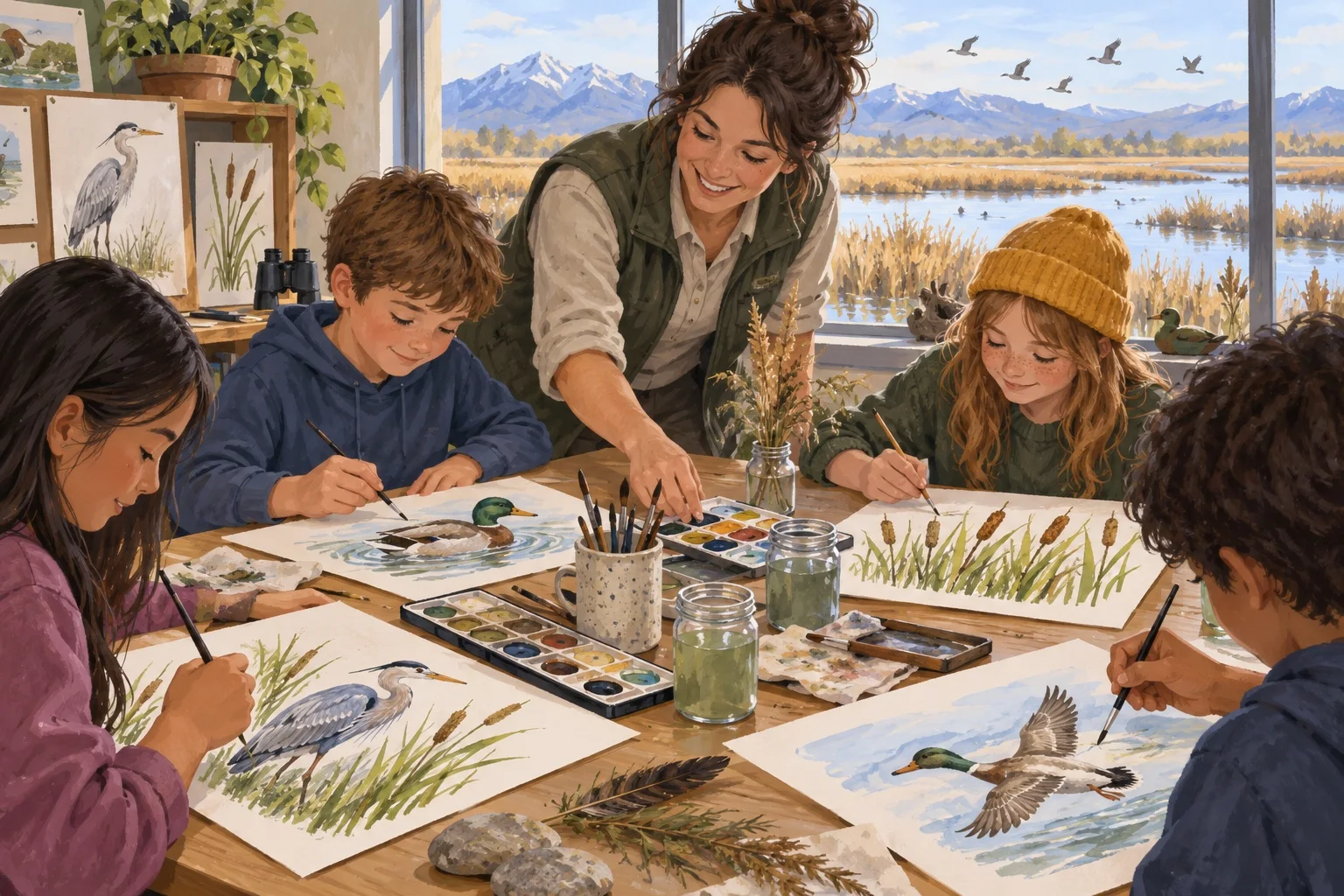
    Editorial illustration of children and caregivers exploring maps and nature objects with a park educator at a table.
    Editorial illustration, created for Smile News. Editorial illustration.

    Program Manager for Interpretation and Education Tyra Olstad said in the park’s announcement that Junior Rangers are among the park’s most enthusiastic visitors. The message behind the day is pleasantly simple: curiosity is welcome, and it is better with company.

    What to know before heading over

    The event is scheduled for Thursday, July 30, and the park says it is free and open to the public. A detailed schedule is expected to be available at the visitor center that day. Because event details can change, families should check the park’s official announcement before traveling.

    Editorial illustration of children taking a Junior Ranger oath with a ranger while caregivers stand nearby in an Alaska mountain setting.
    Editorial illustration, created for Smile News. Editorial illustration.

    Whether a young visitor comes away with a badge, a new question, or just a good story about the day, Skagway’s invitation is a generous one: show up, look closely and let a national park make room for play.

    Source

    National Park Service: “2026 Junior Ranger Day”, news release dated July 23, 2026.

  • Smile Across America: Glacier’s Native America Speaks Returns Tonight

    Smile Across America: Glacier’s Native America Speaks Returns Tonight

    Smile Across America is a look at real places and gatherings around the country. This article is based on public program information; Smile News did not attend the event.

    On Tuesday evening, a lobby near the Amtrak station in East Glacier Park, Montana, is scheduled to become a place for listening. Glacier National Park’s Native America Speaks program begins its summer run at Glacier Park Lodge at 7:30 p.m. The free, 45-minute gathering is listed as a weekly Tuesday program through September 8.

    Its appeal is refreshingly direct: members of the Blackfeet Nation and the Confederated Salish and Kootenai Tribes share personal knowledge of their history and culture. That means the people with the relationship to this place get to set the terms of what visitors can learn, rather than having the story filtered through a generic park script.

    A long-running invitation to listen

    Glacier says Native America Speaks began in 1982 and is the National Park Service’s longest-running Indigenous speaker series. The park describes presentations at campgrounds, historic lodges and other locations, while the series’ schedule offers a simple way to make cultural learning part of a summer visit.

    The lodge session is in the Glacier Park Lodge lobby, on Montana Highway 49 across from the East Glacier Park Amtrak station. The National Park Service lists it as free. Visitors should treat the posted time and location as the plan, and check the official listing before heading out in case a program detail changes.

    Editorial illustration of an anonymous traveler approaching a warmly lit mountain lodge at dusk.
    Editorial illustration; not a depiction of Glacier Park Lodge, the program, or its presenters.

    Why this is a Smile Across America stop

    “Smile” can mean a small civic kindness: making room for people to speak for themselves and making time to hear them. This program creates that opening in a place many travelers already pass through. There is no claim here that every visitor will leave with the same experience. The encouraging part is more concrete: a recurring public program places tribal voices at the center of a conversation about Glacier’s history and living cultural connections.

    The National Park Service notes that numerous Native American tribes used the area around and within what is now Glacier for hunting, fishing, ceremonies and gathering plants. Its visitor guidance encourages people visiting Glacier to hear from tribal members through Native America Speaks. That context matters: a good evening at a park is not just a scenic backdrop; it is an opportunity to listen with care.

    How to show up thoughtfully

    • Arrive early enough to find the lodge lobby without interrupting the start.
    • Listen first. Do not assume a presenter is speaking for every Indigenous person or community.
    • Ask before photographing or recording, and follow any request about phones or participation.
    • Use the park’s official Native America Speaks information page and event calendar for the latest schedule.
    Editorial illustration of a blank notebook, a mug and a mountain sketch on a lodge table.
    Editorial illustration; not a depiction of the event or its materials.

    For anyone in East Glacier on July 21, the route is uncomplicated: a free evening program, a public lodge lobby and a chance to hear community members share knowledge in their own words. It is a modest plan, but a meaningful kind of welcome—one that begins by making room to listen.

    Sources

  • Smile Across America: $25,000 Helps New Philadelphia Invite New Citizen Storytellers

    Smile Across America: $25,000 Helps New Philadelphia Invite New Citizen Storytellers

    Smile Across America is a series about real people and communities finding practical ways to make life a little brighter. This report is based on National Park Service announcements; the accompanying images are original editorial illustrations, not documentary photographs.

    In west-central Illinois, a new $25,000 grant is set to make room for a simple but powerful kind of community work: people telling their own local history.

    New Philadelphia National Historic Site has received support from the Jefferson National Parks Association’s BlueSky Opportunity Fund for an 18-month initiative called Our Past, Our Voices: Building Community through Citizen Storytelling at New Philadelphia. The National Park Service says the project will create Storytelling Stations that pair first-person historical vignettes with live, on-site and digital storytelling.

    A history that belongs in many voices

    New Philadelphia’s story has long been carried through records, oral histories, archaeology, descendants, and neighboring communities. The town was founded in 1836 by Free Frank McWorter, a formerly enslaved man; the National Park Service describes it as the first U.S. town platted and legally registered by an African American.

    That background gives the new program a particularly human scale. Rather than treating history as something visitors only read on a sign, the plan is to invite community members into monthly workshops where they can learn to present local stories for national audiences. The grant will also support paid internships in historical research and interpretive narrative development with Illinois College, the University of Illinois Springfield, and the New Philadelphia Association.

    Editorial illustration of two people comparing a historic town map and note cards at a workshop table.
    Editorial illustration; it does not depict an actual New Philadelphia workshop or participants.

    Listening is part of the plan

    There is no announcement yet of workshop dates or internship openings. The park says that information will be shared as the project develops. That is worth stating plainly: these are plans now, not programs the public can already attend.

    Still, the project offers a hopeful model. It connects historical research with the people who know a region, care for its memory, and want to pass it along. In a place whose legacy has been sustained by generations of people refusing to let it disappear, training new citizen storytellers is less a handoff than an invitation.

    Park superintendent Chris Collins said the project will strengthen the site’s ability to share New Philadelphia’s stories and that the park looks forward to working with students and community members. For readers following along from elsewhere, the small joy is in the premise: a national historic site is making space for local voices to be heard.

    Editorial illustration of a prairie storytelling station with visitors approaching along a path.
    Editorial illustration of the kind of welcoming public storytelling space described in the story; it is not an image of a planned or existing installation.

    Sources

  • Smile Across America: Yosemite’s Apple-Picking Day Is About Making More Room for Bears

    Smile Across America: Yosemite’s Apple-Picking Day Is About Making More Room for Bears

    Smile Across America is a place-led series about verified acts of care and community across the United States. This article is based on National Park Service information; Smile News did not attend Yosemite’s event.

    A small July volunteer job at Yosemite National Park carries a thoughtful purpose: pick apples before the fruit becomes an easy snack near busy visitor areas.

    The National Park Service scheduled its 2026 Apple Picking Day for July 15 in Yosemite Valley. The agency says the valley’s historic apple orchards can attract bears to non-native food, raising the chance of bear–visitor conflicts in nearby parking areas and campgrounds. Volunteers are invited to harvest the apples, helping remove that temptation.

    Editorial illustration of volunteers harvesting apples in a mountain orchard.
    Editorial illustration, generated for Smile News. It is not a documentary image of Yosemite’s event.

    A practical kind of welcome

    It is an especially approachable picture of stewardship: a few hours outside, a crate filling up with fruit, and a park made a little less likely to put people and wildlife in the same uncomfortable place. The work is not about feeding bears or getting close to them. It is about reducing an attractant before a bear has a reason to investigate a parking lot or campground.

    That distinction matters. The Park Service’s description points to a simple chain of cause and effect: apples ripen in historic orchards, bears are drawn to a calorie-rich non-native food source, and removing the fruit can lower the pull around areas where people are concentrated. The volunteer task is modest, but the aim is shared space with fewer risky surprises.

    Editorial illustration of gloved hands placing an apple into a wooden harvest crate.
    Editorial illustration, generated for Smile News. It does not depict a specific volunteer.

    One local tradition, many hands

    Yosemite lists Apple Picking Day alongside other drop-in volunteer opportunities, including seasonal litter cleanups and larger public-service events. For this particular day, the invitation is intentionally direct: come help take ripe apples out of the landscape that bears and people share.

    That makes the event feel like a tiny road-trip lesson from the valley. A volunteer does not need to solve every conservation challenge to take part in a useful one. Sometimes care looks like carrying a crate, working under an old fruit tree and leaving a familiar place a little easier for both its human visitors and its wild residents to navigate.

    Editorial illustration of volunteers carrying wooden crates toward apple trees on a sunny mountain path.
    Editorial illustration, generated for Smile News. It is a general visual interpretation, not a record of the event.

    What to take from it

    For anyone looking for a hopeful, concrete way to think about public lands, Yosemite’s apple-picking tradition offers one: good outcomes often begin with an ordinary task done together. The volunteers are not asked to manufacture a dramatic moment. They are asked to help make room.

    For current volunteer opportunities and event details, check Yosemite National Park’s drop-in volunteering and special events page before making plans. Dates and requirements can change.


    Source: National Park Service — Yosemite: Drop-in Volunteering and Special Events (page last updated July 6, 2026).

  • Brookfield Zoo’s Second Pangopup of 2026 Is Already Riding Mom’s Tail

    Brookfield Zoo’s Second Pangopup of 2026 Is Already Riding Mom’s Tail

    Brookfield Zoo Chicago has a second tiny reason to celebrate this year: a female white-bellied pangolin pup who has already begun nursing consistently, exploring her nest box and taking rides on her mother’s tail.

    The pup was born June 8 to 11-year-old Virginia, the zoo announced on July 14. She is the zoo’s second pangopup of 2026. A male pup born to Rosy in February has moved on to another milestone—starting to wean and eat solid food.

    Both young pangolins remain behind the scenes while their care teams monitor them. That means the public update offers a small, welcome window into their progress without turning a sensitive early stage into a spectacle.

    A tail ride and a decade of careful work

    For a young white-bellied pangolin, riding on mom’s tail is not just an irresistible image. It is a natural way for a pup to travel with its mother. In the new arrival’s case, the behavior joins a practical list of encouraging observations: regular nursing and independent exploration of the nest box.

    Original editorial illustration of a young white-bellied pangolin exploring a leafy wooden shelter.
    Original Smile.news editorial illustration of a young white-bellied pangolin exploring a sheltered space; it does not depict the Brookfield Zoo pup.

    The birth also lands in a milestone year for Brookfield’s pangolin program. The zoo says it has welcomed 11 pangolin births over 10 years while building knowledge about nutrition, veterinary medicine, reproductive biology and newborn care. Those are unusually important areas of study for a secretive, nocturnal animal that can be difficult to observe in the wild.

    “Every pangolin birth is a special moment,” Racquel Ardisana, the zoo’s associate director of carnivore and small mammal care and conservation, said in the announcement. She called two births in one year an extraordinary milestone and credited a decade of work by the animal care team.

    What visitors can—and cannot—see

    The two pups are not currently on public view. Visitors can instead look for Kara, an adult white-bellied pangolin in Habitat Africa! The Forest. Brookfield says Kara is the only pangolin currently displayed in a North American habitat, and suggests checking around feeding times or watching carefully among the exhibit’s hiding spaces.

    White-bellied pangolins are native to forests in Central and West Africa. Their overlapping scales provide a remarkable defense: when threatened, a pangolin can curl into a tight ball. The IUCN SSC Pangolin Specialist Group classifies the white-bellied pangolin as endangered and says all eight pangolin species are threatened with extinction.

    Original editorial illustration of a white-bellied pangolin curled protectively on a sunlit forest floor.
    Original Smile.news editorial illustration showing a pangolin’s protective curled posture; it is a general species scene, not documentary evidence.

    That larger conservation picture gives the happy update some weight, but it does not need to eclipse the good news. The story here is about steady progress: one pup nursing and venturing around her nest, another learning to eat solid food, and a care team turning years of patient observation into information that can help the species.

    Two small arrivals, one shared conservation effort

    Brookfield leads the Association of Zoos and Aquariums’ SAFE Pangolin program, established in December 2025. According to the AZA, the program brings accredited institutions and field partners together to share data, care practices and conservation strategies across all eight pangolin species.

    The new pup may be small enough to hitch a ride, but her update reflects a wide circle of work—animal care specialists watching daily milestones, researchers learning from rare observations and conservation partners sharing what they discover.

    For now, the best news is also the simplest: Virginia’s pup is nursing, exploring and holding on for the ride.

    Sources

  • Cleveland Zoo Welcomes Its First Amur Leopard Cub in 144 Years

    Cleveland Zoo Welcomes Its First Amur Leopard Cub in 144 Years

    Cleveland has a tiny new reason to celebrate: an Amur leopard cub is growing behind the scenes at Cleveland Metroparks Zoo, marking the first birth of the species in the zoo’s 144-year history.

    A first for Cleveland—and for Ohio zoos

    The cub was born just after midnight on July 1 to five-year-old Marta and four-year-old Sylas, the zoo announced on July 14. Cleveland Metroparks Zoo said this is also the first Amur leopard birth among Ohio zoos.

    For now, the smallest resident of the zoo’s Asian Highlands is spending quiet time with Marta away from public view. The animal-care team has observed the cub nursing, being groomed and already becoming mobile. Both Marta and Sylas are first-time parents.

    Editorial illustration of a young Amur leopard cub taking careful steps while an adult leopard watches nearby
    A generic editorial illustration of an Amur leopard cub becoming mobile; it is not a photograph of the Cleveland cub.

    The cub will remain off exhibit for several weeks so mother and youngster can continue bonding. Sylas can still be seen in the Asian Highlands habitat, according to the zoo. The cub’s sex had not yet been determined when the announcement was published.

    Why one small cub matters

    Amur leopards are critically endangered, and their wild range is limited to a cold forest region spanning the Russian Far East and northeastern China. World Wildlife Fund says the cats are adapted to that northern landscape with thick coats and long tails that help them move through harsh winters.

    The Cleveland birth is part of the Association of Zoos and Aquariums’ Amur Leopard Species Survival Plan. These cooperative programs manage breeding recommendations across accredited institutions with the goal of maintaining healthy, genetically diverse populations of threatened and endangered species in human care.

    Natural-history illustration of an Amur leopard walking through a snowy birch and conifer forest
    A natural-history illustration of the cold temperate forest habitat to which Amur leopards are adapted.

    “Every birth offers renewed hope for the future of this iconic species,” Cleveland Metroparks Zoo Executive Director Dr. Chris Kuhar said in the announcement, describing the cub as both a milestone for the zoo and a contribution to the long-term sustainability of the population in human care.

    The next happy update

    The zoo plans to keep sharing updates as the cub grows. It also said a public naming opportunity is coming, with the effort set to support Amur leopard conservation.

    That means the next chapter belongs to a cub currently doing exactly what a newborn should: staying close to mom, finding its feet and getting a little stronger each day.


    Sources: Cleveland Metroparks Zoo, Association of Zoos and Aquariums, and World Wildlife Fund.

  • Nearly 3,000 Girl Scouts Turn 307,000 Hours Into Community Change

    Nearly 3,000 Girl Scouts Turn 307,000 Hours Into Community Change

    Nearly 3,000 Girl Scouts earned the organization’s highest honor in 2026 after turning community needs into projects built to last.

    Girl Scouts of the USA announced its 2026 Gold Award class on July 14, reporting that the awardees collectively devoted more than 307,000 hours and raised over $2.1 million to put their ideas into action. The projects reached across the country and focused especially on mental wellness, sustainability, and accessibility.

    Those totals are impressive, but the real smile is in what they represent: thousands of teenagers learning to notice a problem, bring people together, and create a practical response.

    What it takes to earn Gold

    The Gold Award is the highest honor in Girl Scouting. It is open to Girl Scouts in grades 9 through 12, who identify an issue with national or global relevance and then address a root cause rather than stopping at a one-time gesture.

    According to Girl Scouts of the USA, each participant commits at least 80 hours to the process. That work can include researching the issue, assembling a team of experts and volunteers, developing a plan, leading the project, and creating a way for its benefit to continue.

    The 2026 class applied that structure to concerns that affect everyday life. The national organization highlighted projects designed to expand physical activity for children with disabilities, help peers build financial literacy, slow the cycle of fast fashion, and strengthen mental wellness.

    Editorial illustration of teens leading an inclusive recreation activity with children using an accessible community course
    Illustration: The 2026 Gold Award class included projects centered on accessibility and inclusive physical activity.

    One project can become a community habit

    The Gold Award model asks a useful question: what will keep working after the project leader steps away?

    That emphasis on sustainability changes the shape of service. A clothing project, for example, can become more than a single collection drive when it also creates a repeatable event, recruits community partners, and leaves behind an organizing plan that other people can use.

    Girl Scouts of the USA pointed to 2026 Gold Award recipient Ella Kate Vinson, who organized a free community clothing event for families at a local elementary school. In the organization’s announcement, Vinson described the experience as a lesson in service, collaboration, and leadership—and as encouragement to keep listening for needs in her community.

    Editorial illustration of teen volunteers organizing a welcoming community clothing share
    Illustration: Gold Award projects are designed to pair immediate help with leadership and a plan for lasting impact.

    Across nearly 3,000 projects, that approach adds up. Dividing the reported 307,000 hours across the class would average more than 100 hours per awardee, though individual projects and time commitments vary. The $2.1 million raised also shows how often young leaders had to explain an idea clearly enough for other people to support it.

    A celebration with a next chapter

    The class will receive national recognition during the Girl Scouts Unite 2026 convention in Washington, D.C. An official convention listing schedules a Gold Award celebration for July 24, featuring a keynote, an intergenerational panel, and recognition of the movement-wide class.

    The organization also awarded post-secondary education scholarships to 110 members of the 2026 class. Those scholarship recipients are included in the convention celebration.

    The event arrives during the Gold Award’s 110th year. That long history matters, but the 2026 class makes the tradition feel very current: teenagers are applying project management, public speaking, collaboration, and problem-solving to issues they can see around them right now.

    More than 307,000 hours is a huge number. Its simplest meaning may be the best one: thousands of young people decided that a community problem deserved their sustained attention—and then got to work.


    The images in this story are original editorial illustrations and do not depict specific awardees or documented events.

    Sources

  • A Volunteer Met Sage the Dog in Utah—and Brought Her Joyful Routine Home to Houston

    A Volunteer Met Sage the Dog in Utah—and Brought Her Joyful Routine Home to Houston

    Sage the dog had a loyal fan club, a mountain of stuffed toys and her own unmistakable schedule. What she needed was a person who understood the whole delightful package.

    That person turned out to be Liz Tran, a volunteer who met Sage at Best Friends Animal Sanctuary in Kanab, Utah. Their connection grew across two visits until Liz decided the dog she kept arriving early to see—and staying late to say goodbye to—belonged with her in Houston.

    A fresh start after recovery

    Best Friends Animal Society reported that Sage came to the sanctuary from a shelter and needed knee surgery to stabilize a joint and relieve pain. After a successful operation and recovery, she was ready for adoption.

    Caregivers already knew Sage had strong opinions about a good day. When she decided it was time for a walk, she announced “walk-30” with a howl. Before leaving, she often selected a stuffed toy to carry. Sometimes the excursion included a sunny nap along the route.

    Editorial illustration of a shelter dog choosing a stuffed toy before a walk
    Editorial illustration inspired by Sage’s toy-choosing walk routine; not a documentary image.

    Those quirks made her memorable. So did the enthusiastic tail that thumped whenever a favorite person appeared.

    A volunteer visit becomes a match

    Liz first spotted Sage before the start of a volunteer shift. She was immediately charmed, but adoption was a decision to consider carefully. Sage’s surgical history meant Liz had to think about practical needs, including helping the dog into a high vehicle.

    On a second sanctuary visit, the answer became clearer. Liz was building her days around extra time with Sage. Best Friends’ account says that was when she knew she did not want to return home without her.

    The adoption moved Sage from Utah’s red-rock country to a home in Houston, where her routines adapted with her. She still grabs a toy when excitement strikes, especially as Liz gets ready for a morning walk. Once outside, however, interesting scents usually win her attention.

    Sunshine, squirrels and stability

    At home, Sage’s mornings include a backyard squirrel patrol. She watches from the window, investigates the yard when the door opens and eventually settles into a sunny patch of grass.

    Editorial illustration of an adopted dog watching squirrels from a bright window
    Editorial illustration inspired by Sage’s settled routine in Houston.

    For Liz, those simple rituals restored something she had missed. After losing her previous dogs, she had gone two years without one. She told Best Friends that Sage gave her a reason to get up early and enjoy the everyday routine alongside her new companion.

    There is an appealing symmetry to their story. Liz traveled to volunteer, offering her time to animals who needed care. Sage greeted that kindness with her own clear language: snuggles, a favorite toy and one very busy tail. The connection they formed did not end with a shift at the sanctuary—it became a home.

    Today, according to the organization’s April 2026 adoption update, Sage is settled in Houston with the person who learned her rhythms and chose all of them. The toy of the moment may change, and the squirrels may keep testing the perimeter, but the important part of the schedule is set: Sage and Liz get to begin and end each day together.


    Source: Best Friends Animal Society’s April 10, 2026 adoption update, reported by Cayla Cavalletto, with supporting background from the organization’s sanctuary and adoption information.

  • Meet Linh Mai, the National Zoo’s First Asian Elephant Calf in Nearly 25 Years

    Meet Linh Mai, the National Zoo’s First Asian Elephant Calf in Nearly 25 Years

    A small elephant made a very big entrance in Washington, D.C., this spring—and her story has already connected animal care, public joy and conservation.

    Linh Mai, a female Asian elephant calf at the Smithsonian’s National Zoo and Conservation Biology Institute, stepped into public view on Earth Day, April 22, 2026. At two months old, she became the first Asian elephant calf born at the Zoo in nearly 25 years.

    Her debut was also shared online through the Zoo’s Elephant Cam, giving people beyond Washington a chance to watch her explore, socialize and learn.

    From a carefully watched pregnancy to a healthy arrival

    Linh Mai was born at 1:15 a.m. on February 2 to first-time mother Nhi Linh and father Spike. The Smithsonian said animal care teams had monitored the 21-month pregnancy through voluntary husbandry, blood samples and ultrasound exams.

    During her neonatal exam, the calf appeared healthy, alert and bright-eyed. She weighed 308 pounds and stood 38.5 inches tall—tiny by elephant standards, but already an impressive presence.

    Editorial illustration of an Asian elephant calf taking curious first steps
    Editorial illustration of an Asian elephant calf’s early steps; not a documentary image of Linh Mai.

    The birth followed a recommendation from the Association of Zoos and Aquariums’ Species Survival Plan. Because the parents’ genes are not well represented in the managed Asian elephant population, Smithsonian officials said the calf adds valuable genetic diversity.

    A name chosen by thousands of supporters

    For her first 11 days, the calf was known simply as the Zoo’s new arrival. Then the public helped choose a name inspired by her mother’s Vietnamese heritage.

    The winning choice was Linh Mai, pronounced “LIN-my.” The Smithsonian explains that Linh can mean spirit or soul, while Mai refers to the apricot blossom associated with Tết, the Vietnamese Lunar New Year.

    The 10-day naming campaign raised $58,892.70 for the Zoo’s Asian elephant care and conservation program. That made the vote more than a popularity contest: each ballot also supported the work behind the calf’s future and the Zoo’s wider elephant efforts.

    Growing into the herd

    Before the public debut, the Elephant Community Center remained closed for a quiet bonding period. The care team gradually helped Linh Mai build relationships with the herd and become comfortable in her surroundings.

    Asian elephants are deeply social animals, so those early connections matter. The public debut offered a visible milestone after weeks of careful, mostly behind-the-scenes work by keepers, veterinarians and the elephants themselves.

    The Smithsonian links its work with elephants in Washington to conservation programs in Southeast Asia. That makes Linh Mai’s story both immediately joyful and larger than one adorable calf. Her arrival gives visitors a reason to care, while the science and support around her contribute to the long-term work of protecting an endangered species.

    Editorial illustration connecting elephant care with protected Asian forest habitat
    Editorial illustration symbolizing the connection between elephant care and conservation in Southeast Asia.

    For families who can visit the free National Zoo—and for anyone tuning in online—Linh Mai is now learning the world one step, rumble and trunk-curled discovery at a time.


    Sources: Smithsonian National Zoo and Conservation Biology Institute announcements covering Linh Mai’s birth on February 2, her publicly selected name on February 13, and her Earth Day debut on April 22, 2026.

  • Smile Across America: 2,431 Volunteers Help 24 Atlanta Homes Take Shape

    Smile Across America: 2,431 Volunteers Help 24 Atlanta Homes Take Shape

    Smile Across America: In southwest Atlanta, thousands of volunteers and future homeowners turned one busy week into the beginning of a new neighborhood.

    The Smile Across America minivan is pointed toward Sylvan Hills, a tree-lined Atlanta neighborhood where an extraordinary building effort recently reached its final hammer swing. From May 3 through May 8, 2026, the 40th Jimmy & Rosalynn Carter Work Project brought people together at Langston Park to work on 24 affordable homes.

    Habitat for Humanity’s day-by-day project record says 2,431 volunteers took part. They raised walls, framed roofs, installed doors and windows, painted interiors, fitted cabinetry and, even in the rain, laid sod and pine-straw mulch. On the last day, crews handled the finishing touches, landscaping and cleanup.

    Editorial illustration of volunteers painting and landscaping new homes in Atlanta
    Editorial illustration of a community build; not a photograph of the Carter Work Project.

    A build measured in neighbors, not just numbers

    The visible result was 10 single-family homes and 14 townhomes moving much closer to move-in. The deeper result was a community taking shape around 24 homebuyers who had already completed a long process of applying, learning, volunteering and preparing for ownership.

    Atlanta Habitat for Humanity described the closing day as the point when Langston Park began to look less like a construction site and more like home. That is an especially fitting milestone for a project named for President Jimmy Carter and First Lady Rosalynn Carter, whose decades of hands-on Habitat service helped turn an annual build into an international tradition.

    The Atlanta event was also a homecoming. It marked the first Carter Work Project held in the city since 1988, and it arrived during Habitat for Humanity’s 50th anniversary year.

    Why this place matters

    Langston Park is being developed on eight acres in historic Sylvan Hills. Habitat says the completed community is planned for 68 families, using a mix of single-family homes, duplexes and townhomes. It is the first Atlanta Habitat development to include townhomes, an approach intended to make careful use of limited urban land.

    The location is part of the promise. Langston Park sits near two MARTA stations and the Atlanta Beltline Southwest Trail. Plans also include walking paths and green space, giving future neighbors ways to connect with one another and reach recreation, education and work.

    Editorial illustration of a walkable Atlanta neighborhood with townhomes, trees and neighbors
    Editorial illustration inspired by Langston Park’s planned mix of homes, paths and green space.

    Associated Press reporting before the build introduced future homeowners Oswaldo “Ozzy” Herrera and Phileena Daniel, both 27 at the time. Herrera imagined the stability of homeownership creating room to pursue his dream of opening a coffee shop. Daniel looked forward to a permanent home for herself and her young son. Their plans put human scale around the week’s construction totals: every painted wall belongs to someone’s next chapter.

    The road-trip takeaway

    A minivan can cover a lot of miles in five days. In Atlanta, 2,431 people showed how much more ground a community can cover when everyone brings a useful pair of hands.

    Langston Park is not finished; Atlanta Habitat says the wider neighborhood is still growing. But the Carter Work Project left behind more than a successful build week. It offered a warm, practical picture of kindness: future homeowners working beside volunteers, one careful task after another, until a cluster of houses began to feel like a place people could call home.


    Sources: Habitat for Humanity’s Langston Park project record and Carter Work Project newsroom; Atlanta Habitat for Humanity’s May 18, 2026 completion update; and Associated Press reporting on Langston Park and its future homeowners.