In September, two olive ridley sea turtles came ashore on Orange County beaches to nest, marking the first recorded sea turtle nests on the U.S. West Coast. The discovery drew wildlife experts, aquarium caretakers, city teams and community partners into a shared effort to care for the eggs and prepare for what comes next.

A rare visit to two beaches
NOAA Fisheries reported that one turtle nested near Seal Beach on Sept. 16, and another nested about eight miles away near the Huntington Beach Pier three days later. The turtles were identified as two different olive ridleys, a species that usually nests farther south in Mexico.
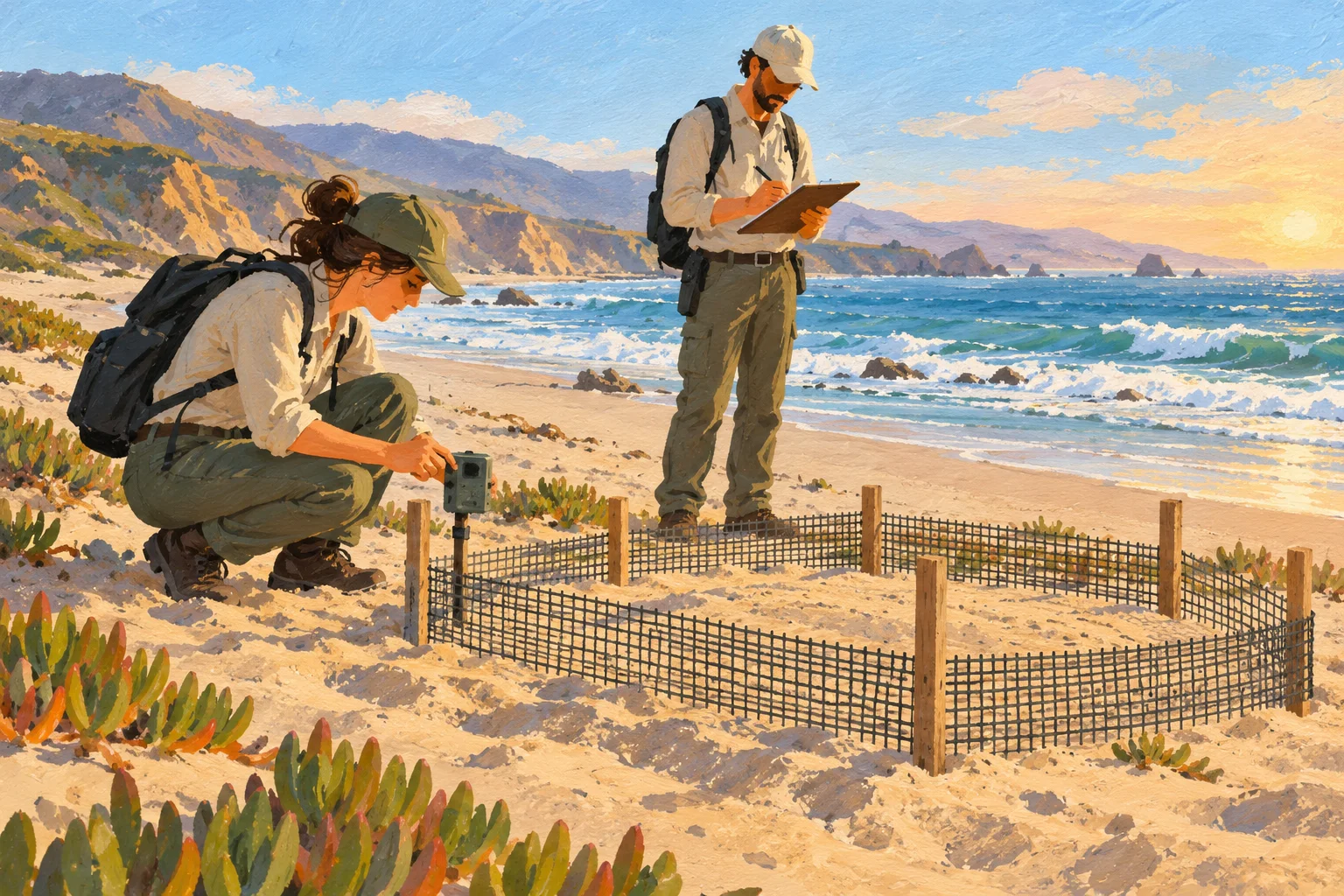
The discovery brought together people who know these beaches from many angles. NOAA Fisheries, the U.S. Fish and Wildlife Service, California wildlife officials, local marine-safety teams, the Aquarium of the Pacific and community organizations coordinated monitoring and public information. Crews marked and protected the nesting areas while beachgoers learned how to give the turtles room.
Care for more than 200 eggs
With Hurricane Polo approaching and high surf forecast, the interagency team moved quickly. On Sept. 25, biologists collected 100 eggs from Huntington Beach and 104 from Seal Beach, then transferred them to the Aquarium of the Pacific in Long Beach. Aquarium staff placed the eggs in sand-filled containers and are monitoring them in a temperature-controlled environment during incubation.
The aquarium’s care team is giving the eggs a steady setting through an incubation period that typically lasts 45 to 60 days. If the eggs are viable and hatch, partners plan to return the young turtles to the beaches where they were laid, so they can make their first journey from sand to sea.

Neighbors can help the shoreline stay welcoming
The nesting was a first for the West Coast, and the people caring for the eggs are continuing to monitor the beaches. NOAA encourages visitors to respect posted nesting areas and protective fencing, keep a safe distance from wildlife and report sea turtle sightings to local lifeguards or the West Coast Sea Turtle Stranding Hotline at 562-506-4315.
For the Orange County partners, the work links careful science with everyday stewardship: protect the shoreline, share clear guidance and give these unexpected visitors a chance to thrive.