One September morning in southwestern Minnesota, an invitation is turning a patch of tallgrass prairie into a shared workday. Pipestone National Monument has asked volunteers to join park rangers on Saturday, September 26, for National Public Lands Day.
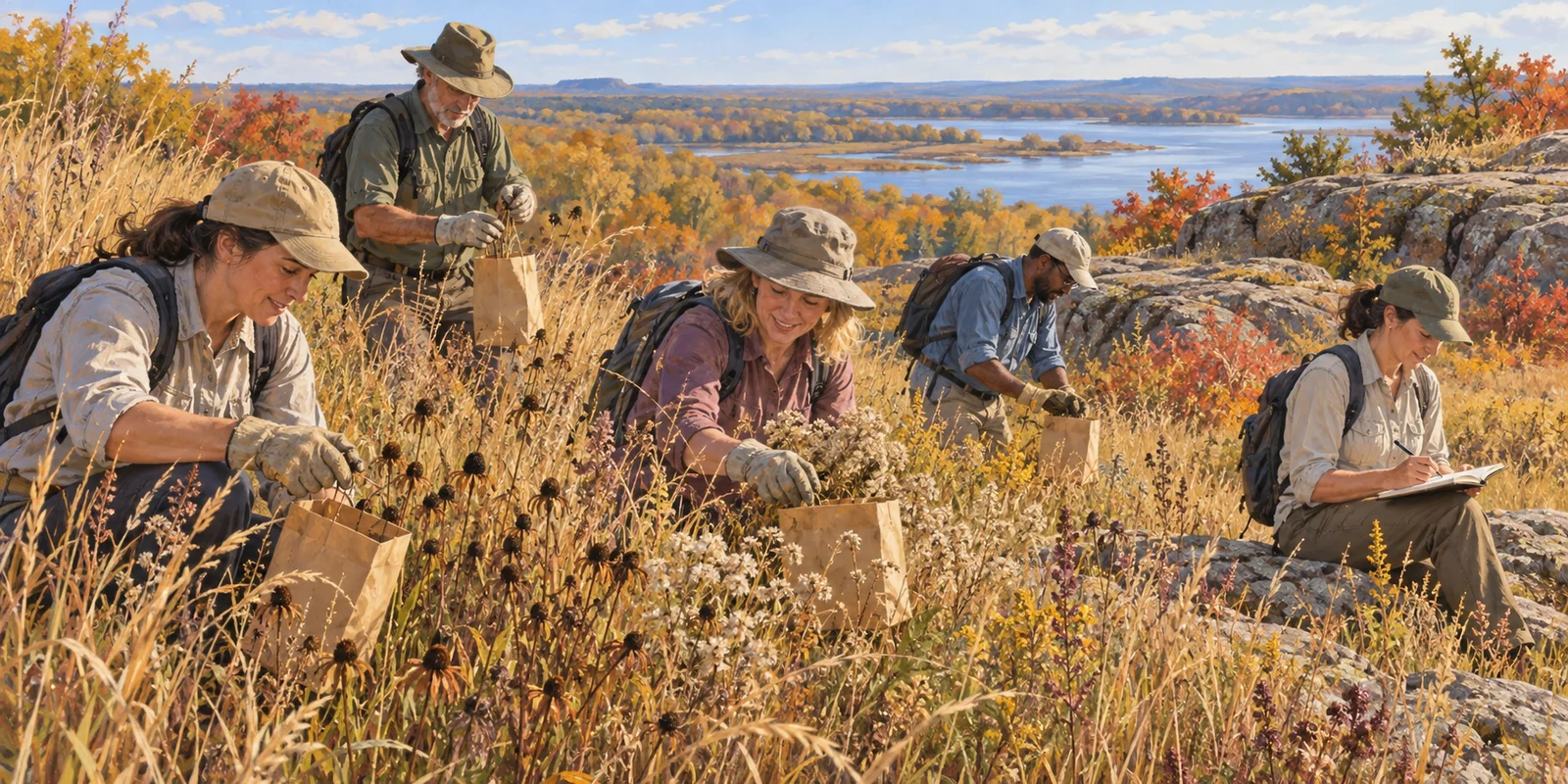
Editorial illustration: a community volunteer day in tallgrass prairie.
The three-hour event runs from 9 a.m. to noon. According to the monument’s September 16 announcement, participants may collect native seeds for next year’s planting or help remove invasive plants that compete with native species. The park says tools, training and gloves will be available, making the morning welcoming to people who are new to this kind of stewardship.
There is something wonderfully concrete about the work: a seed head gathered now can return to the prairie next season, while a few hours of careful tending can make room for the plants already rooted there. The monument is a cultural site as well as a prairie landscape, and the volunteer project offers neighbors a direct way to care for that place together.
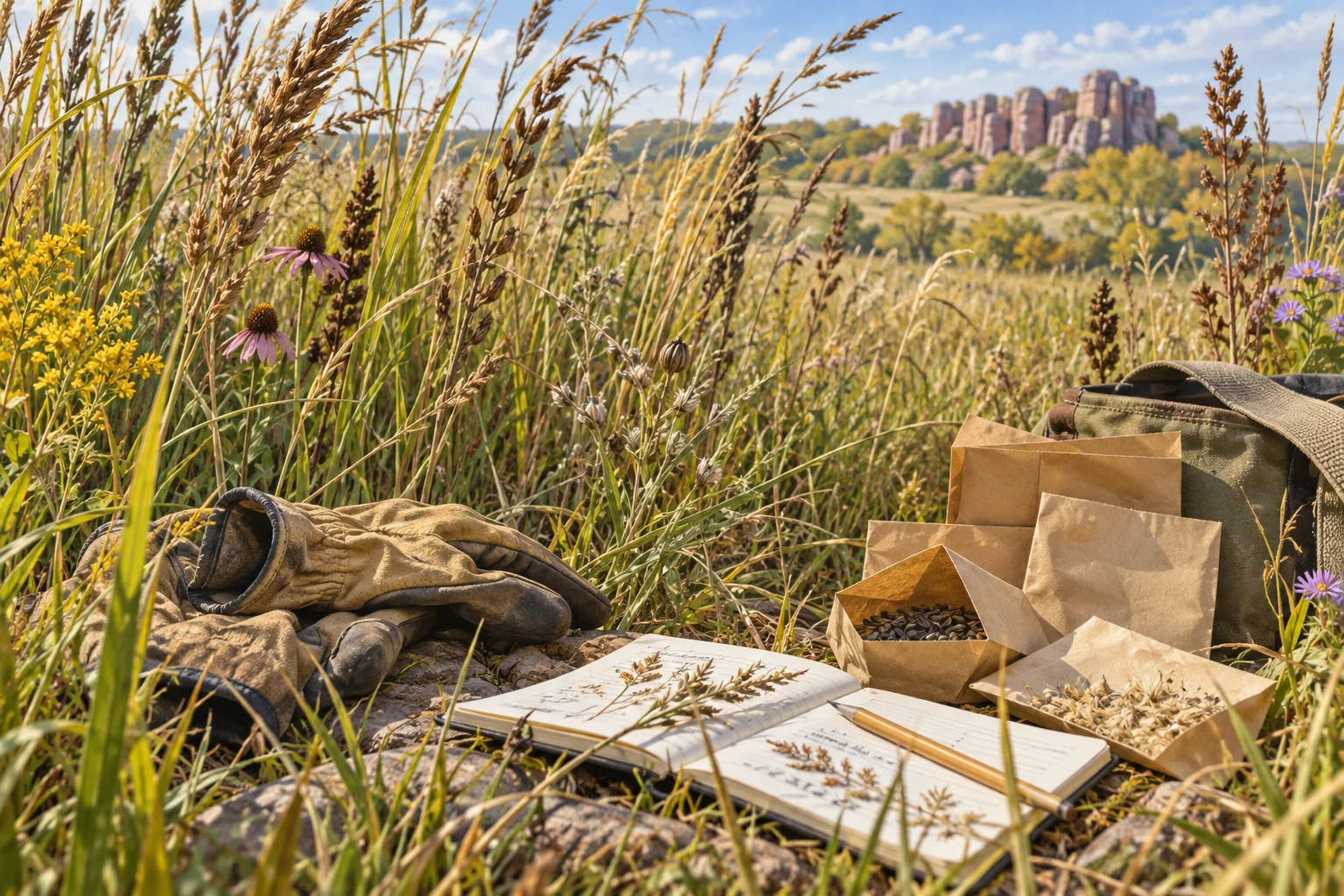
Editorial illustration: seed collection tools among native prairie grasses.
Pipestone’s gathering is one local stop in a wider season of public-land care. The National Park Service says National Public Lands Day falls on September 26 this year, with volunteer events scheduled from September 12 through October 10. The annual effort, led with the National Environmental Education Foundation, brings people together around parks and other shared outdoor places.
At Pipestone, volunteers are encouraged to RSVP so the park can prepare lunch, which will be served at 11:30 a.m. Sturdy shoes and layers for the weather are recommended. The details and contact information are available on the monument’s official event announcement.
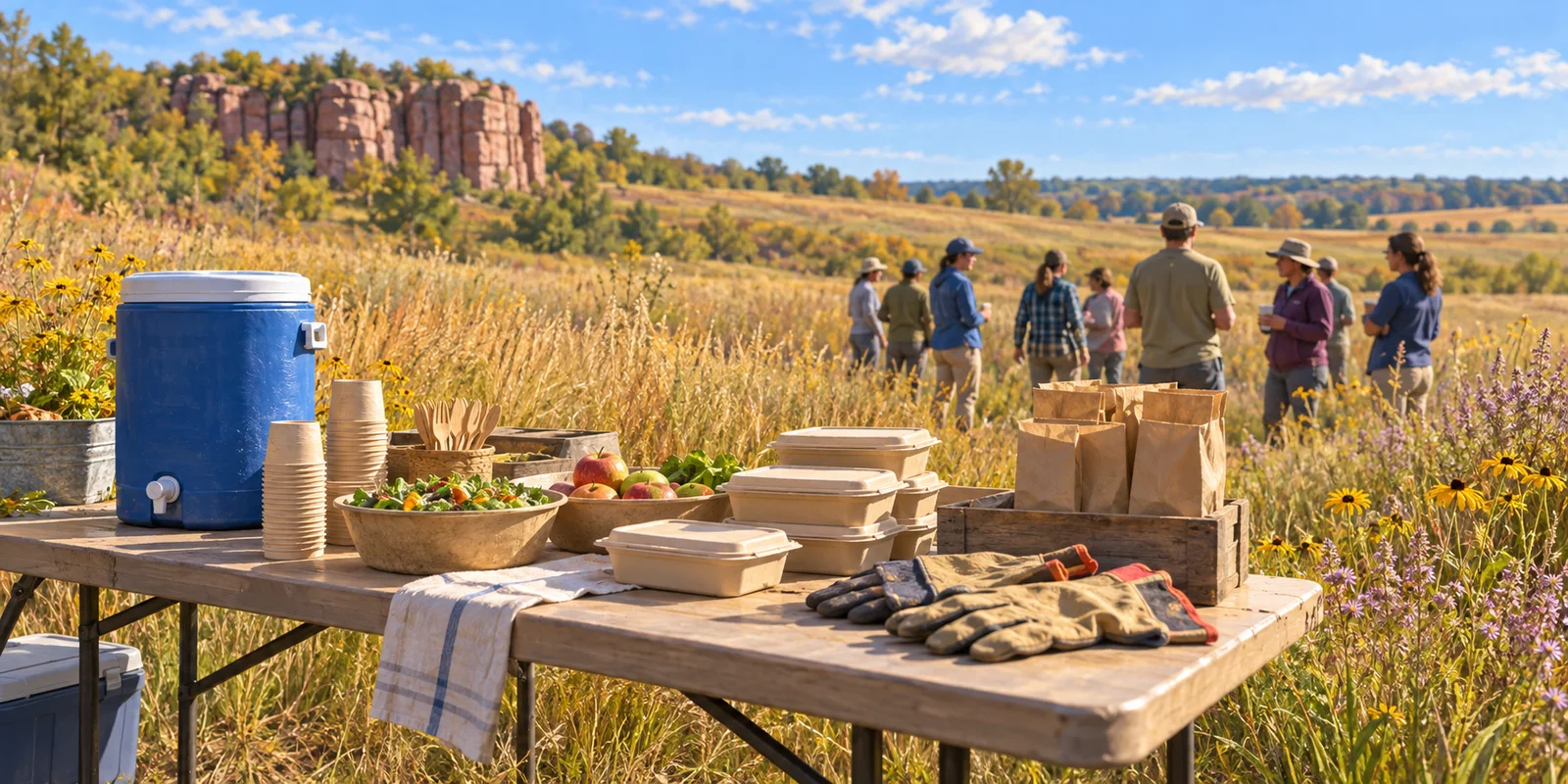
Editorial illustration: a shared lunch after prairie stewardship.
For people looking for a hopeful way to spend a Saturday, the invitation is refreshingly simple: show up, learn a little, lend a hand and leave a familiar landscape ready for another growing season.
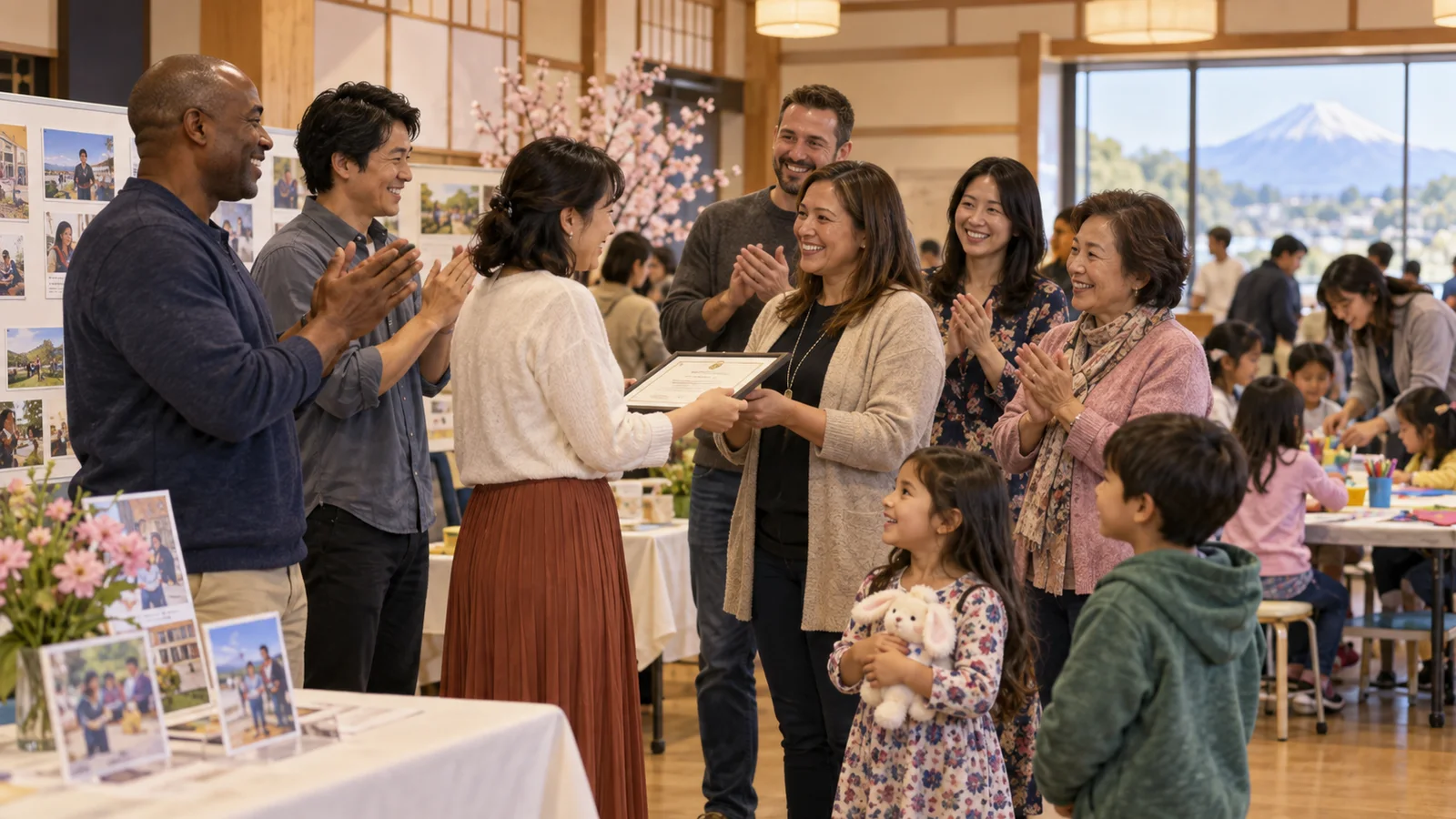
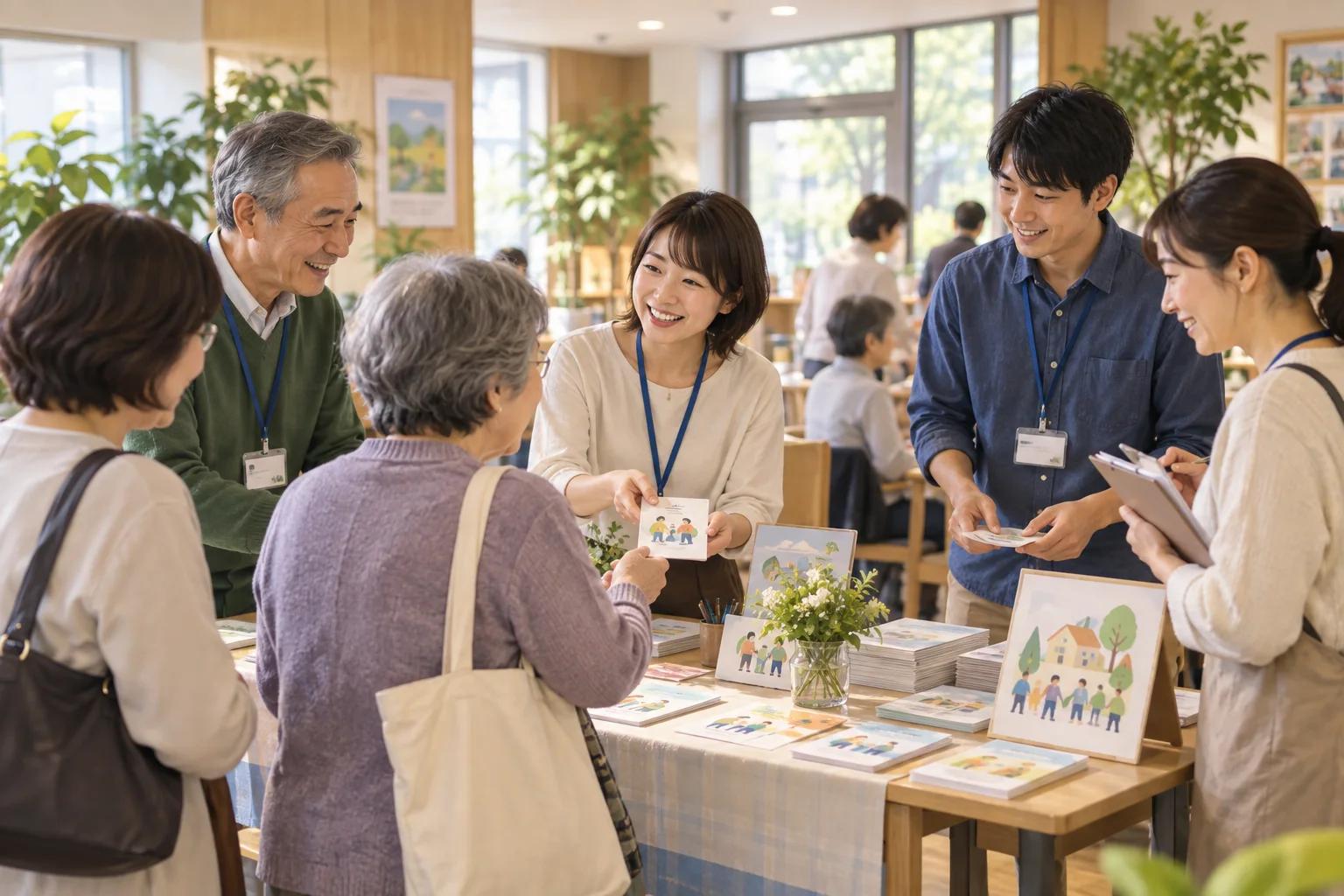
Editorial illustration: Community volunteers gather for a recognition event and children’s activities.
At Camp Zama in Japan, a room full of neighbors recently paused to celebrate the people who make everyday community life run a little more smoothly.
U.S. Army Garrison Japan’s Volunteer Recognition Ceremony, held September 14 at the Camp Zama Community Club, honored more than 200 volunteers for service across the year. The gathering recognized a wide range of contributions, from recurring programs to practical help that keeps community spaces welcoming and connected.
Editorial illustration: A volunteer-led children’s activity brings neighbors together.
One of the volunteers highlighted in the garrison’s report was Lindsey Wine. With her husband, Staff Sgt. Derek Wine of the 765th Transportation (Terminal) Battalion, she established and led a weekly children’s program after identifying a community need. Their work offers a clear example of the quiet, repeatable care that helps families find activities, friendships, and familiar faces close to home.
The ceremony’s message centered on the value of every contribution. Programs thrive through the people who set out supplies, welcome newcomers, organize a weekly gathering, share local knowledge, or return each week to help an idea become part of the neighborhood’s rhythm.
Editorial illustration: Community connections grow through practical, friendly help.
Recognition events can make that work visible. They give a community a chance to name the effort behind familiar programs and to celebrate the volunteers whose time creates room for other people to participate.
Camp Zama’s gathering is a warm reminder that local life is shaped by many small acts of service. A weekly children’s activity, a conversation at a community table, and an evening spent helping neighbors all add up to a place where people can feel included.
A four-person Youth Conservation Corps crew spent the Nevada summer repairing trails, gathering native seeds and learning field skills alongside refuge staff at Stillwater National Wildlife Refuge.
Some summer jobs end with a paycheck. At Stillwater National Wildlife Refuge in Nevada, four teenagers finished their season with something extra: trails ready for the next visitor, native seeds ready for future work, and field lessons they can carry into whatever comes next.
The U.S. Fish and Wildlife Service’s Aug. 31 account of the 2026 Youth Conservation Corps crew describes a summer of practical stewardship. The teens maintained trails, planted native seeds, collected seeds for processing and learned how to band waterfowl in the Ruby Mountains. It is a cheerful stop on the Smile Across America map—a place where young people and experienced caretakers made a public landscape stronger together.
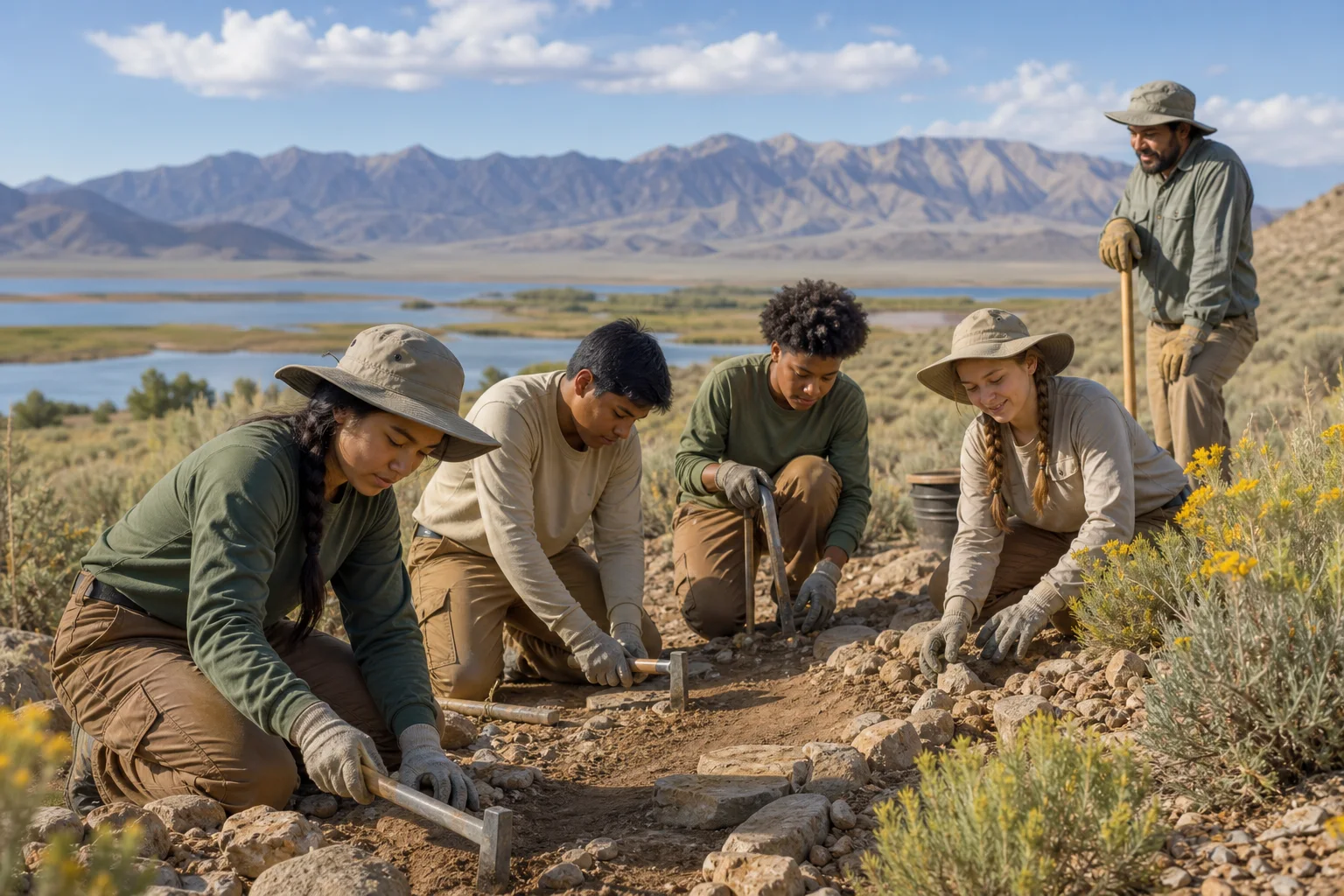
Editorial illustration: a young crew turns hands-on work into a welcoming trail.
Four teens, many ways to help
The crew’s assignments moved across the refuge system. At Stillwater, they worked on maintenance and learned about the plants, animals and insects that make the local refuges their home. In the Ruby Mountains, refuge biologist Daniel Dewey taught them about waterfowl banding.
They also repaired the Cave Creek Trail and visited Fort Ruby to help with cleanup at the historic site. The variety matters: conservation can mean a careful observation, a restored path, a handful of seeds or an hour spent caring for a place with a long human story.
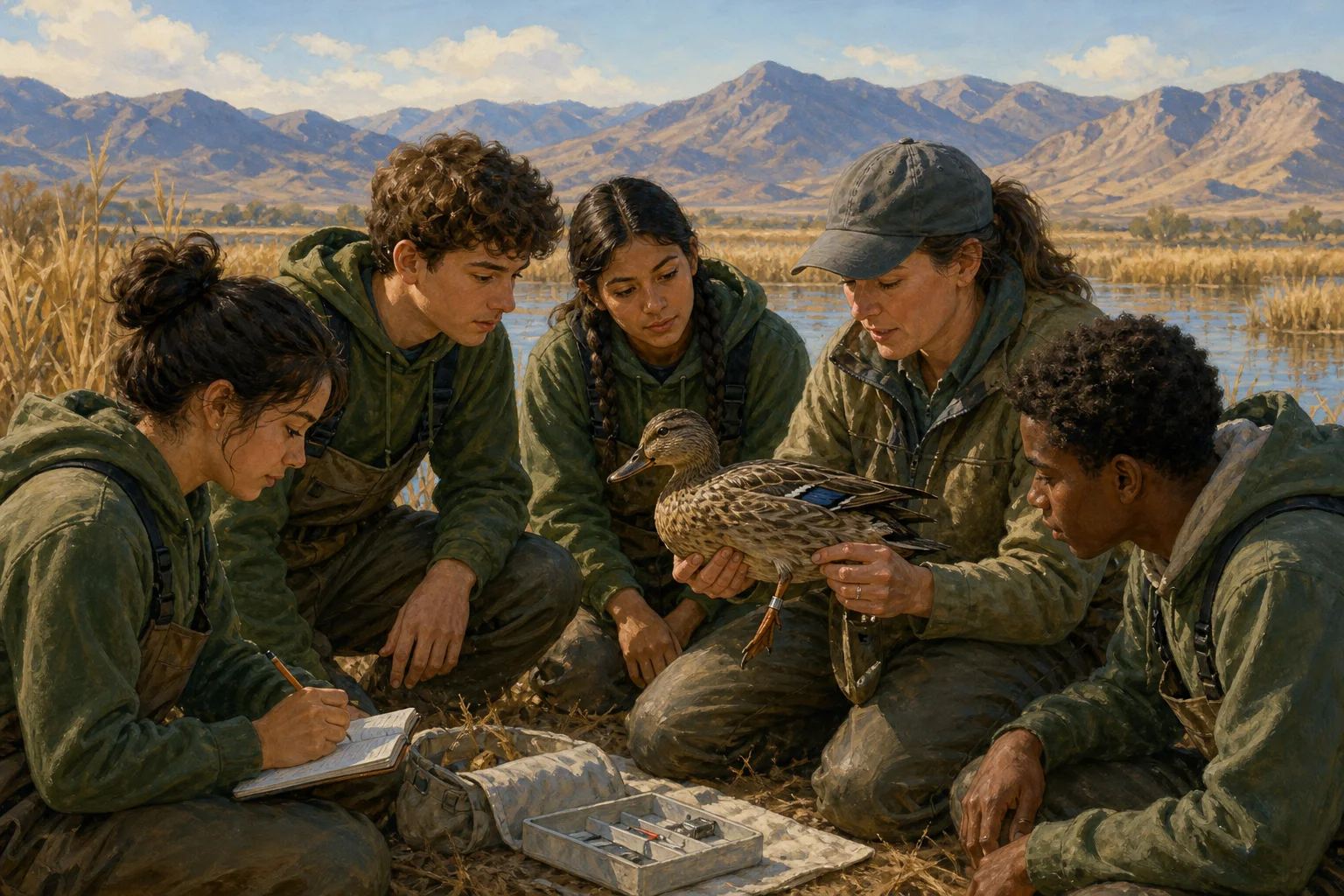
Editorial illustration: field science becomes a shared lesson beside the marsh.
A mentor who keeps showing up
Leading the group was crew leader Keith Sluyter, who returned for his 17th season. The Service says he guided the teenagers through refuge maintenance, local biology and the many details that turn an outdoor assignment into a real education.
Nevada’s summer heat made the work demanding, and the crew prioritized safety in the desert conditions. A short break at Ruby Lake National Wildlife Refuge offered more tolerable temperatures and another chance to learn alongside staff. The rhythm—work, instruction, care and regrouping—is the kind of support that lets a first job become a foundation.
Editorial illustration: collecting native seeds connects one season’s work to the next.
Public lands, personal futures
Youth Conservation Corps positions employ teenagers ages 15 to 18 as summer workers at national wildlife refuges, national parks and national forests. Participants learn public-lands stewardship and conservation while doing useful work in the places they help care for.
Stillwater’s four-person crew leaves behind more than repaired paths and collected seeds. They leave a model for a good summer: show up, learn from someone who knows the place, take care of the details and make room for the next person. That is how a refuge becomes a classroom—and how a community’s future gets a little greener.
Source note: Crew size, assignments, mentor names and program details are from the U.S. Fish & Wildlife Service story “Youth Power at Stillwater NWR,” published Aug. 31, 2026. All images are original editorial illustrations.
Yosemite’s Fall Cleanup Tradition Brings Volunteers Back to the Valley
The five-day Yosemite Facelift returns Sept. 23–27, giving park visitors a practical way to care for a place they love.
Editorial illustration: volunteers working together on a mountain-park trail.
At the end of another busy summer, Yosemite National Park is making room for one of its most hands-on traditions: the Yosemite Facelift. The annual cleanup, organized in partnership with the Yosemite Climbing Association, is scheduled for Sept. 23–27, 2026, as part of National Public Lands Day season.
The event is a simple invitation with a visible result. Volunteers spend time caring for the park, and the work is shared across the public lands that visitors come to enjoy. The National Park Service says the Facelift has drawn more than 1,500 volunteers in some recent years. In 2025, more than 1,400 volunteers contributed over 13,000 hours and removed 15,290 pounds of debris from Yosemite, according to the park’s volunteer information.
A tradition built around showing up
Yosemite’s current listing describes the Facelift as a five-day event and points visitors to the Yosemite Climbing Association for the full schedule. The park’s drop-in volunteer guidance says people can join special events without an application. That makes the tradition approachable for a visitor who wants to add a useful hour or day to a park trip.
Editorial illustration: neighbors and park staff sorting a day’s collected materials.
Participants should plan for outdoor work: the park asks volunteers to wear long pants and closed-toe shoes suited to the weather, and to bring sun protection, water, and snacks. Yosemite provides tools and protective equipment. Everyone signs a volunteer agreement, and a guardian must sign for anyone under 18.
Small work, shared ownership
National Public Lands Day, observed this year on Sept. 26, is billed by the NPS as the nation’s largest single-day volunteer effort for public lands. The agency says the day is designed to connect communities around caring for parks, rivers, refuges, and other shared spaces. Yosemite Facelift gives that broad idea a local rhythm: meet other people, learn the practical work, and leave a favorite landscape better cared for.
For people planning a fall visit, the NPS recommends checking Yosemite’s current event information and conditions before arriving. Visitors who cannot make the September dates can still follow the same spirit close to home by joining a local public-land or neighborhood stewardship project.
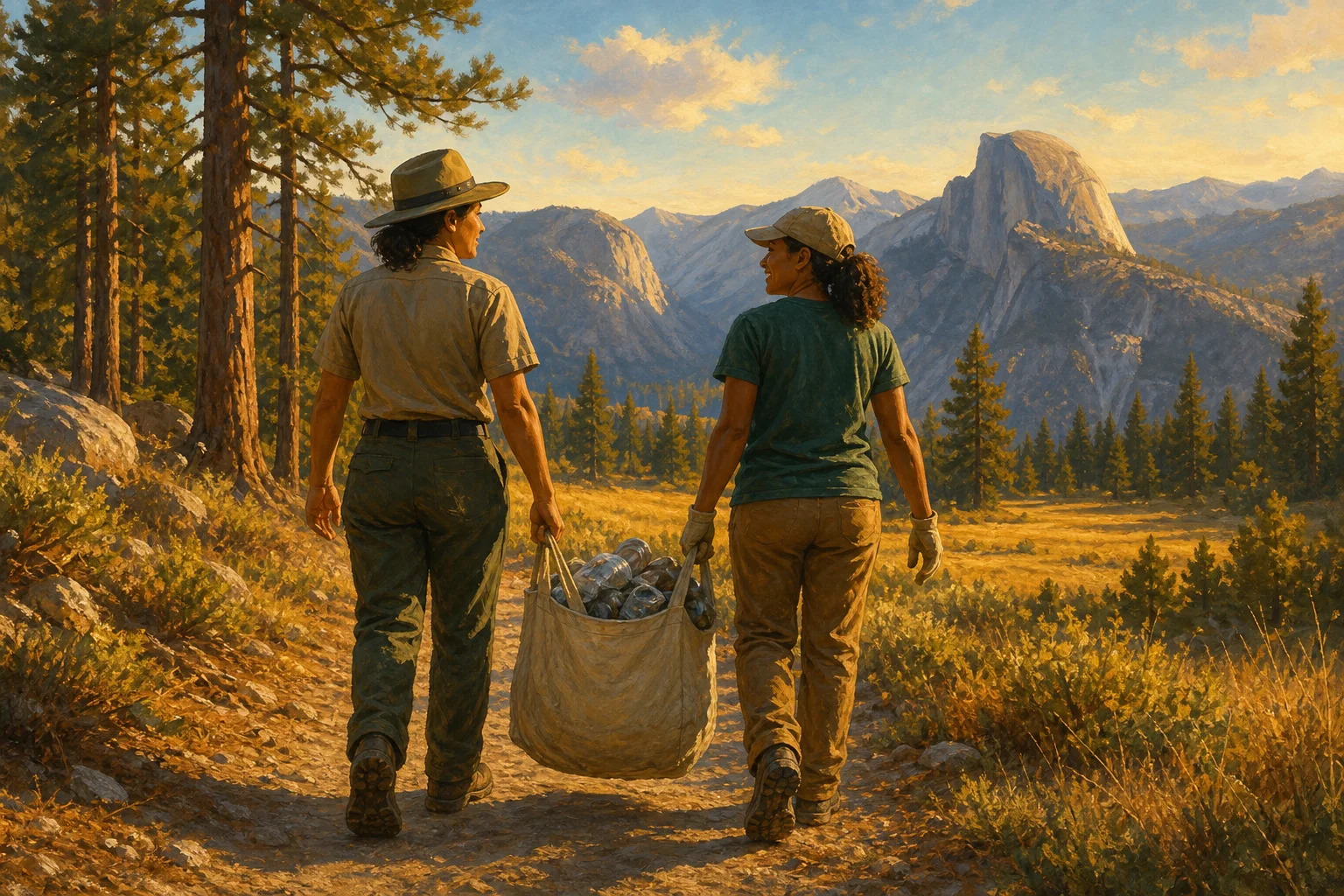
Editorial illustration: a ranger and volunteer carrying the work forward together.
A Turtle Family’s Bright New Chapter Began in a Massachusetts Wetland
Two young Blanding’s turtles released at Great Meadows National Wildlife Refuge are the first documented offspring of a turtle that once received the same community-supported head start.
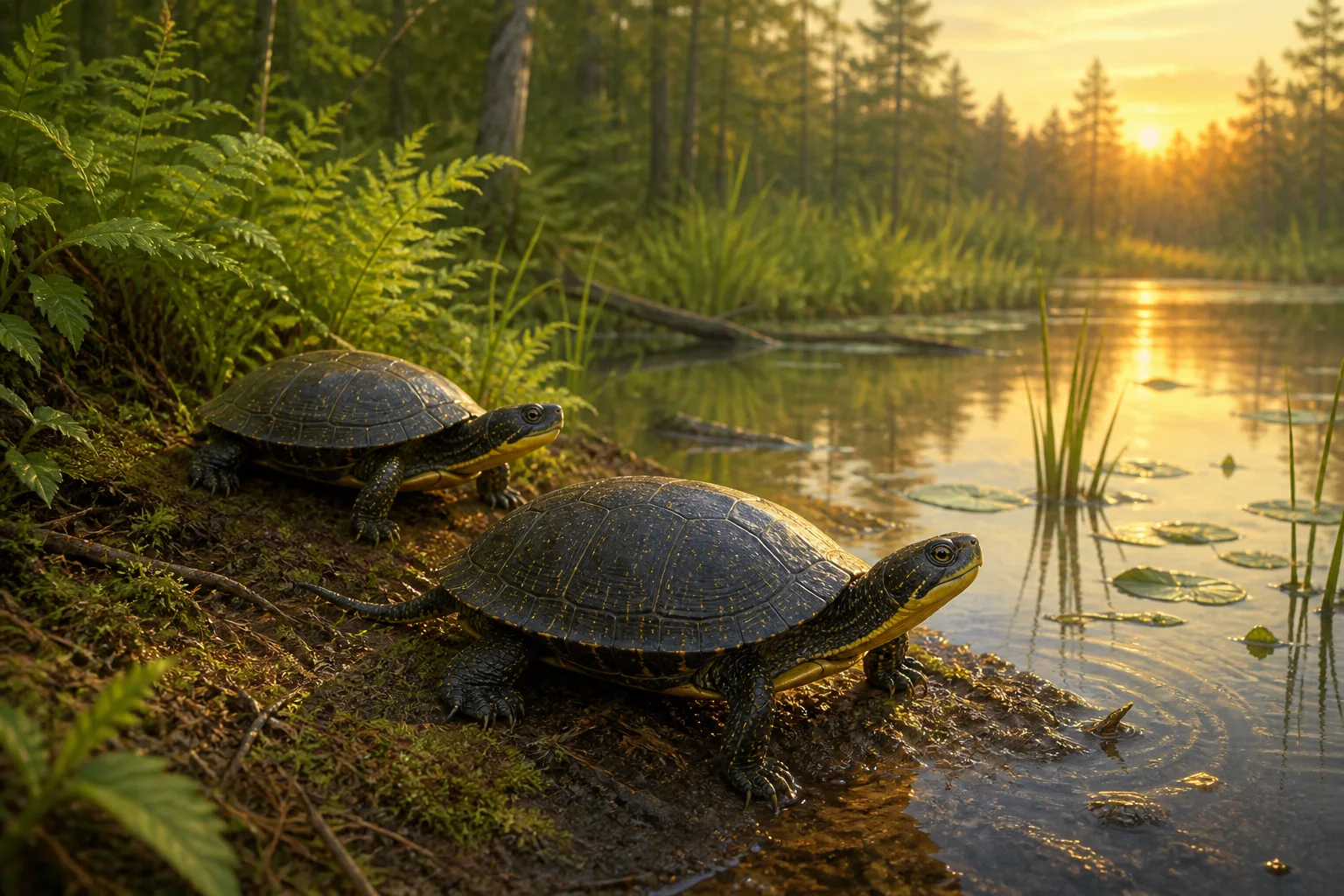
Editorial illustration: Two young Blanding’s turtles approach a New England wetland.
Some good news arrives in a very small package. In late June, two nine-month-old Blanding’s turtles made their way toward a wetland at Great Meadows National Wildlife Refuge in Concord, Massachusetts, while about 40 people gathered to see them off.
The release, reported by the U.S. Fish & Wildlife Service on July 7, marked a milestone two decades in the making: the turtles were the first documented offspring at the refuge of a turtle that had itself gone through the conservation program known as “headstarting.”
Meet Ivy, the turtle who came back into view
The family story begins in 2010, when a female Blanding’s turtle left the refuge’s marsh and traveled more than a mile to nest at a nearby office park. Her nest produced 11 hatchlings. One of them, a small female nicknamed Ivy, spent her first winter at Stone Zoo through Zoo New England’s Headstart Program.
Ivy and her siblings returned to Great Meadows the next spring, each with a small shell notch so researchers could recognize them later. Ivy then disappeared from view for about a decade. Zoo New England field technicians found her during a routine survey in 2023 and fitted her with a radio transmitter.
In spring 2025, senior field conservationist Jimmy Welch followed Ivy’s signal as she left the refuge to look for a nesting site. She chose adjacent conservation land owned by the Town of Concord, and Welch marked and protected the nest. It produced seven healthy hatchlings—the first documented young from a headstarted turtle at the refuge.
Editorial illustration: Families, volunteers, and conservation partners walk toward a protected wetland.
A head start, shared by a whole community
Blanding’s turtle hatchlings are roughly the size and weight of a quarter when they first emerge. The headstarting program gives some of them indoor care through their most vulnerable first winter. By release time, the turtles are much larger: the two young turtles released in June each weighed about one-third of a pound.
Since the program began in 2003, more than 800 headstarted Blanding’s turtles have been released at Great Meadows and surrounding wetlands, according to the Fish & Wildlife Service. Zoo New England says its partners work with about 40 Massachusetts schools each year, giving students a hands-on role in raising hatchlings for nine months before they return to native habitat.
That means the audience at this summer’s release included much more than wildlife professionals. Representatives of Zoo New England, the Town of Concord, Concord Land Conservation Trust, and the Massachusetts Department of Fish and Game joined field technicians, animal-care specialists, volunteers, interns, retired teachers, and nearby residents.
Dr. Bryan Windmiller, who founded Zoo New England’s Blanding’s turtle conservation program at Great Meadows and led it until his retirement this year, was there too. The Fish & Wildlife Service described the moment as a chance for him to see the program’s second generation begin its own life in the wild.
Editorial illustration: A Blanding’s turtle pauses beside the shallow water of a marsh.
The long view
Blanding’s turtles can live 80 years or longer in a protected landscape. That gives this release a wonderfully patient kind of hope: the people who helped Ivy’s children today may never see the whole story, but their work has put another generation on the map.
“We think they can smell the swamp,” senior Stone Zoo zookeeper Deborah Jon Toupouzis said as the young turtles waited in their holding tank, according to the Fish & Wildlife Service.
After the remarks, Welch, Windmiller, and senior field conservationist John Berkholtz waded to the wetland’s edge and released the turtles. They swam away as the sun began to set.
The lesson is quietly practical: habitat, careful monitoring, schools, volunteers, and neighbors can add up to something that lasts. In Concord, a turtle that once vanished into the reeds returned with a family—and a community ready to welcome the next generation home.
A spring gathering at Utah’s Bear River Migratory Bird Refuge paired a 250th-anniversary flag ceremony with new ways for families to enjoy the wetlands.
Editorial illustration: a welcoming community gathering at Bear River Migratory Bird Refuge.
Sometimes a good day outdoors comes with a little ceremony. At Bear River Migratory Bird Refuge in northern Utah, about 500 people gathered April 4 for the “Wild Wonders” celebration, welcoming a set of commemorative flags traveling through the country for America’s 250th anniversary.
The U.S. Fish & Wildlife Service’s Aug. 24 account describes a day built around neighbors, birds and a place that belongs to everyone who cares for it. The celebration included a special flag ceremony and marked the opening of a temporary 12-mile auto-tour route, giving visitors access to parts of the refuge while the permanent route receives repairs.
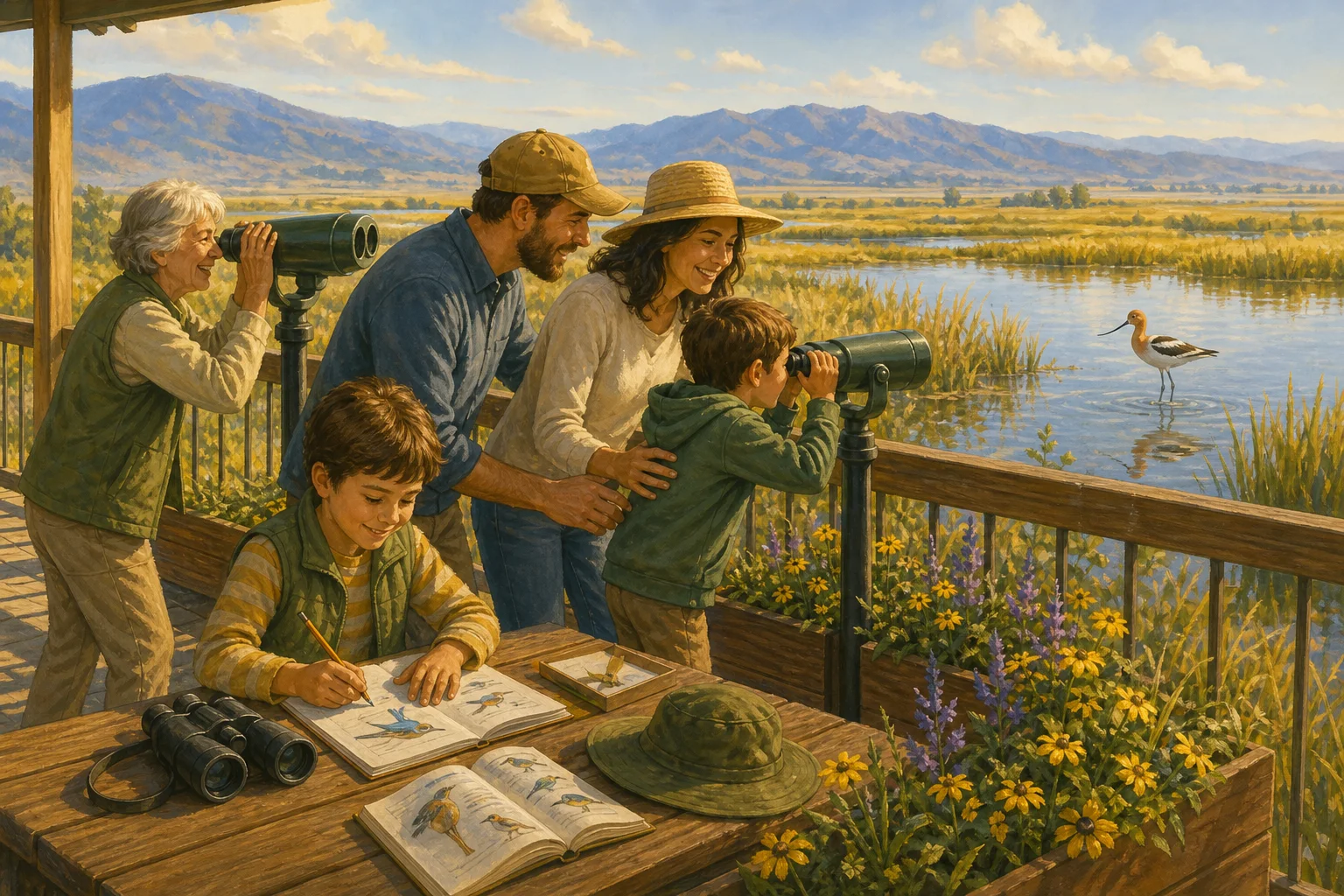
Editorial illustration: families can pause together at the refuge’s patio and outdoor learning spaces.
A refuge made for a shared day
The April report says families and visitors of all ages tried junior-ranger activities, crafts, seed planting and scavenger hunts. Renovated patio space now includes binocular viewers and planter boxes, while an interactive garden in the Outdoor Nature Explore Classroom gives visitors another hands-on way to spend time outside.
Bear River is a particularly lively setting for that kind of gathering. The refuge protects nearly 80,000 acres of marsh, open water, uplands and alkali mudflats, and millions of birds use the area during migration. The refuge’s auto-tour route lets people watch wildlife from their cars, with pullouts for a closer look at the landscape.
Editorial illustration: the temporary auto-tour route offers a new perspective on the refuge’s wetlands.
Where history and habitat meet
The refuge’s story is also a community story. The Fish & Wildlife Service reports that local individuals and organizations urged Congress to protect the Bear River delta after wetlands were disappearing in the 1920s. Congress established the refuge in 1928, creating a lasting sanctuary for migratory waterfowl.
Today, visitors can walk an accessible trail near the James V. Hansen Wildlife Education Center, look for birds from the patio or follow the temporary route through mid-September 2026. The service says American avocets and other shorebirds can be seen along the route, alongside the refuge’s wide-open views and seasonal wildlife.
That makes the flags’ stop at Bear River feel fitting: a celebration of a national milestone held in a place shaped by local care. The day’s simple invitation is still available—bring a little time, look closely, and let a shared landscape do some of the smiling.
Reporting note: This article is based on U.S. Fish & Wildlife Service reporting. The accompanying images are original editorial illustrations created for this article.
Young Park Stewards Take the Mic for America’s 250th
A free National Park Service conversation on Aug. 27 puts youth service, curiosity, and the next generation of caretakers at the center of the celebration.
Editorial illustration: young volunteers working together in a national park meadow.
Some of the best birthday plans are the ones that look toward tomorrow. On Thursday, Aug. 27, the National Park Service will host “Voices of Our Youth at 250: Journeys & Park Connections for Future Generations,” a free virtual gathering about the young people already helping care for public lands.
The 90-minute program, scheduled for 1–2:30 p.m. Eastern, is being presented with the National Park Foundation and The Corps Network. The conversation will feature young people who have served through conservation corps, internships, volunteer programs, and other youth engagement efforts. They will talk about how those experiences connect them with national parks and what inspires them to keep showing up.
A celebration built around service
For Jessica Bowron of the National Park Service, the gathering is part of a larger anniversary reflection: young people are stepping forward as leaders, stewards, and innovators. That makes this more than a look back at 250 years of American history. It is an invitation to notice the people building the next chapter, one trail, project, and park connection at a time.
Editorial illustration: volunteers learning from hands-on conservation work.
Room for every kind of learner
The event will include opening remarks, a moderated panel discussion, and audience questions. It is designed for a broad public audience, with live captioning and American Sign Language interpretation. Viewers can join through the National Park Foundation’s Zoom platform or the NPS Youth and Young Adult Programs Facebook livestream.
That accessible, conversational format is a fitting way to celebrate a national parks milestone. People do not need to be expert hikers, scientists, or long-time volunteers to be curious about public lands. A question, a first service day, or a story about a favorite park can be a beginning.
Editorial illustration: young stewards sharing ideas after a day of service.
How to take part
“Voices of Our Youth at 250” is scheduled for Thursday, Aug. 27, from 1 to 2:30 p.m. ET. The National Park Service directs viewers to go.nps.gov/YouthVoices250 for event information and viewing details.
Across the country, the work of caring for parks is often measured in small, tangible acts: learning a place’s story, helping with a project, asking a thoughtful question, or bringing another person along. Thursday’s celebration gives those acts a national stage—and gives everyone watching a hopeful reminder that the future of public lands has plenty of willing hands.
Source: National Park Service, “National Park Service to Host ‘Voices of Our Youth at 250’ Virtual Event Celebrating Youth Engagement in National Parks,” Aug. 20, 2026 (updated Aug. 26, 2026).
Smile Across America is a warm look at real ways communities make room for one another. Our next stop is Washington, D.C., where a historic mill yard is set to become a dance floor for one summer evening.
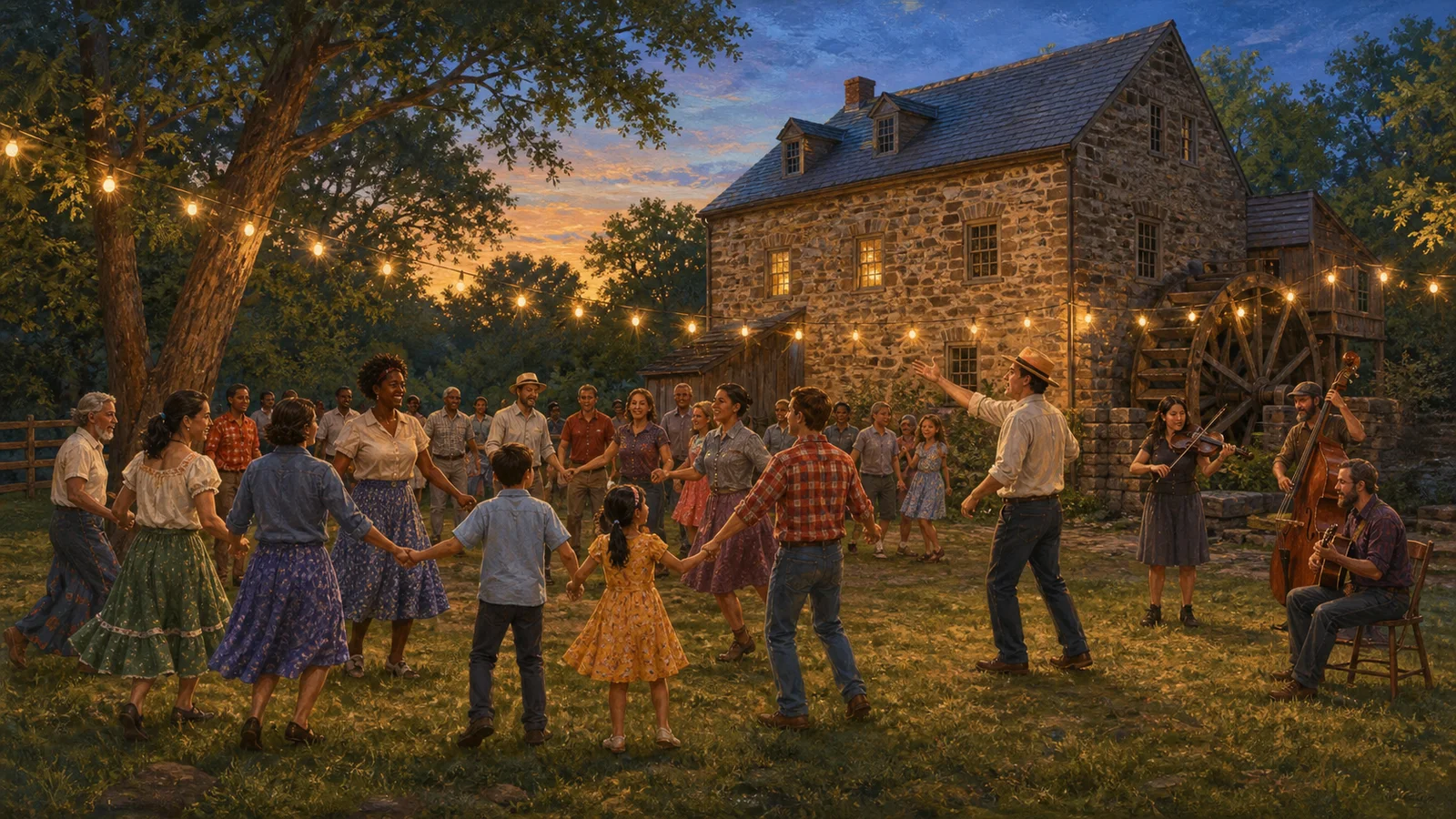
On Saturday, August 29, Peirce Mill in Rock Creek Park will host a free Summer Square Dance from 7 to 10 p.m. The National Park Service says the DC Square Dance Collective will bring live music and a caller to the mill yard, turning an old community gathering place into a place for people to learn the next step together.
Editorial illustration
A welcome that starts before the first turn
The practical details are unusually friendly to newcomers. The Park Service says no partner, lessons, or prior experience are required, and that a caller will teach and guide each dance. The DC Square Dance Collective confirms that its events welcome all ages and experience levels; the group says its volunteers make the dances happen, with live callers and musicians at each one.
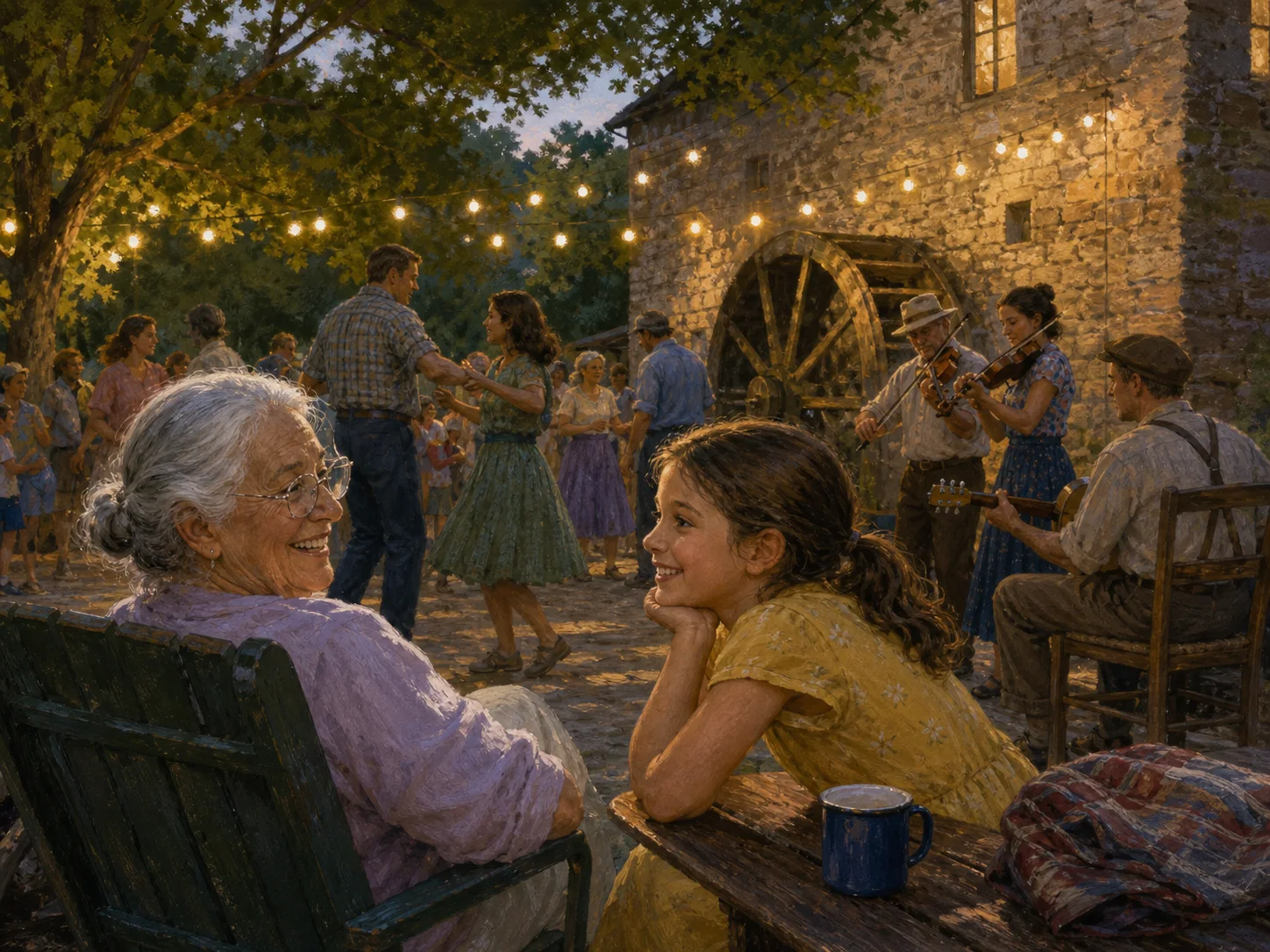
That makes the evening less a test of whether anyone already knows a do-si-do and more an invitation to try one. A caller can name the moves; the circle does the rest. Families, friends, regular dancers, and first-timers can arrive with the same first assignment: listen, step in, and keep going.
Editorial illustration
An old mill, a current kind of gathering
Peirce Mill stands in Rock Creek Park at 2401 Tilden Street NW. Friends of Peirce Mill, which lists the August 29 event on its own calendar, says dancers will gather in the mill yard under twinkling lights. The organization and the National Park Service both list the program as free. If rain gets in the way, the Park Service lists Sunday, August 30, as the rain date.
There is something useful in a public event that explains its welcome so plainly. No prior knowledge is assumed. No partner is required. A caller will help. Those are small logistical facts, but together they lower the threshold for the shy guest, the curious neighbor, and the person who has only seen square dancing from the edge of a room.
Editorial illustration
Plan the evening
The Summer Square Dance is scheduled for Saturday, August 29, 2026, from 7 to 10 p.m. at Peirce Mill in Rock Creek Park, Washington, D.C. The event is free, with a rain date of Sunday, August 30. Visitors can check the National Park Service event listing and the Friends of Peirce Mill calendar for current details before heading out.
For one late-August evening, the invitation is pleasantly direct: come as you are, listen for the caller, and join the circle.
At Salmen Scout Reservation Camp V-Bar in Hancock County, Mississippi, a practical repair project is helping keep a beloved outdoor place within reach. A joint team working through the Department of Defense’s Innovative Readiness Training program repaired roads, strengthened the Morning Glory Lake dam, and restored vehicle access across the camp, according to the Air Force Reserve Command.
Editorial illustration
The 1,400-acre reservation welcomes more than 3,000 young people and nearly 900 adult volunteers each year. That makes a dependable road network more than a convenience: it helps staff, service providers, and emergency vehicles reach camp and activity sites.
A repair with a long view
The work brought together more than 80 personnel from the Air Force Reserve Command, Air National Guard, and active-duty Navy with the Southeast Louisiana Council, Boy Scouts of America. The Air Force Reserve Command reports that the team repaired and resurfaced camp routes, rebuilt washed-out sections, raised the dam to meet the current flood plain, and installed a permanent siphon to replace a failing pipe.
Editorial illustration
The team was working with infrastructure that had weathered roughly five decades. Heavy rain complicated the job, but the project still restored access for emergency response and service vehicles to areas that had been difficult to reach, the command said. A final spillway repair will need specialized civilian engineering work.
Many hands, one camp
There is a satisfying local equation in the project: training hours for the people doing the work, useful repairs for the people who gather at the camp, and donated materials that stretch the result further. The command said the effort saved the Scout council more than $314,000 in labor costs, alongside more than $300,000 in donated limestone and riprap from a local supplier.
Editorial illustration
Camp V-Bar’s story began with a small act of kindness in 1924, when an unnamed Scout shared an umbrella with Fritz Salmen, who later donated the original camp land, according to the command. A century later, the project is another reminder that a lasting community place is cared for in practical ways: a repaired road, a stronger dam, and a route that stays open for the next group of young people and volunteers.
Nearly 3,000 Girl Scouts earned the organization’s highest honor in 2026 after turning community needs into projects built to last.
Girl Scouts of the USA announced its 2026 Gold Award class on July 14, reporting that the awardees collectively devoted more than 307,000 hours and raised over $2.1 million to put their ideas into action. The projects reached across the country and focused especially on mental wellness, sustainability, and accessibility.
Those totals are impressive, but the real smile is in what they represent: thousands of teenagers learning to notice a problem, bring people together, and create a practical response.
What it takes to earn Gold
The Gold Award is the highest honor in Girl Scouting. It is open to Girl Scouts in grades 9 through 12, who identify an issue with national or global relevance and then address a root cause rather than stopping at a one-time gesture.
According to Girl Scouts of the USA, each participant commits at least 80 hours to the process. That work can include researching the issue, assembling a team of experts and volunteers, developing a plan, leading the project, and creating a way for its benefit to continue.
The 2026 class applied that structure to concerns that affect everyday life. The national organization highlighted projects designed to expand physical activity for children with disabilities, help peers build financial literacy, slow the cycle of fast fashion, and strengthen mental wellness.
Illustration: The 2026 Gold Award class included projects centered on accessibility and inclusive physical activity.
One project can become a community habit
The Gold Award model asks a useful question: what will keep working after the project leader steps away?
That emphasis on sustainability changes the shape of service. A clothing project, for example, can become more than a single collection drive when it also creates a repeatable event, recruits community partners, and leaves behind an organizing plan that other people can use.
Girl Scouts of the USA pointed to 2026 Gold Award recipient Ella Kate Vinson, who organized a free community clothing event for families at a local elementary school. In the organization’s announcement, Vinson described the experience as a lesson in service, collaboration, and leadership—and as encouragement to keep listening for needs in her community.
Illustration: Gold Award projects are designed to pair immediate help with leadership and a plan for lasting impact.
Across nearly 3,000 projects, that approach adds up. Dividing the reported 307,000 hours across the class would average more than 100 hours per awardee, though individual projects and time commitments vary. The $2.1 million raised also shows how often young leaders had to explain an idea clearly enough for other people to support it.
A celebration with a next chapter
The class will receive national recognition during the Girl Scouts Unite 2026 convention in Washington, D.C. An official convention listing schedules a Gold Award celebration for July 24, featuring a keynote, an intergenerational panel, and recognition of the movement-wide class.
The organization also awarded post-secondary education scholarships to 110 members of the 2026 class. Those scholarship recipients are included in the convention celebration.
The event arrives during the Gold Award’s 110th year. That long history matters, but the 2026 class makes the tradition feel very current: teenagers are applying project management, public speaking, collaboration, and problem-solving to issues they can see around them right now.
More than 307,000 hours is a huge number. Its simplest meaning may be the best one: thousands of young people decided that a community problem deserved their sustained attention—and then got to work.
The images in this story are original editorial illustrations and do not depict specific awardees or documented events.