A spring gathering at Utah’s Bear River Migratory Bird Refuge paired a 250th-anniversary flag ceremony with new ways for families to enjoy the wetlands.

Sometimes a good day outdoors comes with a little ceremony. At Bear River Migratory Bird Refuge in northern Utah, about 500 people gathered April 4 for the “Wild Wonders” celebration, welcoming a set of commemorative flags traveling through the country for America’s 250th anniversary.
The U.S. Fish & Wildlife Service’s Aug. 24 account describes a day built around neighbors, birds and a place that belongs to everyone who cares for it. The celebration included a special flag ceremony and marked the opening of a temporary 12-mile auto-tour route, giving visitors access to parts of the refuge while the permanent route receives repairs.
A refuge made for a shared day
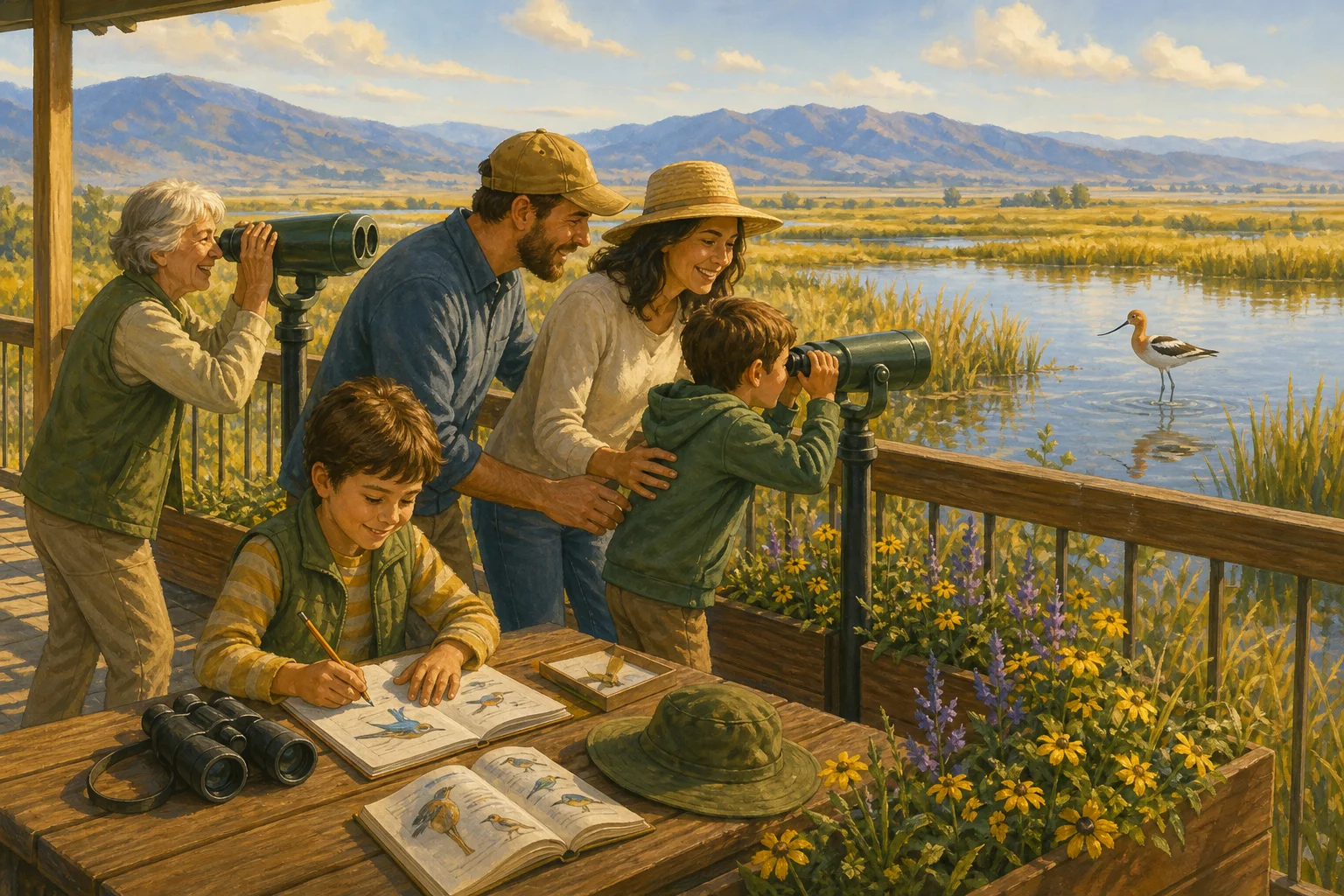
The April report says families and visitors of all ages tried junior-ranger activities, crafts, seed planting and scavenger hunts. Renovated patio space now includes binocular viewers and planter boxes, while an interactive garden in the Outdoor Nature Explore Classroom gives visitors another hands-on way to spend time outside.
Bear River is a particularly lively setting for that kind of gathering. The refuge protects nearly 80,000 acres of marsh, open water, uplands and alkali mudflats, and millions of birds use the area during migration. The refuge’s auto-tour route lets people watch wildlife from their cars, with pullouts for a closer look at the landscape.

Where history and habitat meet
The refuge’s story is also a community story. The Fish & Wildlife Service reports that local individuals and organizations urged Congress to protect the Bear River delta after wetlands were disappearing in the 1920s. Congress established the refuge in 1928, creating a lasting sanctuary for migratory waterfowl.
Today, visitors can walk an accessible trail near the James V. Hansen Wildlife Education Center, look for birds from the patio or follow the temporary route through mid-September 2026. The service says American avocets and other shorebirds can be seen along the route, alongside the refuge’s wide-open views and seasonal wildlife.
That makes the flags’ stop at Bear River feel fitting: a celebration of a national milestone held in a place shaped by local care. The day’s simple invitation is still available—bring a little time, look closely, and let a shared landscape do some of the smiling.
Reporting note: This article is based on U.S. Fish & Wildlife Service reporting. The accompanying images are original editorial illustrations created for this article.
Leave a Reply