Author: Jacob

  • D.C. Neighbors Can Spend Saturday Morning Caring for Kenilworth Aquatic Gardens

    D.C. Neighbors Can Spend Saturday Morning Caring for Kenilworth Aquatic Gardens

    Smile Across America stop: Northeast Washington, D.C. A Saturday morning at Kenilworth Aquatic Gardens can pair a walk among the ponds with a few hours of hands-on care for the park. The National Park Service lists its monthly volunteer session for Oct. 24, beginning at 9 a.m.; the free event lasts three hours and requires advance registration.
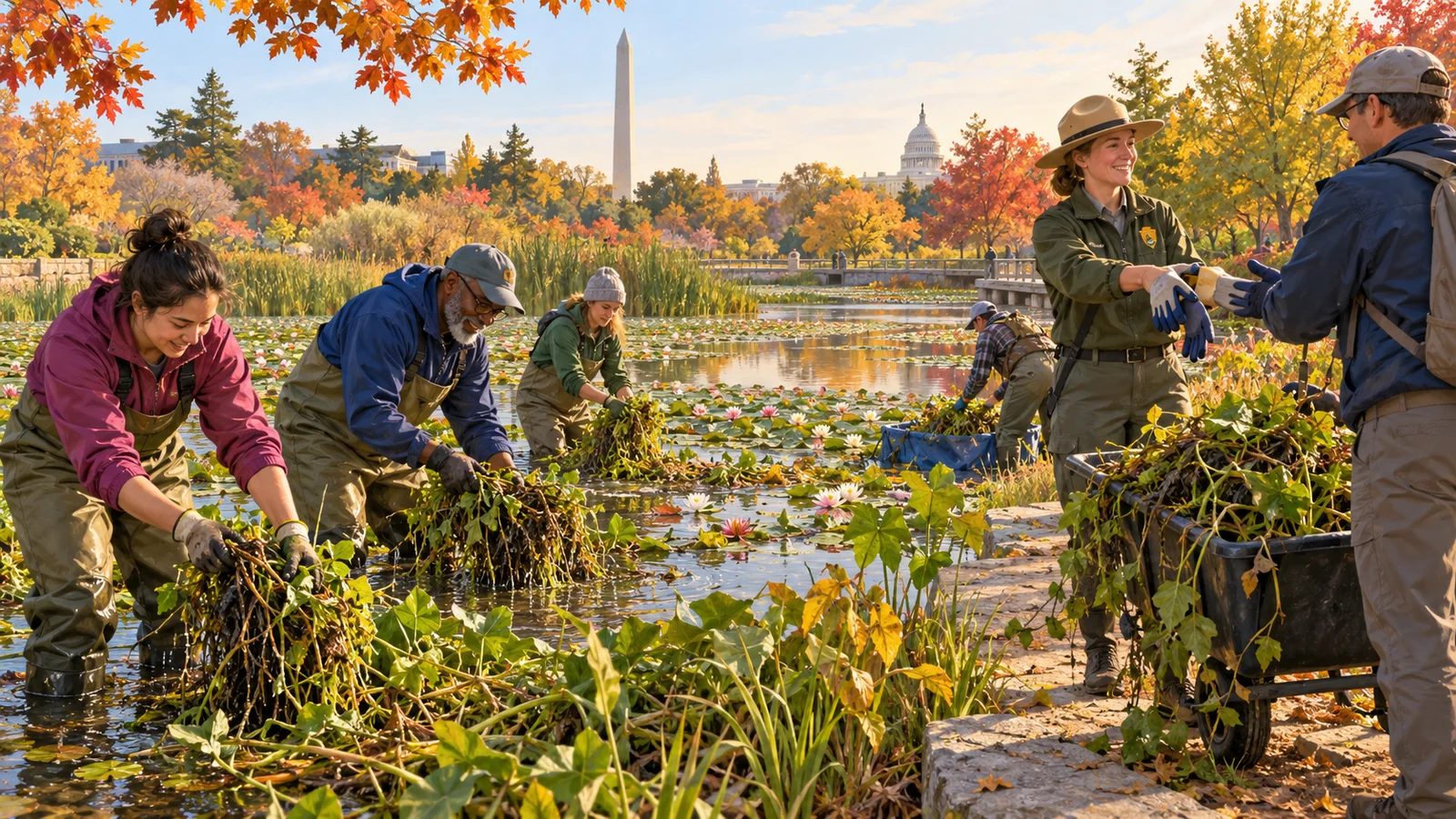
    Community volunteers and a park ranger care for a lily pond at an urban aquatic garden in autumn
    Editorial illustration.

    A garden morning with a practical purpose

    The volunteer session offers several ways to help: removing invasive plants, collecting litter, weeding flower beds, maintaining trails and other park stewardship activities. Some work may take place in shallow ponds, giving volunteers a chance to contribute across the garden’s wetland and walking areas.

    The National Park Service also works with the Friends of Kenilworth Aquatic Gardens, a nonprofit partner that supports volunteer opportunities and helps keep the gardens welcoming. For this event, the Park Service says tools and supplies will be provided, including gloves, boots, waders and hand tools.
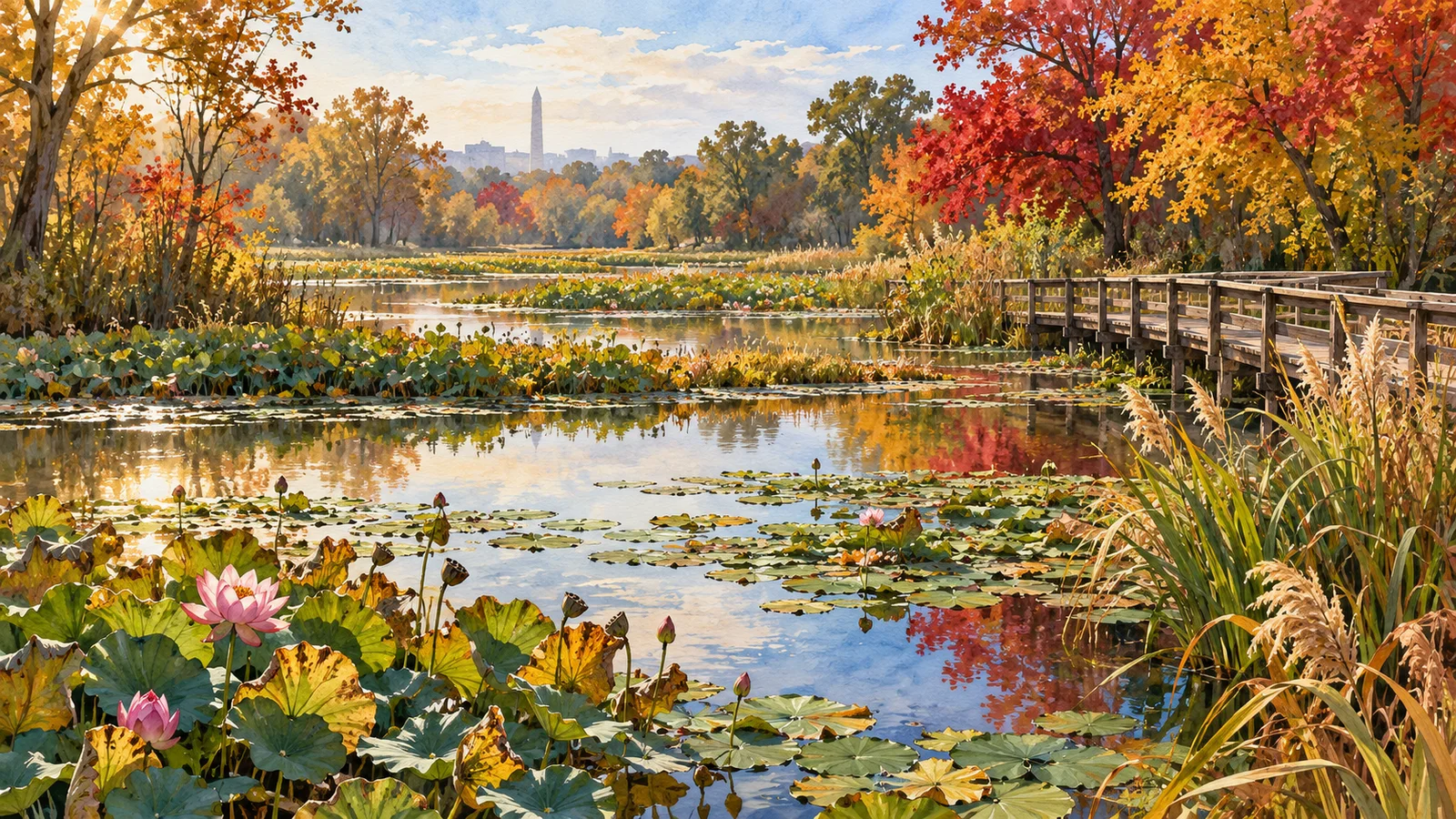
    Autumn colors frame lily ponds and a boardwalk at an aquatic garden
    Editorial illustration.

    What volunteers can expect

    Participants can plan for an outdoor morning that runs rain or shine. A water bottle, snack, hat, sun protection and a change of clothes are useful to bring; comfortable clothes and shoes that can get wet or muddy make the work easier.
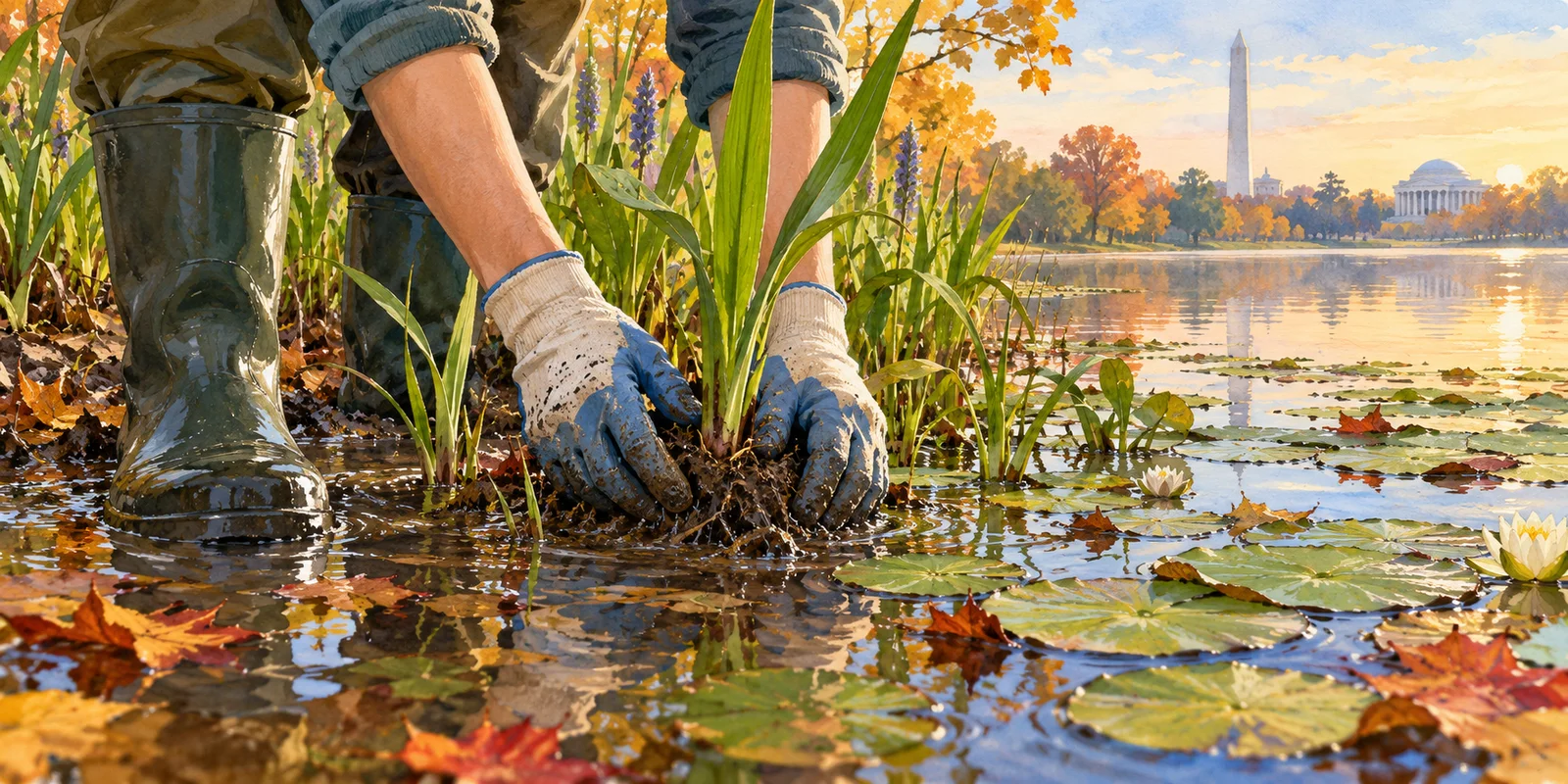
    Gloved hands tend wetland plants beside a lily pond in the soft light of an autumn morning
    Editorial illustration.

    Kenilworth Park & Aquatic Gardens is at 1550 Anacostia Avenue NE in Washington. The Oct. 24 session begins at 9 a.m.; advance registration is required because space is limited. Check the National Park Service event page for details and registration, and the Park Service’s volunteer page for more ways to support the gardens.

  • California’s First Sea Turtle Nests Brought Agencies and Neighbors Together

    California’s First Sea Turtle Nests Brought Agencies and Neighbors Together

    In September, two olive ridley sea turtles came ashore on Orange County beaches to nest, marking the first recorded sea turtle nests on the U.S. West Coast. The discovery drew wildlife experts, aquarium caretakers, city teams and community partners into a shared effort to care for the eggs and prepare for what comes next.

    Editorial illustration of an olive ridley sea turtle approaching the ocean at sunset on a Southern California beach
    Editorial illustration: an olive ridley sea turtle approaches the Pacific at sunset.

    A rare visit to two beaches

    NOAA Fisheries reported that one turtle nested near Seal Beach on Sept. 16, and another nested about eight miles away near the Huntington Beach Pier three days later. The turtles were identified as two different olive ridleys, a species that usually nests farther south in Mexico.

    The discovery brought together people who know these beaches from many angles. NOAA Fisheries, the U.S. Fish and Wildlife Service, California wildlife officials, local marine-safety teams, the Aquarium of the Pacific and community organizations coordinated monitoring and public information. Crews marked and protected the nesting areas while beachgoers learned how to give the turtles room.

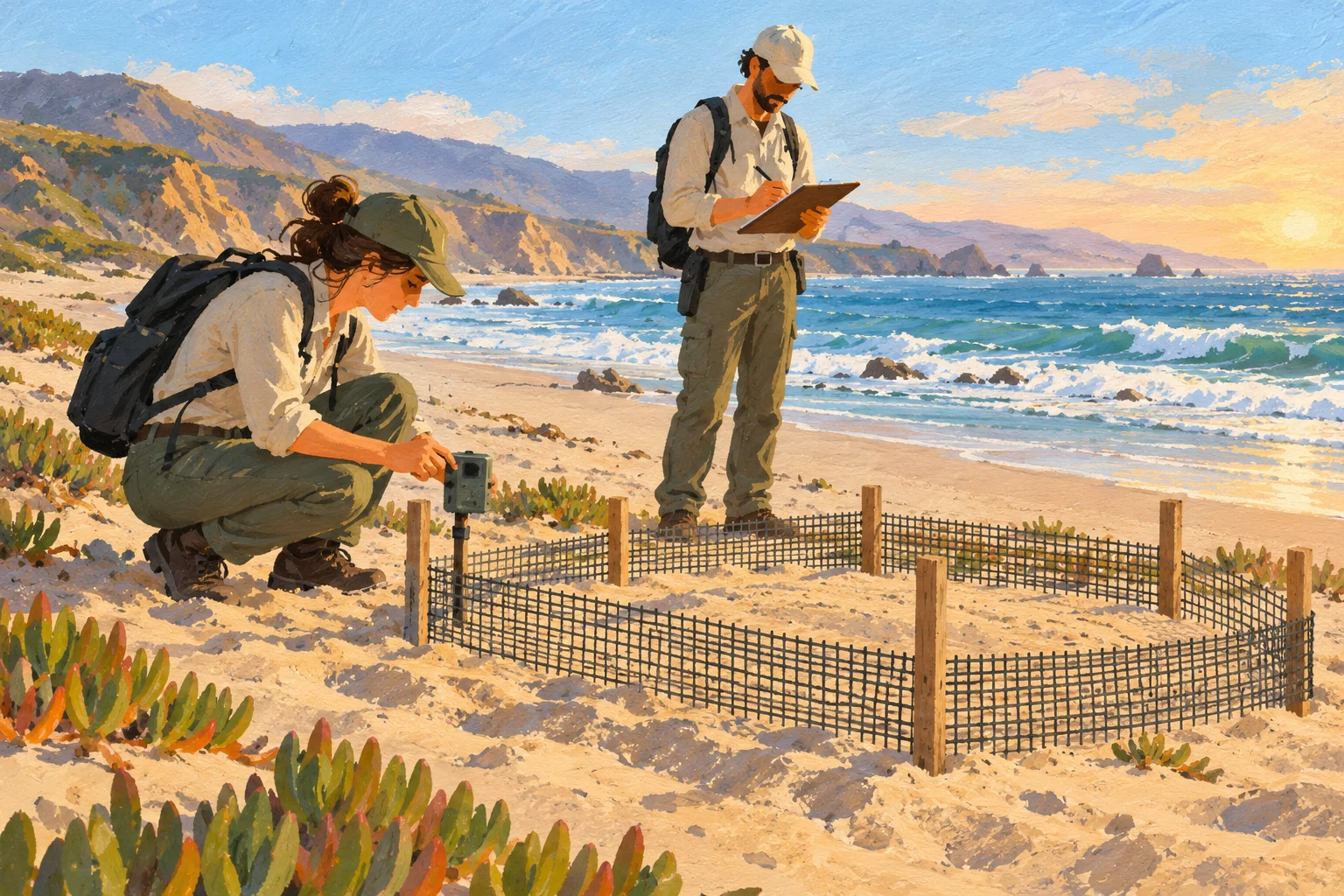
    Editorial illustration of two wildlife biologists monitoring a protected sea turtle nesting area on a California beach
    Editorial illustration: wildlife biologists monitor a marked nesting area.

    Care for more than 200 eggs

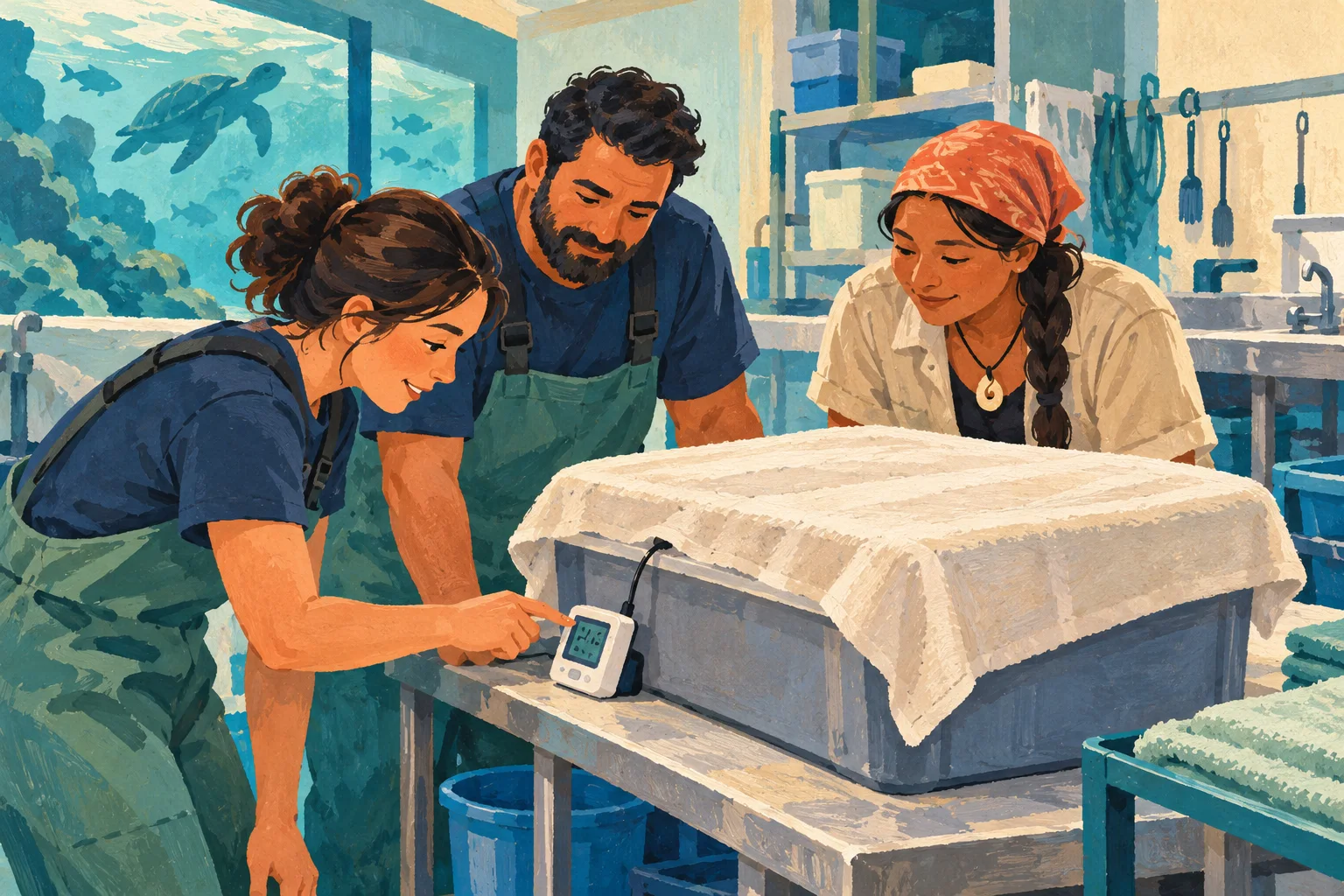
    With Hurricane Polo approaching and high surf forecast, the interagency team moved quickly. On Sept. 25, biologists collected 100 eggs from Huntington Beach and 104 from Seal Beach, then transferred them to the Aquarium of the Pacific in Long Beach. Aquarium staff placed the eggs in sand-filled containers and are monitoring them in a temperature-controlled environment during incubation.

    The aquarium’s care team is giving the eggs a steady setting through an incubation period that typically lasts 45 to 60 days. If the eggs are viable and hatch, partners plan to return the young turtles to the beaches where they were laid, so they can make their first journey from sand to sea.

    Editorial illustration of aquarium animal-care staff and community partners checking an incubation monitor together
    Editorial illustration: aquarium caretakers and community partners check incubation conditions.

    Neighbors can help the shoreline stay welcoming

    The nesting was a first for the West Coast, and the people caring for the eggs are continuing to monitor the beaches. NOAA encourages visitors to respect posted nesting areas and protective fencing, keep a safe distance from wildlife and report sea turtle sightings to local lifeguards or the West Coast Sea Turtle Stranding Hotline at 562-506-4315.

    For the Orange County partners, the work links careful science with everyday stewardship: protect the shoreline, share clear guidance and give these unexpected visitors a chance to thrive.

  • A Hawaii Reunion Brought Generations Together for the 25th Infantry Division’s 85th Anniversary

    A Hawaii Reunion Brought Generations Together for the 25th Infantry Division’s 85th Anniversary

    At Schofield Barracks in Hawaii, a milestone reunion turned an anniversary into a day shared across generations. On Oct. 1, the 25th Infantry Division marked 85 years since its activation with ceremonies, displays and heritage events, bringing together active-duty soldiers, military families, community leaders and veterans attending the Tropic Lightning Association’s annual reunion.

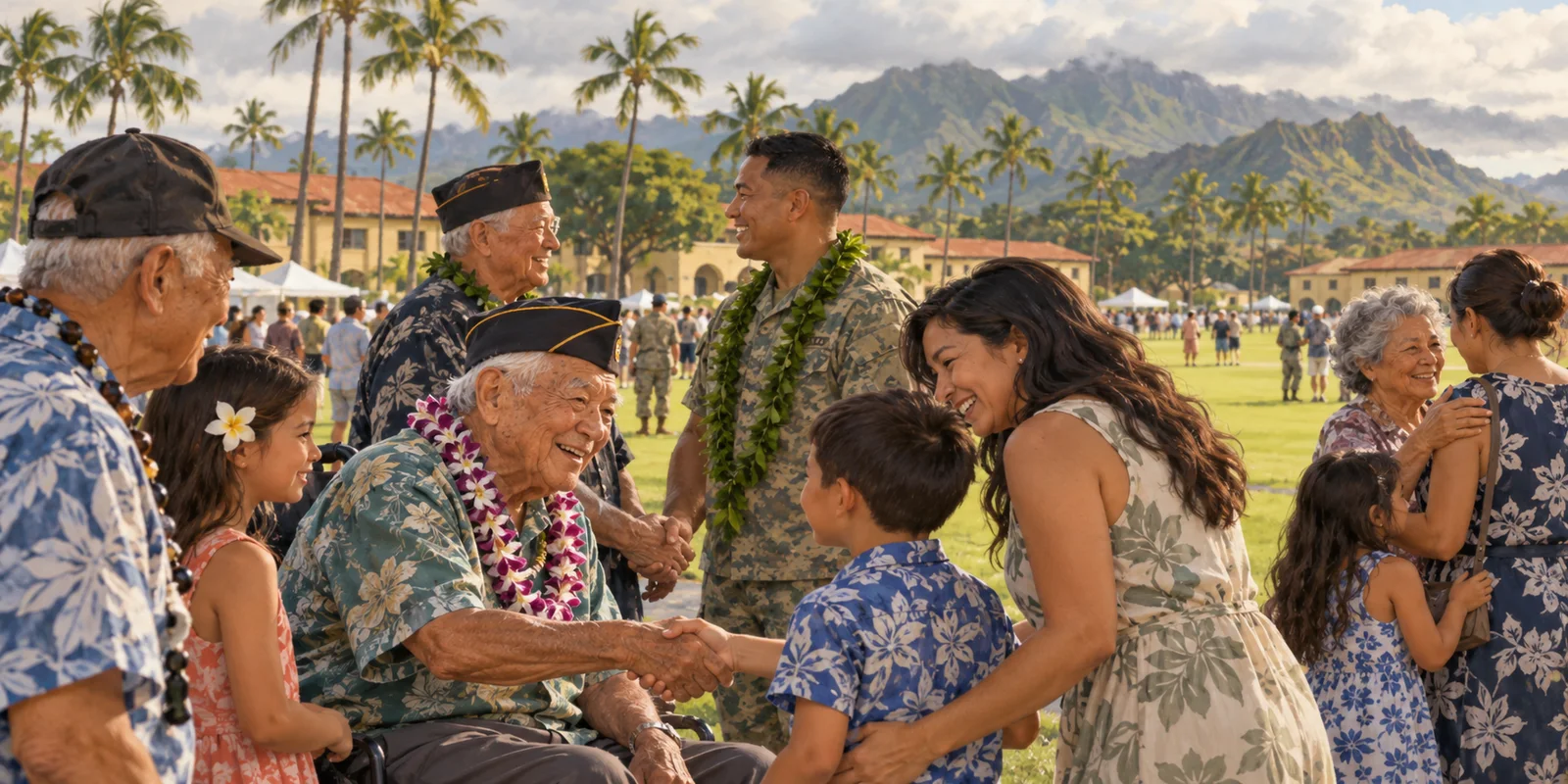
    Editorial illustration of veterans, families and younger service members greeting one another at a Hawaiian anniversary gathering
    Editorial illustration: generations meeting at a community celebration in Hawaii.

    The division began at Schofield Barracks on Oct. 1, 1941. For this year’s anniversary, the gathering moved between the historic post and nearby Wheeler Army Airfield, with a program designed to connect that history to the people who carry it forward.

    One of the day’s early moments was a team race: battalion groups pulled weighted sleds through rain-soaked grounds, and the 3rd Mobile Brigade, known as the Broncos, won the chance to lead the division on its morning run. Later, veterans and families explored displays of modern Army aircraft, including Black Hawks, a Chinook and an Apache, and spoke with the people who fly and maintain them.

    Editorial illustration of families and veterans viewing aircraft together at a Hawaiian airfield
    Editorial illustration: families and veterans share an afternoon aircraft display.

    A shared meal offered another way to bring generations together. Active-duty soldiers and veterans sat down for lunch at the division’s Sustainment Bistro, trading stories over the table. The day also included a memorial ceremony recognizing the people whose service shaped the division, and an evening social with music from the 25th Infantry Division Band and a performance by the Hui Ha‘a warrior chant team.

    The program’s most enduring thread was the connection between people who served at different times. Event planner Maj. Eric Anderson described meeting a veteran who had commanded the same company decades before him. That kind of encounter gave the anniversary its personal scale: a long history made tangible through conversation, shared meals and familiar places.

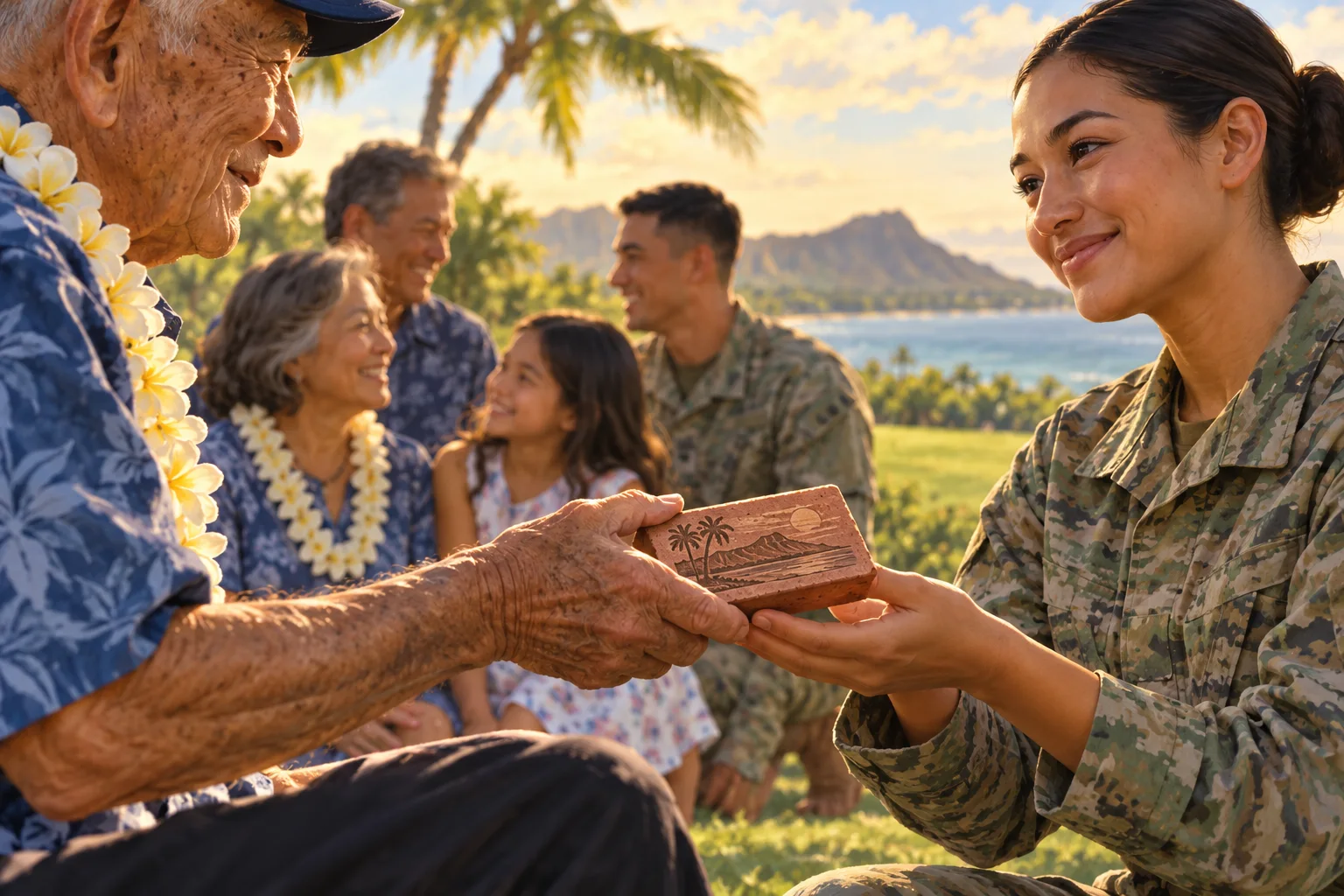
    Editorial illustration of an older veteran and a younger service member sharing a commemorative keepsake while families talk nearby
    Editorial illustration: a keepsake helps carry a story between generations.

    For an anniversary measured in decades, the celebration’s warmth came from the people in the room and on the field: families making the trip, veterans reconnecting with former units, community leaders recognized for local partnership, and younger service members meeting the generation before them.

    Reporting is based on the U.S. Army’s DVIDS account of the Oct. 1 anniversary program.

  • At Dale Hollow, a Day Camp Let Kids Try Fishing, Archery and Hatchery Work

    At Dale Hollow, a Day Camp Let Kids Try Fishing, Archery and Hatchery Work

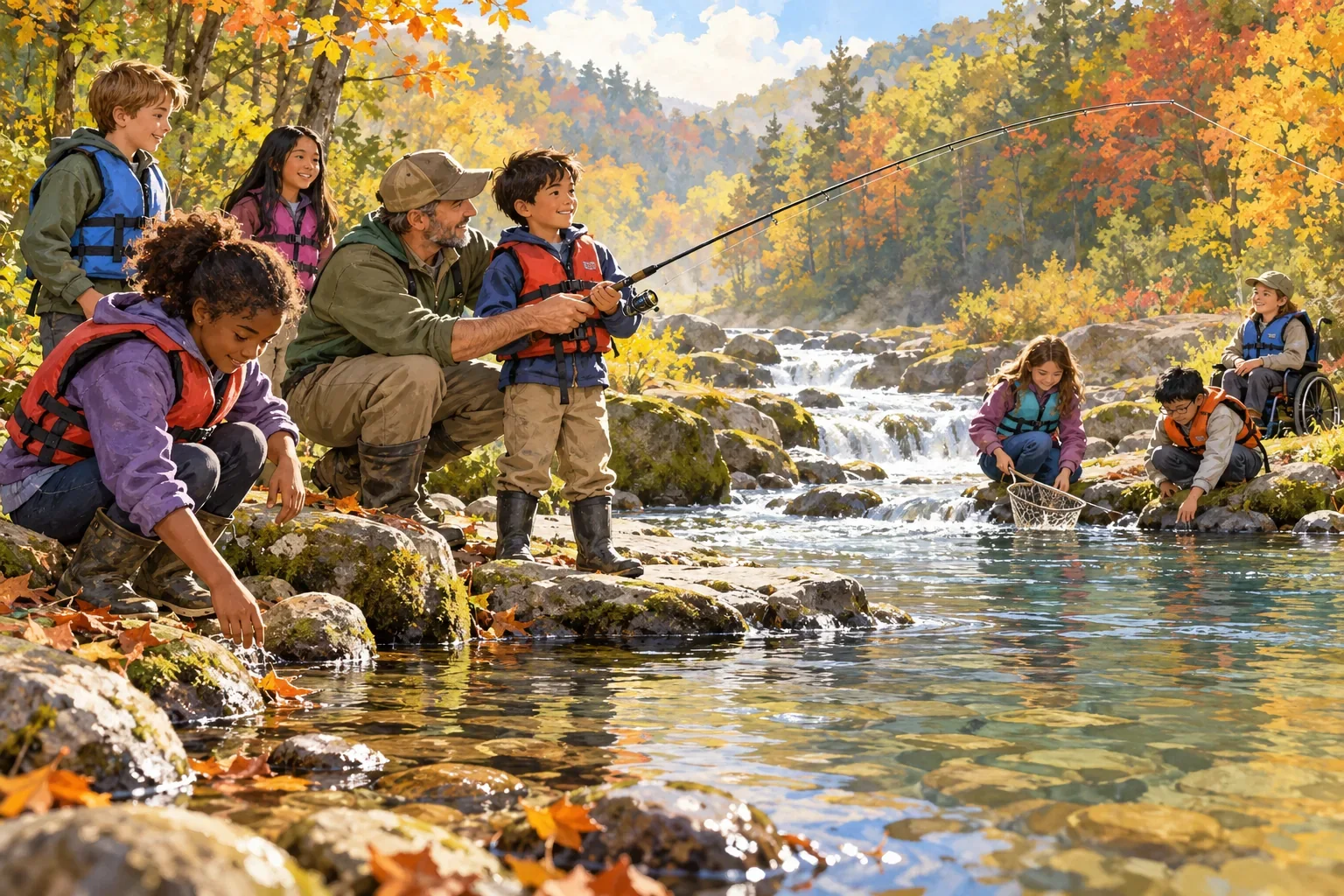
    Dale Hollow’s Wilderness Day Camp turned a September Saturday into a lively sampler of outdoor skills. At the 17th annual gathering, children ages 7 to 14 tried fishing, learned about bats, practiced water safety and met the trout raised at the local hatchery.

    The U.S. Fish and Wildlife Service reports that the camp ran from morning through mid-afternoon at Dale Hollow National Fish Hatchery in Celina, Tennessee. Staff, volunteers and partner organizations built the day around activities children could try with their own hands.

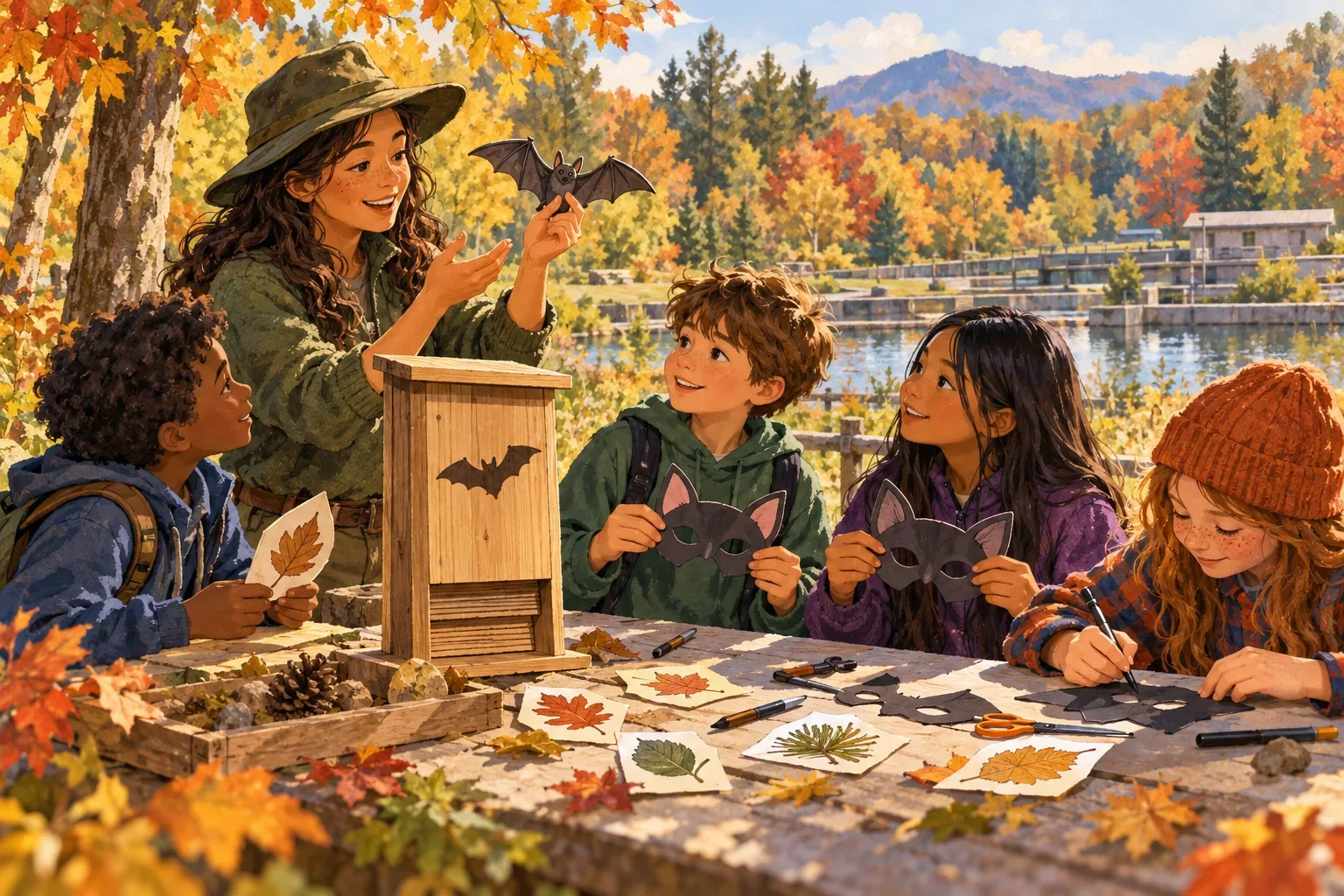
    Editorial illustration of children exploring a bat house and making nature-themed masks with an educator
    Editorial illustration: children explore bat habitats and make nature-themed crafts.

    Desmaray Brown of the U.S. Army Corps of Engineers led water and boating safety lessons, including a life-jacket relay. Children raced to put on their jackets, reach a marker and hand off to a teammate. A local bat enthusiast named Jason introduced the group to bat habitats and showed them how to make a bat house and choose a place for it.

    The campers also handled wildlife-identification materials, learned fishing and fly-fishing basics, and practiced archery and target-sport safety with the Tennessee Wildlife Resources Agency. Friends of Dale Hollow Lake provided lunch, and the Friends of Dale Hollow National Fish Hatchery helped make the day possible alongside hatchery staff and other community partners.

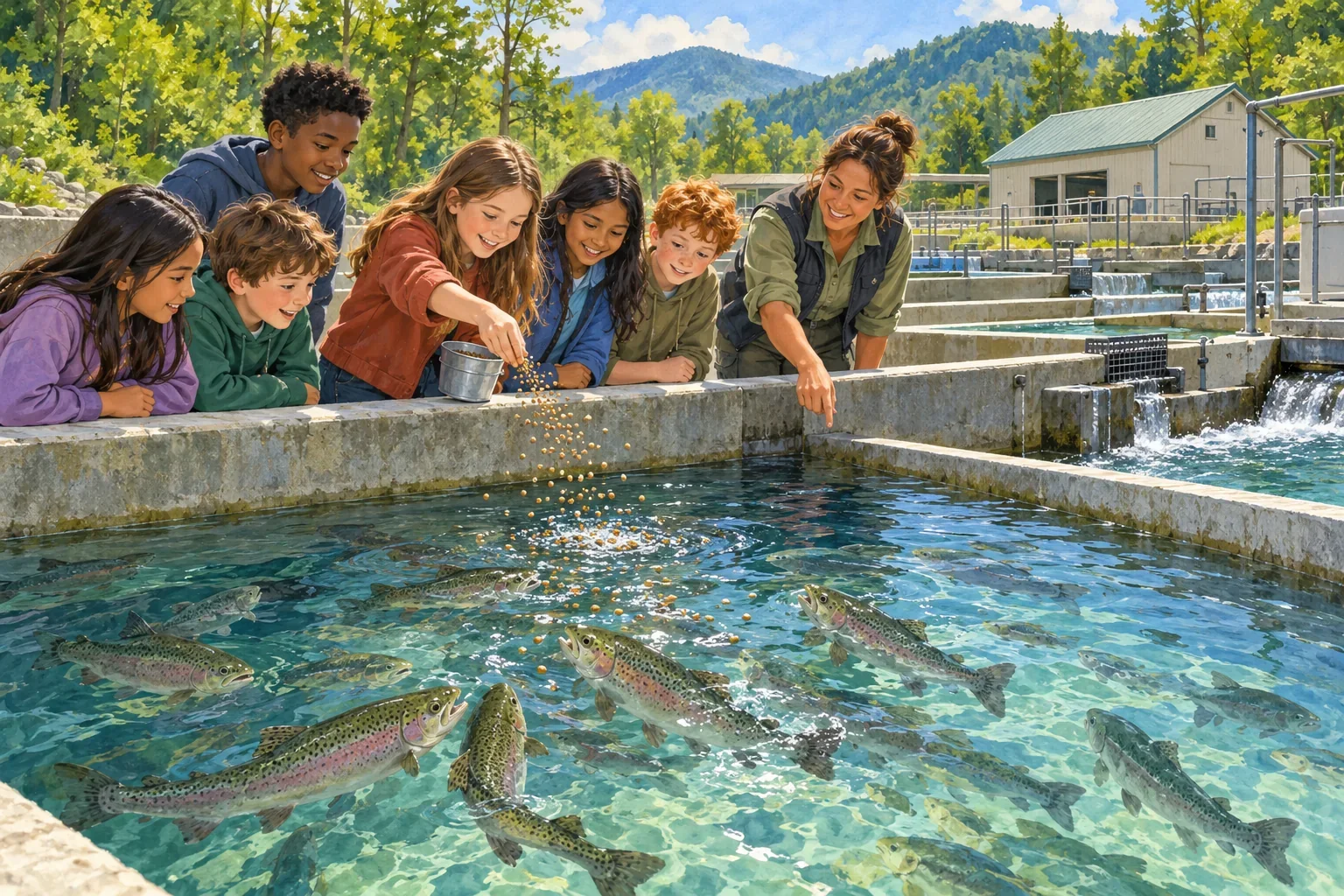
    Editorial illustration of children learning about rainbow trout at a fish hatchery raceway
    Editorial illustration: a hatchery tour brings children close to the trout they have been learning about.

    Fishing brought a memorable surprise: while the children tried their new skills in the stream, hatchery staff added 386 rainbow trout to the water. Tanner Harvey of Dale Hollow National Fish Hatchery made the release, and the young anglers caught and released fish of their own.

    Melissa Briggs, who works at the hatchery, led the closing tour. The children learned how trout grow from tiny sack fry to fish ready for release, then received feed to help nourish the hatchery fish.

    Paul Boyce, a local fly-fishing enthusiast and one of the camp’s founders, told the Service that the program began in 2009 as a tribute to Celina United Methodist Church minister Russell Cain, who founded the Hatchery Friends group in 2007. Today, the camp connects a new generation of young neighbors with fishing, wildlife and the people who care for Dale Hollow’s public waters.

    Source: U.S. Fish & Wildlife Service, “Wilderness Day Camp Delivered Nonstop Excitement,” Sept. 30, 2026.

  • Howling Homestead Brings Prairie Stories, Wildlife and Pumpkins to Beatrice

    Howling Homestead Brings Prairie Stories, Wildlife and Pumpkins to Beatrice

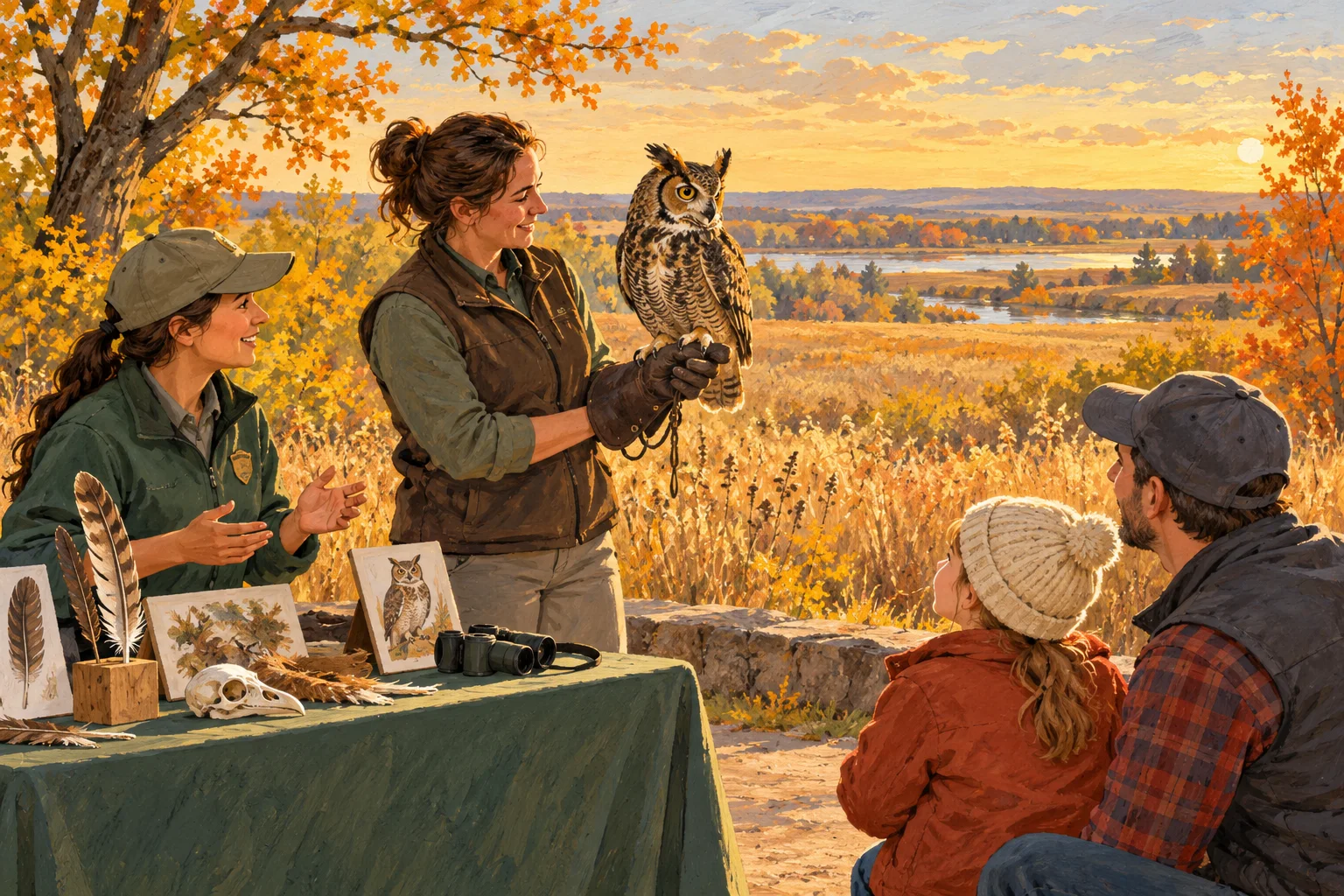
    Saturday evening in Beatrice, Nebraska, brings a prairie walk, local wildlife ambassadors and a pumpkin to carry home. Homestead National Historical Park’s free Howling Homestead begins at 4 p.m. on Oct. 24 at the Heritage Center, with activities designed for visitors of all ages.

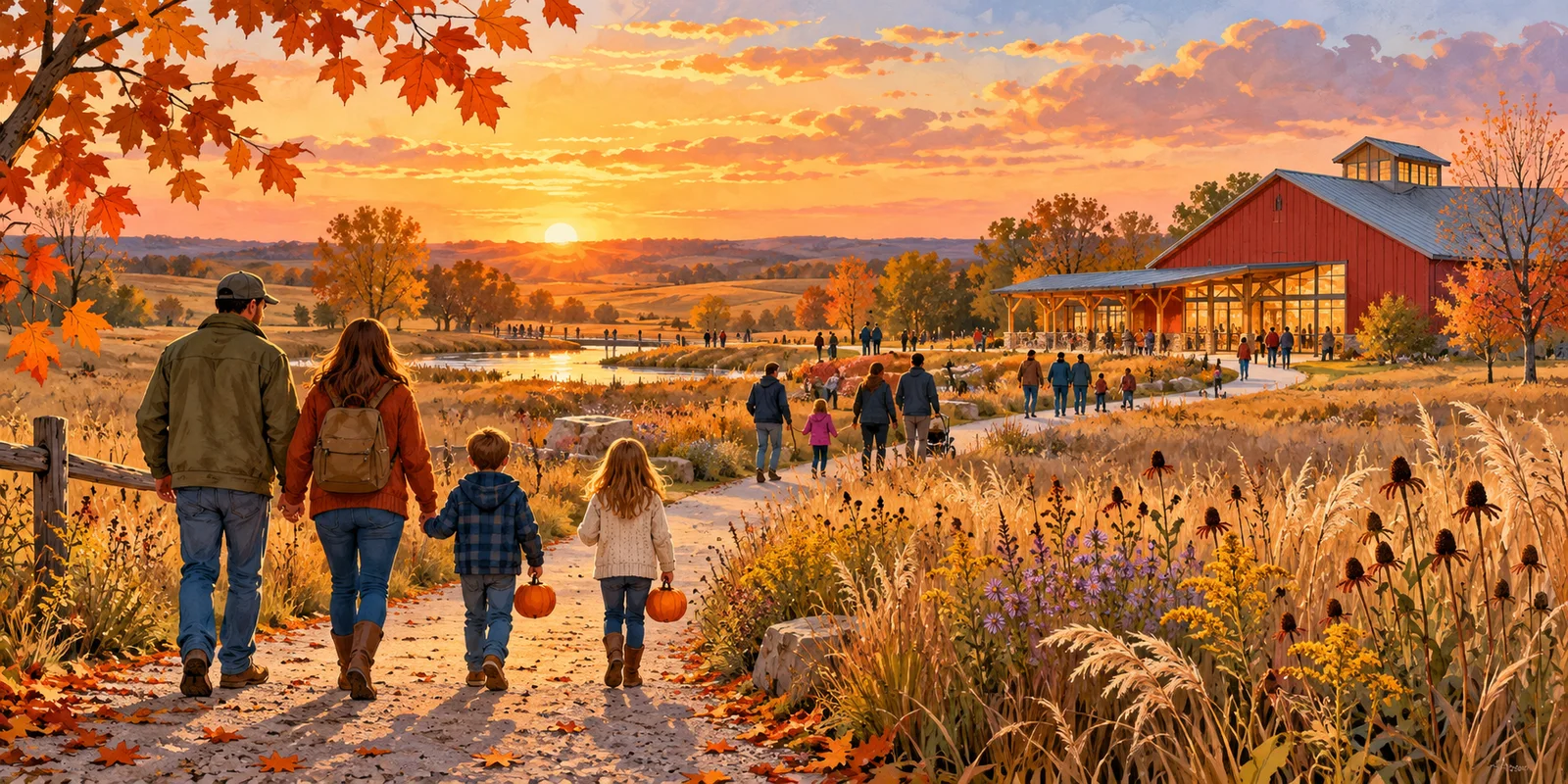
    Editorial illustration of families walking toward an autumn gathering at a prairie heritage center, with children carrying pumpkins.
    Editorial illustration: families arrive for an autumn evening on the prairie.

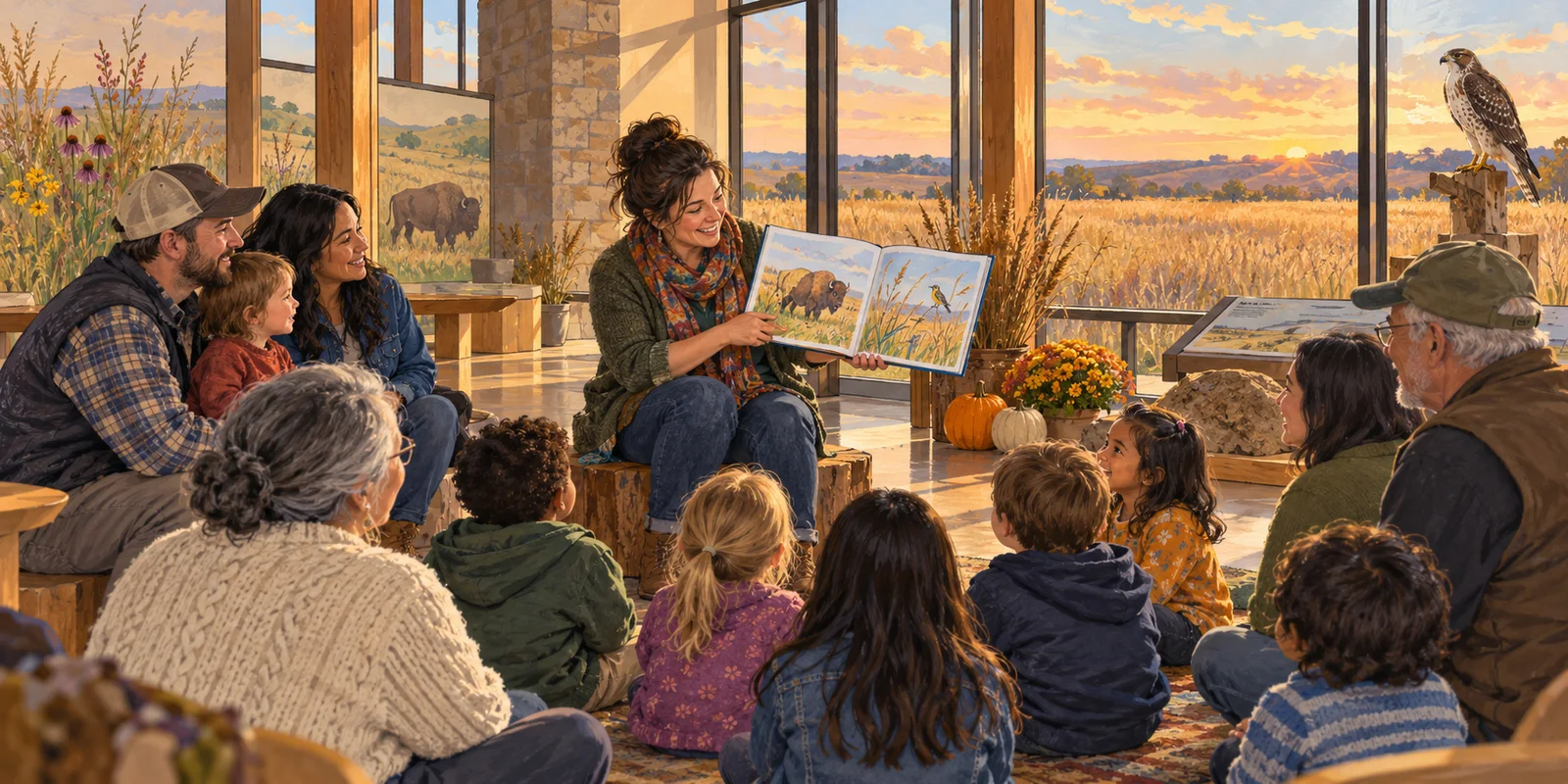
    The program brings together people and organizations from across the area. Storytellers from Odell Public Library will share tales, Nebraska Game and Parks will bring local animal ambassadors, and Raptor Recovery will present raptors. Visitors can also join a hike through the tallgrass prairie and enjoy science magic from a “mad scientist.”

    Local partners make the evening

    The Friends of Homestead, a nonprofit that supports the park, is providing a free pumpkin for each of the first 100 children. The group and America’s National Parks Store, the park bookstore, are funding the event. Hot apple cider and cookies will be available, adding a cozy pause between activities.

    Editorial illustration of a storyteller sharing a picture book with children and parents inside a prairie visitor center.
    Editorial illustration: a shared story brings families together.

    For families, the mix makes it easy to shape the visit around what interests them: a story, a hands-on science moment, a close look at local wildlife or fresh air on the prairie trail. The free, all-ages evening centers on learning, seasonal fun and time together.

    A fall evening in the tallgrass

    Homestead National Historical Park preserves the story of homesteading and the prairie landscape in southeastern Nebraska. Howling Homestead offers a lively way to explore that setting with community partners who bring books, wildlife education and outdoor discovery into one evening.

    Editorial illustration of a naturalist sharing a calm wildlife-learning moment with a child and parent at an autumn prairie event.
    Editorial illustration: a family meets a wildlife educator during a prairie outing.

    The National Park Service lists the event at the Heritage Center, beginning at 4 p.m. Saturday, Oct. 24. Check the park’s event announcement for the latest details before setting out.

  • Congaree’s 50th Anniversary Offers a Big-Tree Hike With John Cely

    Congaree’s 50th Anniversary Offers a Big-Tree Hike With John Cely

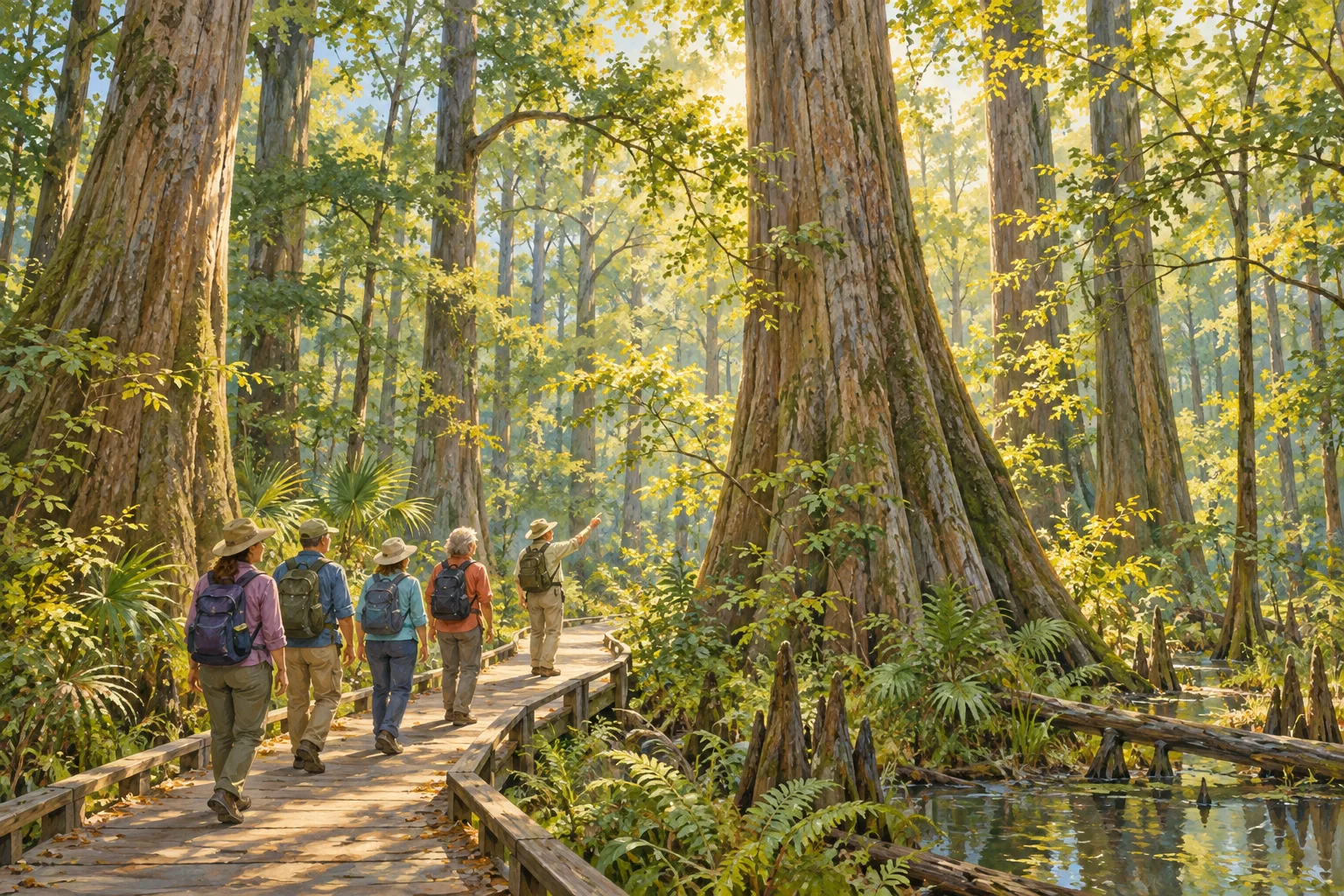
    Congaree National Park’s 50th-anniversary weekend puts the story of its preservation alongside the trees that inspired it. On Sunday, Oct. 18, park volunteer John Cely—one of the original advocates for protecting this South Carolina landscape—is scheduled to lead a guided hike to some of Congaree’s champion-sized trees.

    Visitors follow a volunteer naturalist along a boardwalk beneath Congaree’s tall hardwood trees.
    Editorial illustration: visitors explore Congaree’s old-growth forest on a guided hike.

    The free, approximately three-hour hike is set to begin at 9 a.m. at the Harry Hampton Visitor Center in Hopkins, South Carolina. The route may cover up to five miles off trail in designated wilderness. The National Park Service recommends sturdy closed-toe footwear and water; registration is required.

    A walk through the work of preservation

    Cely’s place on the anniversary schedule links today’s visitors with the community effort that helped protect Congaree. The National Park Service describes him as a park volunteer and an original advocate for preserving the landscape. He is scheduled to guide the group among the large trees and share why he and fellow advocates worked to save the floodplain forest.

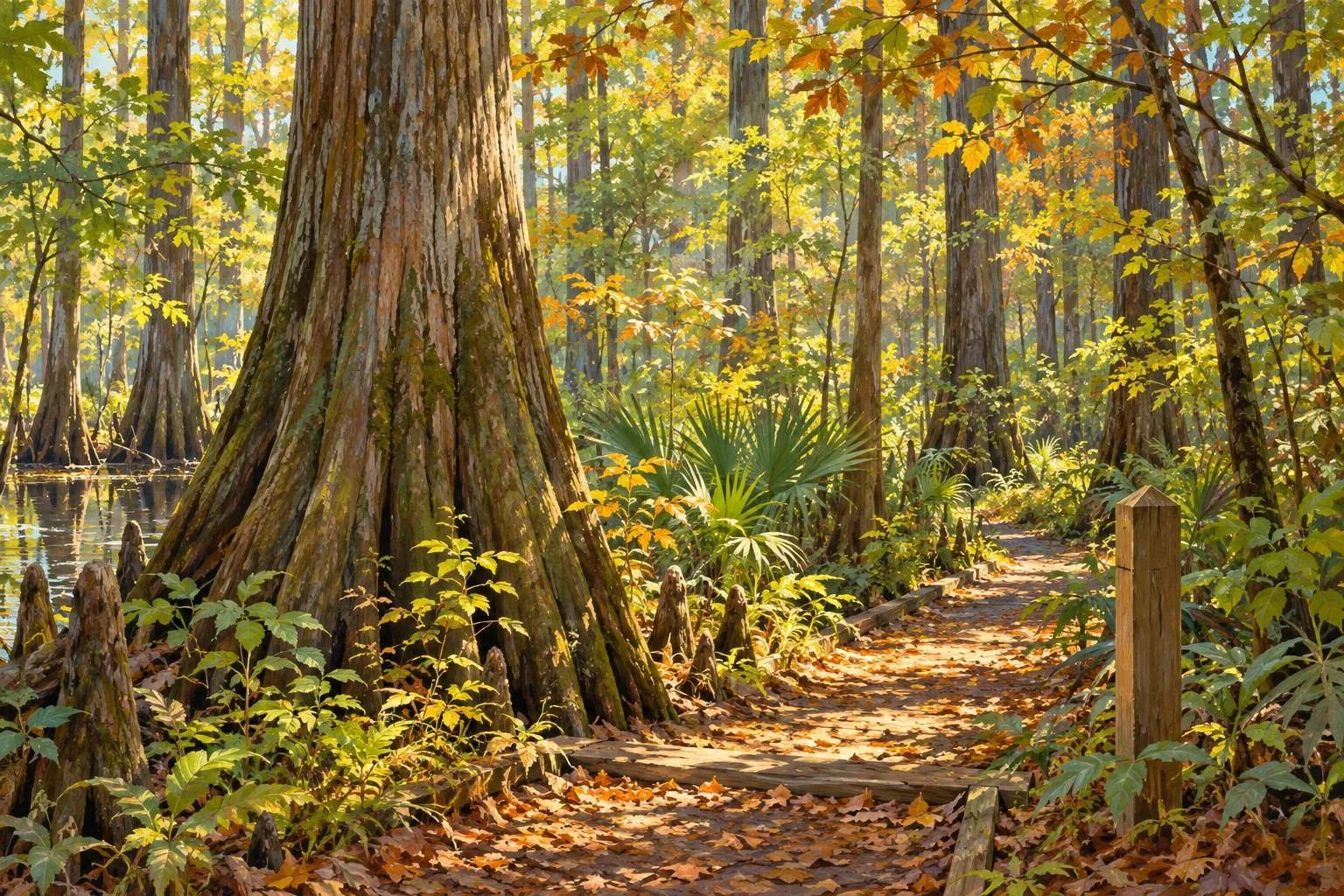
    Autumn light falls across a broad hardwood trunk and a boardwalk through Congaree’s forest.
    Editorial illustration: a boardwalk winds through Congaree’s sunlit forest.

    Earlier preservation efforts included newspaper editor Harry Hampton, who explored the floodplain and wrote in support of conserving it. In the 1970s, activists from South Carolina and across the country campaigned for federal protection. Congress established Congaree Swamp National Monument in 1976; the site became Congaree National Park in 2003.

    The park protects more than 26,000 acres of bottomland and upland forest. The National Park Service calls it the largest intact area of old-growth bottomland hardwood forest in the United States. Its anniversary program invites neighbors and visitors to connect the park’s living landscape with the people who helped preserve it.

    A volunteer naturalist points out a tall tree to visitors during a forest walk.
    Editorial illustration: a naturalist and visitors pause beneath a tall tree.

    Other Sunday programs include ranger talks about the park’s founding and history, a big-tree hike with Cely, and a commemorative ceremony at 12:15 p.m. in the visitor center auditorium. The park’s schedule lists the anniversary programs as free; the guided hike has its own registration requirement.

    For people gathering in Hopkins this weekend, the anniversary offers a close-up look at what a half-century of protection can preserve—and a chance to hear from a volunteer who helped make that future possible.

    Sources

  • A Bright Saturday of Discovery Is Waiting at Hot Springs National Park

    A Bright Saturday of Discovery Is Waiting at Hot Springs National Park

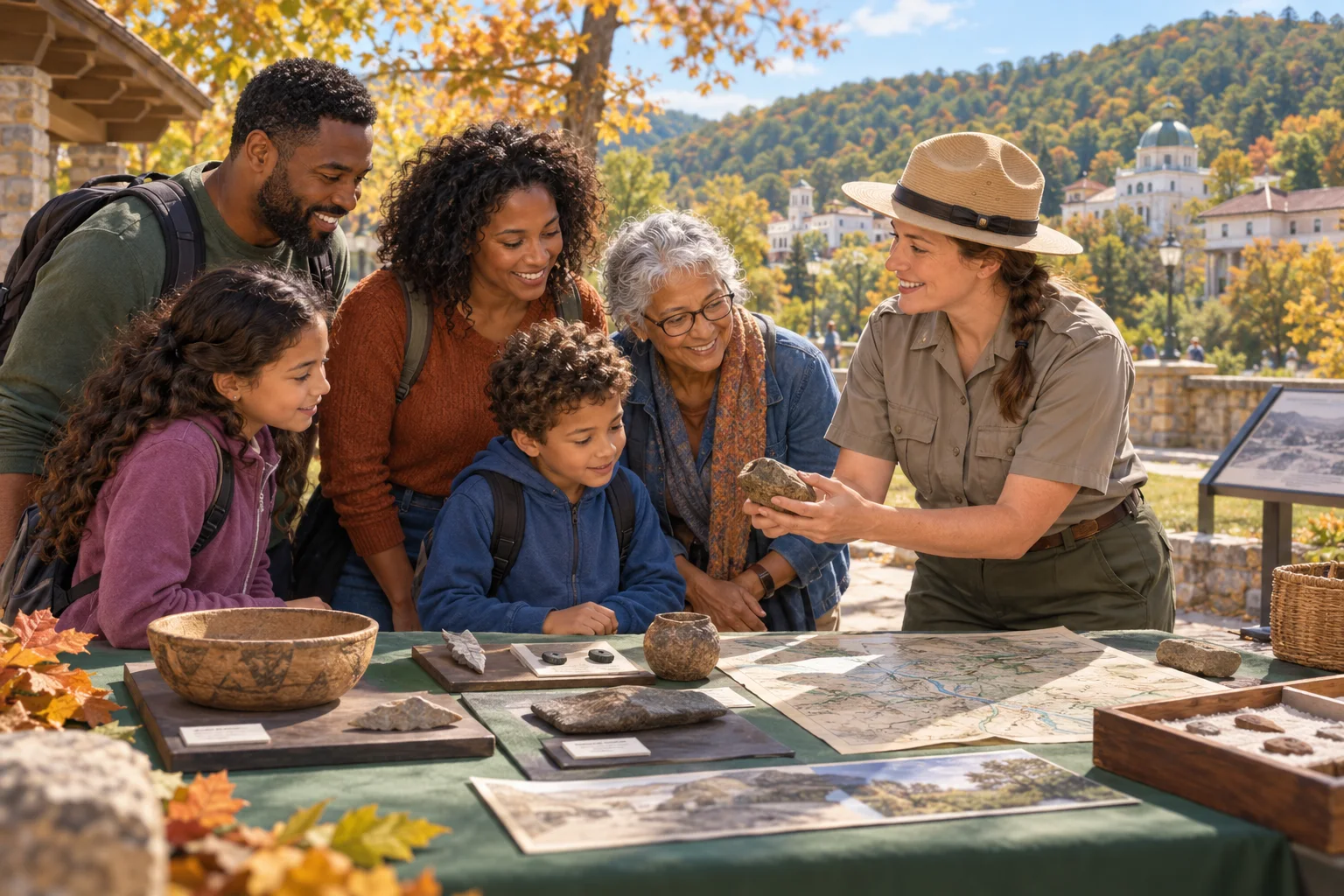
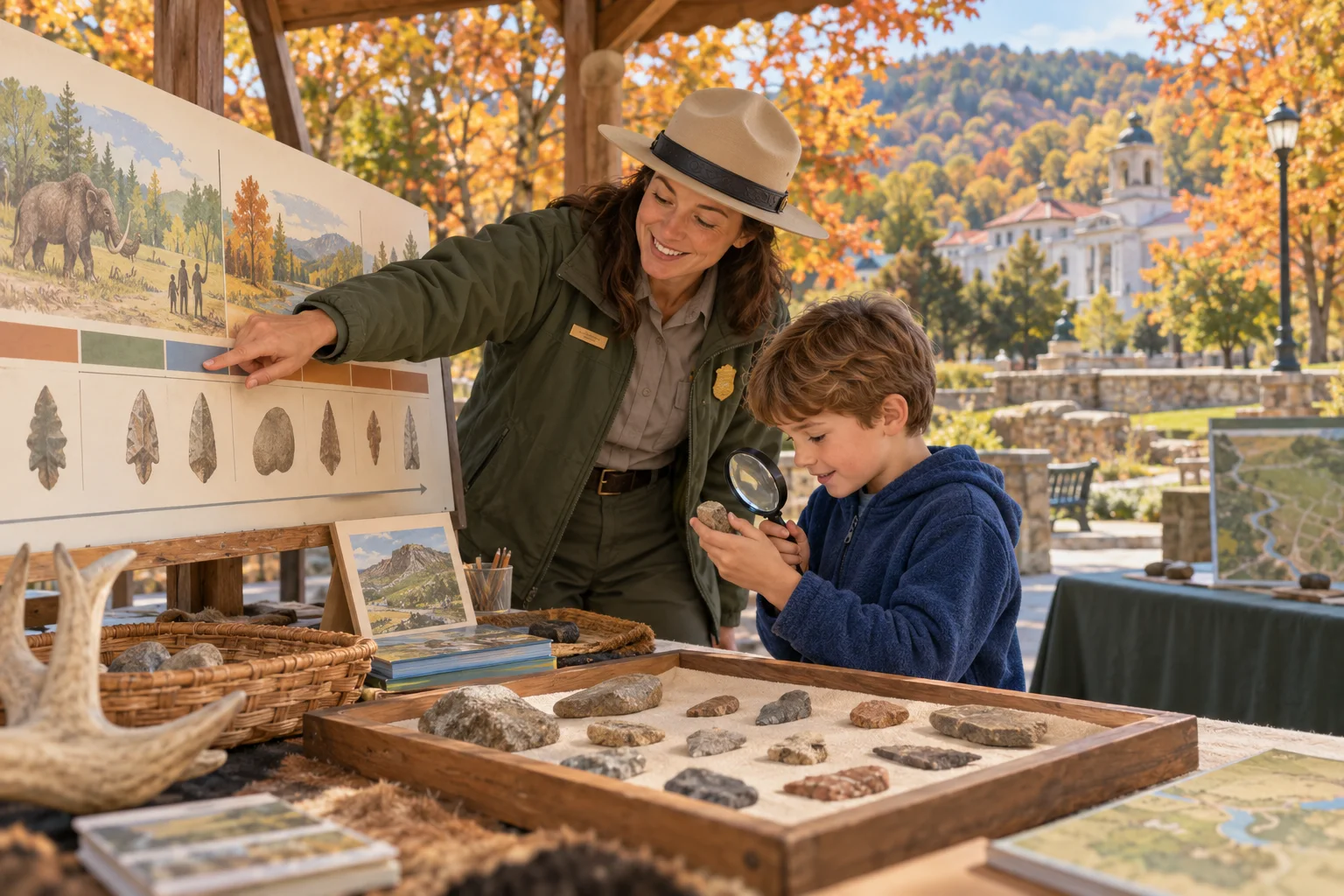
    Editorial illustration: Families explore a hands-on archeology display in a warm autumn park setting.

    A free Saturday of discovery is waiting in Hot Springs, Arkansas. On October 17, Hot Springs National Park will welcome neighbors and visitors to International Archeology Day, a four-hour gathering of rangers, guest archeologists, educational booths, games, and activities for all ages.

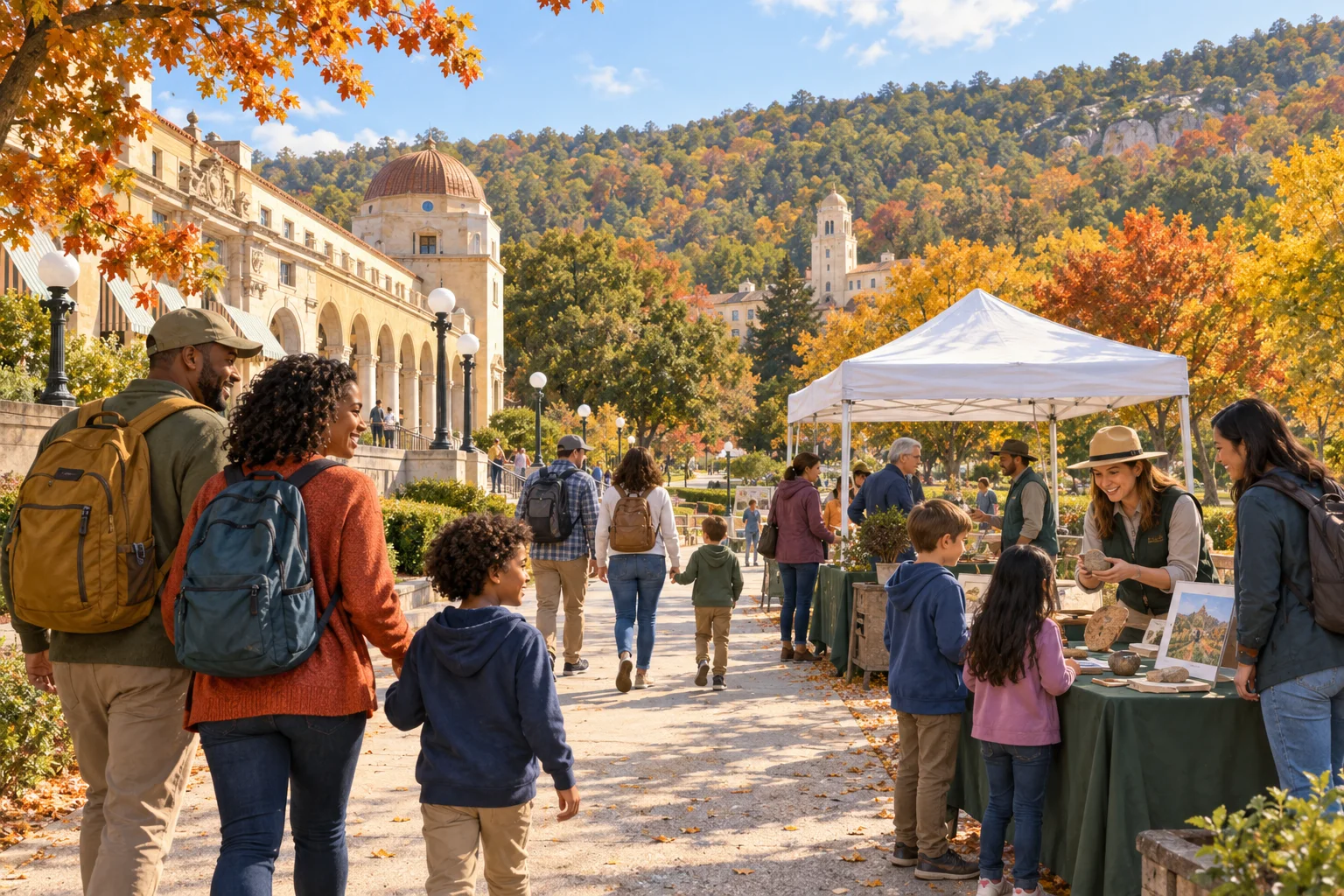
    The event runs from 10 a.m. to 2 p.m. at Arlington Lawn, 325 Central Avenue. The National Park Service lists the program as free and open to the public, making it an easy invitation for families, friends, and anyone with a curious streak.

    Editorial illustration of a park educator and young visitor exploring a hands-on archeology display under autumn trees.
    Editorial illustration

    A welcoming way to ask big questions

    Archeology often starts with a simple kind of wonder: who used this place, what did they leave behind, and what can careful study reveal? Saturday’s program brings that curiosity into a shared public space, where visitors can meet the people who interpret the park’s history and take part in hands-on learning.

    That local focus fits the setting. The park’s 2026 community-program calendar identifies Archeology Day as part of its yearlong America 250 programming and notes that Hot Springs will host educational booths and professional archeologists for Archeology Month.

    The day also offers a lovely reason to linger along Bathhouse Row. The National Park Service describes Hot Springs National Park as the nation’s oldest federal park and says its history connects medical science, veterans affairs, and environmental protection. Each conversation and activity can become a small doorway into those intertwined stories.

    Editorial illustration of families arriving at an outdoor community learning day near historic bathhouse architecture and autumn hills.
    Editorial illustration

    Plan a gentle community outing

    Bring a question, a friend, or a young explorer who loves to notice details. Arlington Lawn is the listed location, and the park’s event page confirms the program’s 10 a.m. start and four-hour duration. A quick look at the official event listing before leaving home will keep the plan current.

    For Smile.news, this is the kind of local joy worth circling on a calendar: people gathering outdoors, experts sharing what they know, and a familiar place offering fresh stories to discover together.

    Sources

  • Aransas Refuge Invites Neighbors to Plant Milkweed for Pollinators

    Aransas Refuge Invites Neighbors to Plant Milkweed for Pollinators

    At Aransas National Wildlife Refuge, Friday’s volunteer shift has a simple goal with a long reach: put milkweed into the ground and give monarch butterflies and other native pollinators more places to feed and breed.

    The U.S. Fish and Wildlife Service is inviting volunteers to a planting workday on Friday, Oct. 16, from 10 a.m. to noon. Participants will plant milkweed in several mulched zones in the refuge’s public-use area, with refuge staff providing guidance, tools and training. The activity is designed for volunteers of all experience levels.

    A morning of hands-on habitat care

    Milkweed gives monarchs a place to lay eggs and provides nectar for adult butterflies. The agency says the planting will also create breeding and nectar resources for other native pollinators. Small planting areas can contribute to that larger network of habitat.

    Volunteers will meet at the visitor center, 1 Wildlife Circle in Austwell, Texas. The refuge asks participants to wear sturdy, closed-toe shoes and dress for the weather. Bringing water, sunscreen and bug spray is recommended. Tools, personal protective equipment, snacks and cool drinks will be supplied with support from the Friends of Aransas National Wildlife Refuge.

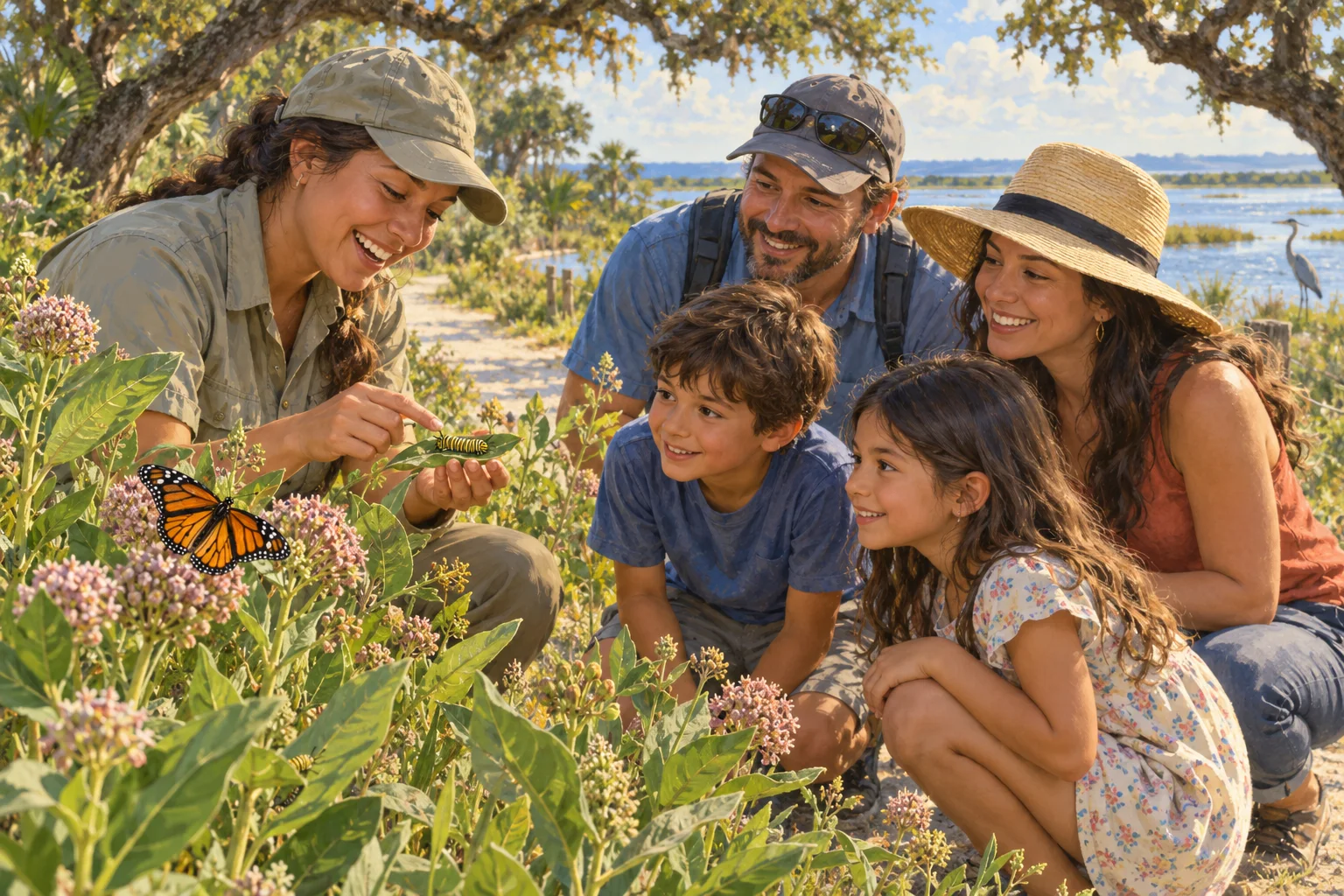
    Volunteers plant native milkweed at a coastal Texas refuge as monarch butterflies pass nearby.
    Editorial illustration: volunteers add milkweed to a coastal refuge garden.

    Neighbors helping pollinators thrive

    The planting pairs practical work with a chance to learn how native plants support wildlife. Refuge staff will guide the group through the activity, so a first-time gardener can take part alongside experienced volunteers.

    People under 18 must be accompanied by a parent or guardian, and anyone bringing a minor is asked to contact the refuge in advance. All participants will sign a volunteer service agreement. The event listing names Viv Atkinson as the contact for questions at 361-349-1299.

    A monarch butterfly rests on orange milkweed flowers in refuge habitat.
    Editorial illustration: milkweed supports monarchs and other pollinators.

    Aransas National Wildlife Refuge is known as the wintering home of the last wild flock of endangered whooping cranes. Friday’s workday focuses on pollinator habitat in the refuge’s public-use area, adding another way for visitors to contribute to the place they come to enjoy.

    Volunteers walk a coastal refuge trail after a native-plant workday, with wetlands in the distance.
    Editorial illustration: neighbors share a refuge walk after the morning’s planting.

    For the schedule, meeting location and participation details, see the Aransas National Wildlife Refuge volunteer opportunities.

  • Utah Refuge Interns Bring Junior Duck Stamp Art to 524 Students

    Utah Refuge Interns Bring Junior Duck Stamp Art to 524 Students

    BRIGHAM CITY, Utah — A drive to bring more Utah students into wildlife art began with a series of school visits. By the time the state’s 2026 Junior Duck Stamp contest closed, 524 students in kindergarten through 12th grade had submitted artwork—up from 78 the year before.

    Gabrielle Johnson, a visitor services specialist intern at Bear River Migratory Bird Refuge, was among the interns who carried the invitation from Brigham City to classrooms and community partners around the state. The students explored waterfowl and wetlands, then turned what they learned into original art.

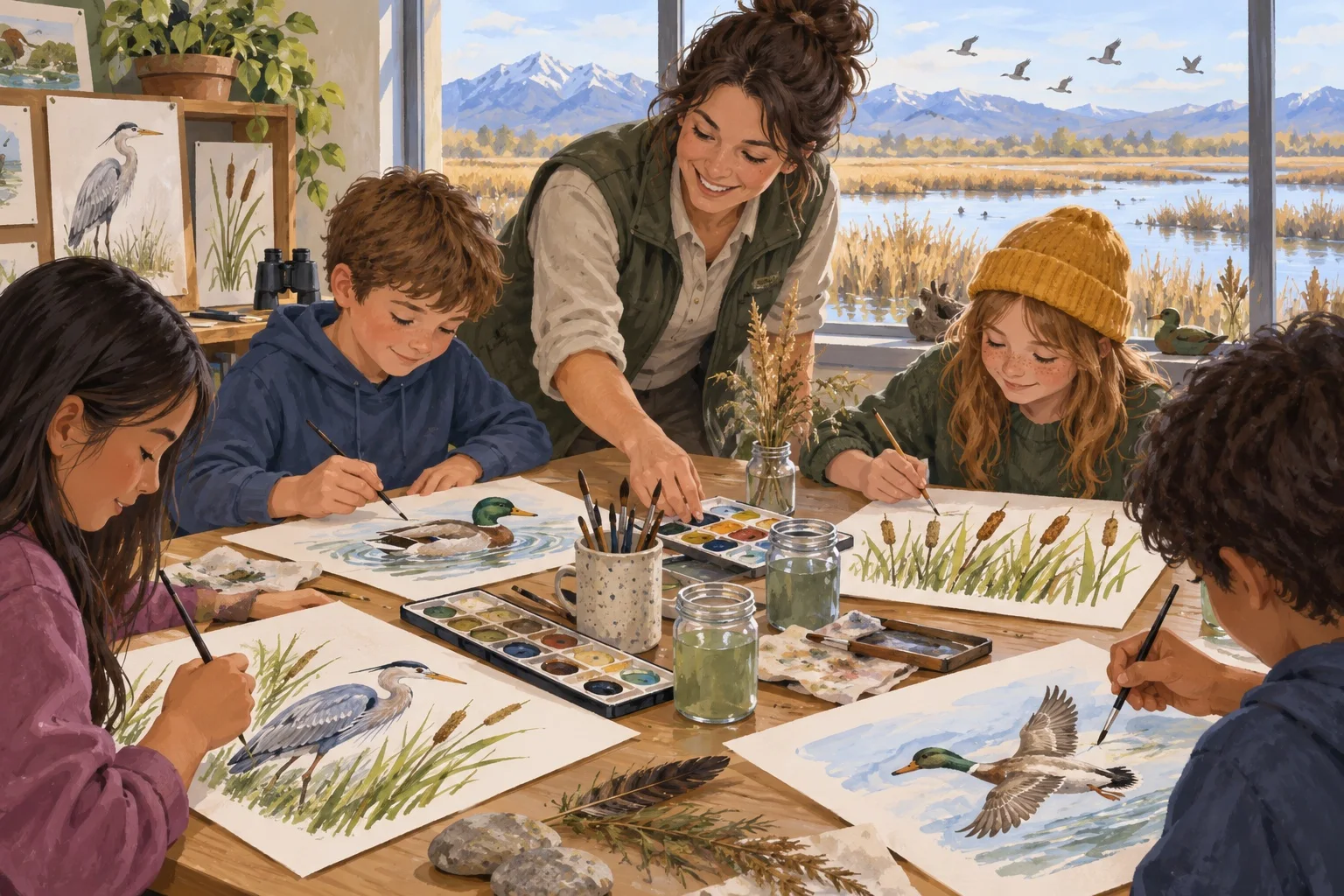
    Young artists paint ducks and wetland plants at a shared classroom table with an educator nearby.
    Editorial illustration: students bring waterfowl and wetland scenes to life with paint.

    A classroom invitation that traveled statewide

    Johnson and fellow refuge interns began contacting educators in September 2025, sharing contest resources and arranging school visits. They brought art supplies so students could take part, and teachers’ interest opened doors to new classrooms and partner organizations.

    The outreach widened between September and March, when the interns joined events at nature centers and other community sites. Partnerships with Utah State University and Southern Utah University also gave contest winners’ artwork places to be seen, connecting more visitors with the young artists behind it.

    Families view student waterfowl paintings inside a sunlit Utah wildlife refuge gallery.
    Editorial illustration: families explore student artwork at a wildlife refuge visitor center.

    For Johnson, the work reached beyond the contest. In June, she discussed the Junior Duck Stamp Program on Utah Public Radio’s “Wild About Utah,” extending the invitation to students and educators listening across the state.

    Art opens a path into conservation

    The U.S. Fish and Wildlife Service’s Junior Duck Stamp program pairs art with learning about waterfowl, wetlands, biology and wildlife management. Students explore the natural world, then share their understanding through an annual design contest.

    At Bear River, the rise from 78 entries to 524 gives the interns a clear measure of how far their classroom visits and new partnerships traveled. It also gives hundreds of young artists a place in a growing community of people who notice, learn about and care for wildlife.

    Read more about the Bear River refuge interns and Utah’s 2026 contest, or explore the Junior Duck Stamp art-and-science curriculum.

  • Two South Carolina School Friends Reunite at a Career Milestone

    Two South Carolina School Friends Reunite at a Career Milestone

    In 2007, Tessa Vandiver and Aubrey Sloan graduated from James F. Byrnes High School in South Carolina. Years later, their military careers brought them to the same North Carolina base—and to a reunion neither had expected.

    Editorial illustration of two friends sharing a lighthearted bowling game.
    Editorial illustration of former classmates reconnecting over a bowling game.

    Vandiver, now a first lieutenant and chaplain with the 4th Fighter Wing, had served in the Army before earning her commission through Officer Training School. Sloan, a technical sergeant and Air Force Reserve Command member assigned to the 414th Maintenance Squadron, followed a different route into the Air Force. Both eventually landed at Seymour Johnson Air Force Base in Goldsboro, North Carolina.

    After Vandiver reached out during Officer Training School, the classmates discovered they would be stationed at the same base. The familiar connection offered each of them a welcome point of contact as they settled into a new assignment. Sloan said having someone he already trusted gave him a person he could turn to with questions at work.

    Editorial illustration of two friends talking over coffee in a Carolina cafe.
    Editorial illustration of a supportive conversation between friends.

    Finding time to catch up took some patience. Lunch plans did not line up, so the friends eventually went bowling—and Vandiver won. Their friendship grew into a practical source of encouragement as they balanced busy military schedules and new responsibilities.

    When Sloan approached his final reenlistment before retirement, he invited Vandiver to stand with him at the ceremony. Their shared milestone linked the classmates they had been in South Carolina with the colleagues and friends they had become in North Carolina.

    Editorial illustration of two adult friends greeting each other at a career milestone.
    Editorial illustration celebrating a friendship carried into a new chapter.

    The reunion is a reminder of the lasting value of familiar people: a school friend can become a trusted colleague, a source of advice, and a companion for an important moment years later.

    Reporting is based on the U.S. Air Force 4th Fighter Wing account published through DVIDS.