Smile Across America is a warm drive through the real gatherings that give a place its lift. Tonight, that route stops in Saugus, Massachusetts, where a lawn at Saugus Iron Works National Historic Site is set to become an easygoing meeting place for neighbors, music and a summer evening outdoors.
The National Park Service and Saugus Public Library have scheduled the Ditto Band for the site’s free Summer Concert Series on Wednesday, July 29. The concert is planned for 6 p.m. on the upper lawn at 244 Central Street, weather permitting. The park asks visitors to bring a chair or blanket.
It is a small invitation with a generous shape: local musicians on the bill, a historic public place after regular daytime rhythms, and room for residents and visitors to settle in together. The National Park Service says the series is designed to celebrate Essex County musical talent and create evening opportunities for people to engage with the park.
Editorial illustration for a community summer concert gathering.
A Wednesday evening tradition
The Saugus series began July 1 and is scheduled to continue on Wednesdays through August 19. The library’s July newsletter also lists the Ditto Band for July 29, confirming the evening’s place on the eight-week lineup.
For a family looking for a low-key outing, the practical details are straightforward: there is no concert fee, the venue is Saugus Iron Works National Historic Site, and the performance is listed for two hours. Because the event is outdoors, checking the park’s update before heading over is sensible if the weather looks uncertain.
Editorial illustration of neighbors gathering for live local music.
The good part is being there
Not every bright community story needs a finish line or a grand announcement. Sometimes it is a weekly date, a lawn, a borrowed chair and a reason to stay out a little longer. In Saugus tonight, the plan is simply to make space for that.
Smile Across America is our warm minivan route through real communities and the small, practical ways people care for the places they share. We have not visited this event.
On Saturday morning, a Tennessee picnic area is on the itinerary for a hands-on reset. Great Smoky Mountains National Park has scheduled its Smokies Service Days “Checkup Chimneys” volunteer event for July 25, from 9 a.m. to noon at Chimneys Picnic Area.
Editorial illustration created by Smile News; it does not depict the event or its participants.
The work list is admirably concrete: replace picnic-table boards, collect fallen tree debris, clear grills, and remove litter left after the July 4 holiday. The park says the date was moved from July 11 because of weather.
A few hours, many useful details
There is something especially cheering about the scale of a morning like this. No grand promise is required—just neighbors and visitors putting a few things back in working order, one table and grill at a time. The National Park Service describes the event as open to all ages and free to attend.
Editorial illustration created by Smile News; it is not documentary photography.
Participation does require advance registration. Prospective volunteers are asked to contact the park’s volunteer coordinator, use “SMOKIES SERVICE DAYS” in the subject line, and include the date they want plus the number and ages of any youth volunteers. The park will send a confirmation if space is available, along with closer-to-the-date details.
A welcome waiting in the woods
By lunchtime, the payoff should be easy for the next family or group of friends to notice: a cleaner grill, a sturdier seat, a clearer corner of the picnic area. Those are humble improvements, but they are a kind of welcome—made by people who chose to leave a shared place more ready for the next person.
Editorial illustration created by Smile News; it is an imagined scene.
Families looking for a low-key reason to spend a Saturday morning outdoors have one coming up at Great Sand Dunes National Park & Preserve. The park will hold its annual Junior Ranger Day on Saturday, August 1, from 9 a.m. to 1 p.m.
The free event is designed around hands-on stations about the dunes, wildlife, fossils, and cultural artifacts. Children who complete every activity will receive small prizes, according to the National Park Service.
A morning built around curiosity
Junior Ranger programs work best when a family can follow a question wherever it leads: What made that track? How does sand move? What clues can a fossil leave behind? This one offers a simple way to try that kind of learning together, without needing to make the day feel like school.
Editorial illustration
The event will be held near the South Ramada Picnic Area. Visitors can park in the Dunes Parking Area and follow posted signs to the gathering spot. Friends of the Dunes, the park’s official nonprofit partner and citizen support group, is presenting the day with the park.
Make room for the small discoveries
There is something particularly generous about an event that gives children permission to slow down and look closely. A few hours with a field guide, a sandy trail, or a ranger’s prompt can turn a family outing into a shared story—one that may outlast the drive home.
Editorial illustration
For families planning to attend, the useful essentials are straightforward: arrive during the 9 a.m.–1 p.m. window, start at the Dunes Parking Area, and follow signs to the South Ramada. The National Park Service’s announcement has the latest event details.
At Salmen Scout Reservation Camp V-Bar in Hancock County, Mississippi, a practical repair project is helping keep a beloved outdoor place within reach. A joint team working through the Department of Defense’s Innovative Readiness Training program repaired roads, strengthened the Morning Glory Lake dam, and restored vehicle access across the camp, according to the Air Force Reserve Command.
Editorial illustration
The 1,400-acre reservation welcomes more than 3,000 young people and nearly 900 adult volunteers each year. That makes a dependable road network more than a convenience: it helps staff, service providers, and emergency vehicles reach camp and activity sites.
A repair with a long view
The work brought together more than 80 personnel from the Air Force Reserve Command, Air National Guard, and active-duty Navy with the Southeast Louisiana Council, Boy Scouts of America. The Air Force Reserve Command reports that the team repaired and resurfaced camp routes, rebuilt washed-out sections, raised the dam to meet the current flood plain, and installed a permanent siphon to replace a failing pipe.
Editorial illustration
The team was working with infrastructure that had weathered roughly five decades. Heavy rain complicated the job, but the project still restored access for emergency response and service vehicles to areas that had been difficult to reach, the command said. A final spillway repair will need specialized civilian engineering work.
Many hands, one camp
There is a satisfying local equation in the project: training hours for the people doing the work, useful repairs for the people who gather at the camp, and donated materials that stretch the result further. The command said the effort saved the Scout council more than $314,000 in labor costs, alongside more than $300,000 in donated limestone and riprap from a local supplier.
Editorial illustration
Camp V-Bar’s story began with a small act of kindness in 1924, when an unnamed Scout shared an umbrella with Fritz Salmen, who later donated the original camp land, according to the command. A century later, the project is another reminder that a lasting community place is cared for in practical ways: a repaired road, a stronger dam, and a route that stays open for the next group of young people and volunteers.
Fort Jackson’s July 4 celebration in South Carolina brought a broad mix of neighbors onto Hilton Field: families looking for an evening out, people trying the event for the first time, and a crowd gathered for music, food, a car show, a laser show and fireworks. The U.S. Army’s Fort Jackson Public Affairs Office reported that roughly 40,000 guests attended.
Editorial illustration of a summer community concert and fireworks.
The event’s small shared moments were as central as its big finale. The official report described the 282d Army Band playing several sets while visitors explored cars and Jeeps, chose from fair food and rode the Dixieland Express train. For Mike and Suzanne Beaulieu of nearby Lexington, it was their first Fort Jackson July 4 celebration. Mike told the public-affairs office that he and his wife wanted an outing that felt more lively than staying home for a cookout; he said he enjoyed the band and the sight of so many people celebrating together.
Editorial illustration of the family-friendly moments described in the event report.
That mix of familiar attractions and open invitation is what makes a local celebration travel well: there is room for a child’s train ride, a conversation with a neighbor and a song shared across a field. The evening closed with a fireworks display after the concert, according to the report.
Editorial illustration of a community concert closing with fireworks.
Smile Across America is our look at real, welcoming things happening in communities around the country. This is a preview based on the National Park Service announcement; Smile News has not attended the event.
On the next stop of our imaginary minivan map, the road runs north to Skagway, Alaska, where Klondike Gold Rush National Historical Park is inviting families to a free Junior Ranger Day on Thursday, July 30.
The park says the celebration will mix hands-on activities, live entertainment and a chance for visitors to earn a Junior Ranger badge. The plan includes performances by the Chilkat Dancers of Klukwan and Haines, a visit with live raptors from the American Bald Eagle Foundation, historic costumes, ice-cream making, an obstacle course and a live musical performance. The schedule also lists an appearance by Nuggets the Bear and a group Junior Ranger swearing-in ceremony.
Editorial illustration, created for Smile News. Editorial illustration.
A day built for curious visitors
For families, the appeal is less about checking off a list than having several easy ways to join in: meet park staff, try an activity, listen to music, watch a performance, or simply make a little room in the day for an Alaska history lesson with a side of ice cream.
The National Park Service says the Junior Ranger Activity Center in the historic Pantheon building at Broadway and Fourth Avenue will also be open. Visitors can explore hands-on exhibits, talk with rangers and work through a Junior Ranger book there.
Editorial illustration, created for Smile News. Editorial illustration.
Program Manager for Interpretation and Education Tyra Olstad said in the park’s announcement that Junior Rangers are among the park’s most enthusiastic visitors. The message behind the day is pleasantly simple: curiosity is welcome, and it is better with company.
What to know before heading over
The event is scheduled for Thursday, July 30, and the park says it is free and open to the public. A detailed schedule is expected to be available at the visitor center that day. Because event details can change, families should check the park’s official announcement before traveling.
Editorial illustration, created for Smile News. Editorial illustration.
Whether a young visitor comes away with a badge, a new question, or just a good story about the day, Skagway’s invitation is a generous one: show up, look closely and let a national park make room for play.
Smile Across America is a look at real places and gatherings around the country. This article is based on public program information; Smile News did not attend the event.
On Tuesday evening, a lobby near the Amtrak station in East Glacier Park, Montana, is scheduled to become a place for listening. Glacier National Park’s Native America Speaks program begins its summer run at Glacier Park Lodge at 7:30 p.m. The free, 45-minute gathering is listed as a weekly Tuesday program through September 8.
Its appeal is refreshingly direct: members of the Blackfeet Nation and the Confederated Salish and Kootenai Tribes share personal knowledge of their history and culture. That means the people with the relationship to this place get to set the terms of what visitors can learn, rather than having the story filtered through a generic park script.
A long-running invitation to listen
Glacier says Native America Speaks began in 1982 and is the National Park Service’s longest-running Indigenous speaker series. The park describes presentations at campgrounds, historic lodges and other locations, while the series’ schedule offers a simple way to make cultural learning part of a summer visit.
The lodge session is in the Glacier Park Lodge lobby, on Montana Highway 49 across from the East Glacier Park Amtrak station. The National Park Service lists it as free. Visitors should treat the posted time and location as the plan, and check the official listing before heading out in case a program detail changes.
Editorial illustration; not a depiction of Glacier Park Lodge, the program, or its presenters.
Why this is a Smile Across America stop
“Smile” can mean a small civic kindness: making room for people to speak for themselves and making time to hear them. This program creates that opening in a place many travelers already pass through. There is no claim here that every visitor will leave with the same experience. The encouraging part is more concrete: a recurring public program places tribal voices at the center of a conversation about Glacier’s history and living cultural connections.
The National Park Service notes that numerous Native American tribes used the area around and within what is now Glacier for hunting, fishing, ceremonies and gathering plants. Its visitor guidance encourages people visiting Glacier to hear from tribal members through Native America Speaks. That context matters: a good evening at a park is not just a scenic backdrop; it is an opportunity to listen with care.
How to show up thoughtfully
Arrive early enough to find the lodge lobby without interrupting the start.
Listen first. Do not assume a presenter is speaking for every Indigenous person or community.
Ask before photographing or recording, and follow any request about phones or participation.
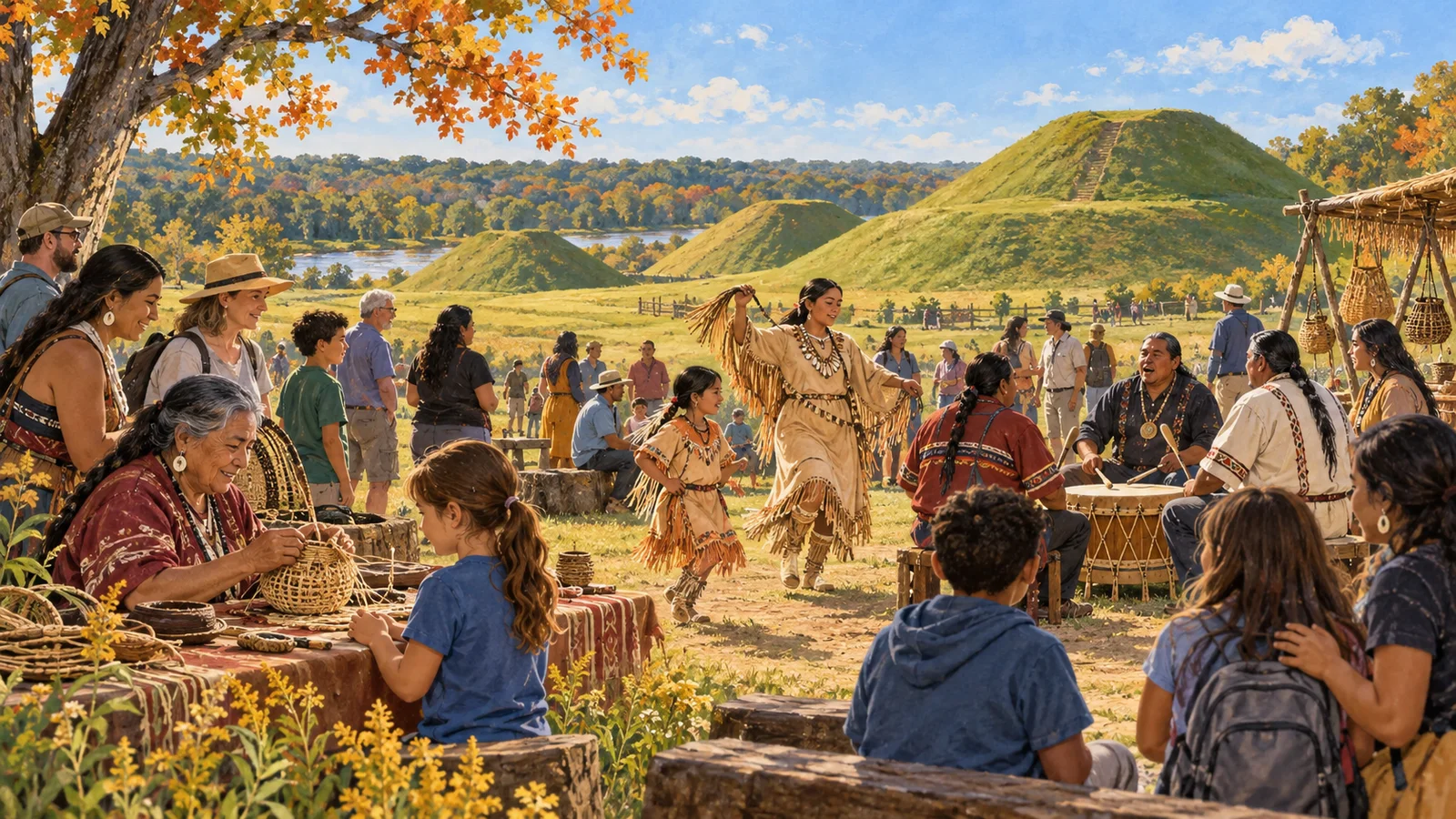
Editorial illustration; not a depiction of the event or its materials.
For anyone in East Glacier on July 21, the route is uncomplicated: a free evening program, a public lodge lobby and a chance to hear community members share knowledge in their own words. It is a modest plan, but a meaningful kind of welcome—one that begins by making room to listen.
Smile Across America is a series about real people and communities finding practical ways to make life a little brighter. This report is based on National Park Service announcements; the accompanying images are original editorial illustrations, not documentary photographs.
In west-central Illinois, a new $25,000 grant is set to make room for a simple but powerful kind of community work: people telling their own local history.
New Philadelphia National Historic Site has received support from the Jefferson National Parks Association’s BlueSky Opportunity Fund for an 18-month initiative called Our Past, Our Voices: Building Community through Citizen Storytelling at New Philadelphia. The National Park Service says the project will create Storytelling Stations that pair first-person historical vignettes with live, on-site and digital storytelling.
A history that belongs in many voices
New Philadelphia’s story has long been carried through records, oral histories, archaeology, descendants, and neighboring communities. The town was founded in 1836 by Free Frank McWorter, a formerly enslaved man; the National Park Service describes it as the first U.S. town platted and legally registered by an African American.
That background gives the new program a particularly human scale. Rather than treating history as something visitors only read on a sign, the plan is to invite community members into monthly workshops where they can learn to present local stories for national audiences. The grant will also support paid internships in historical research and interpretive narrative development with Illinois College, the University of Illinois Springfield, and the New Philadelphia Association.
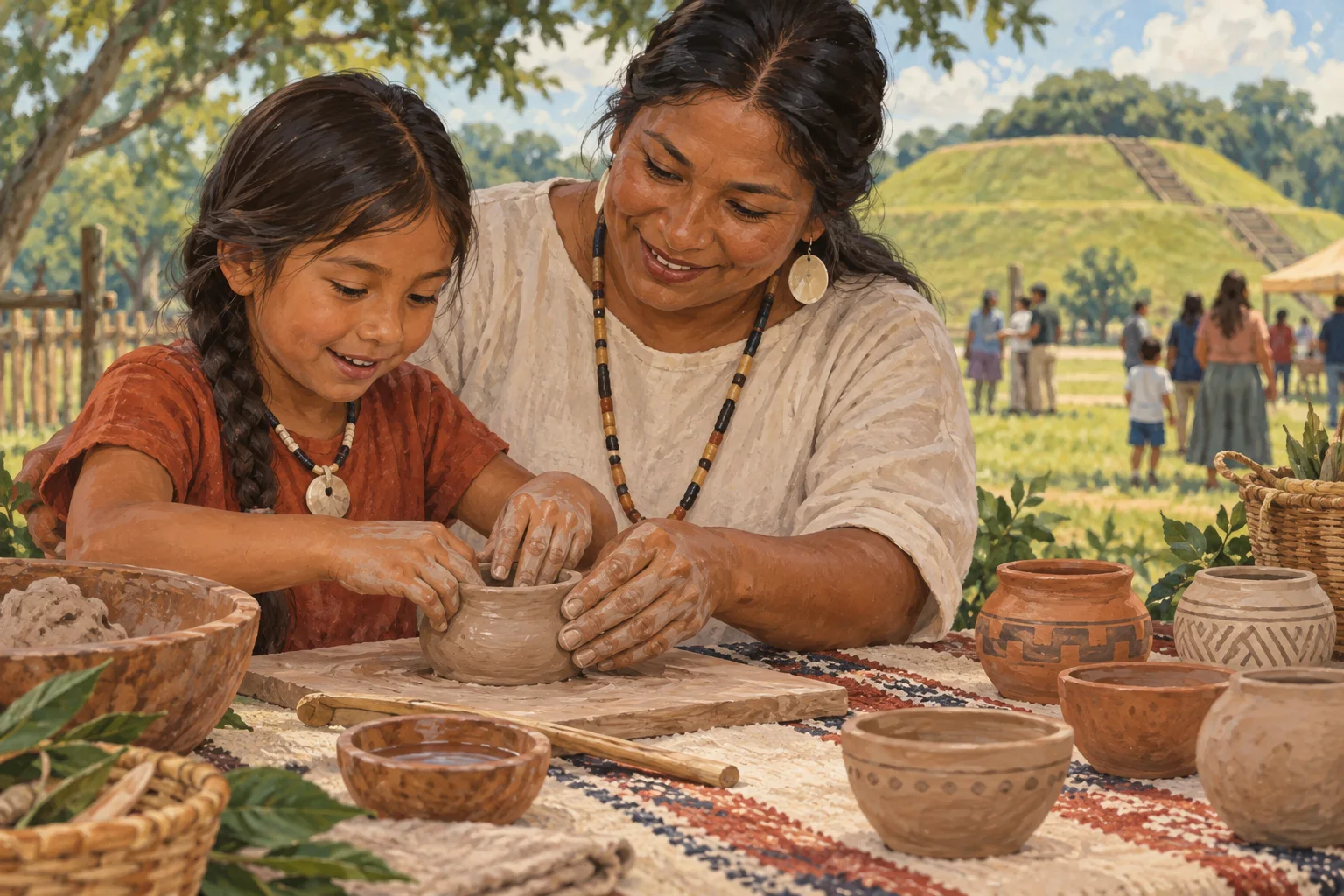
Editorial illustration; it does not depict an actual New Philadelphia workshop or participants.
Listening is part of the plan
There is no announcement yet of workshop dates or internship openings. The park says that information will be shared as the project develops. That is worth stating plainly: these are plans now, not programs the public can already attend.
Still, the project offers a hopeful model. It connects historical research with the people who know a region, care for its memory, and want to pass it along. In a place whose legacy has been sustained by generations of people refusing to let it disappear, training new citizen storytellers is less a handoff than an invitation.
Park superintendent Chris Collins said the project will strengthen the site’s ability to share New Philadelphia’s stories and that the park looks forward to working with students and community members. For readers following along from elsewhere, the small joy is in the premise: a national historic site is making space for local voices to be heard.
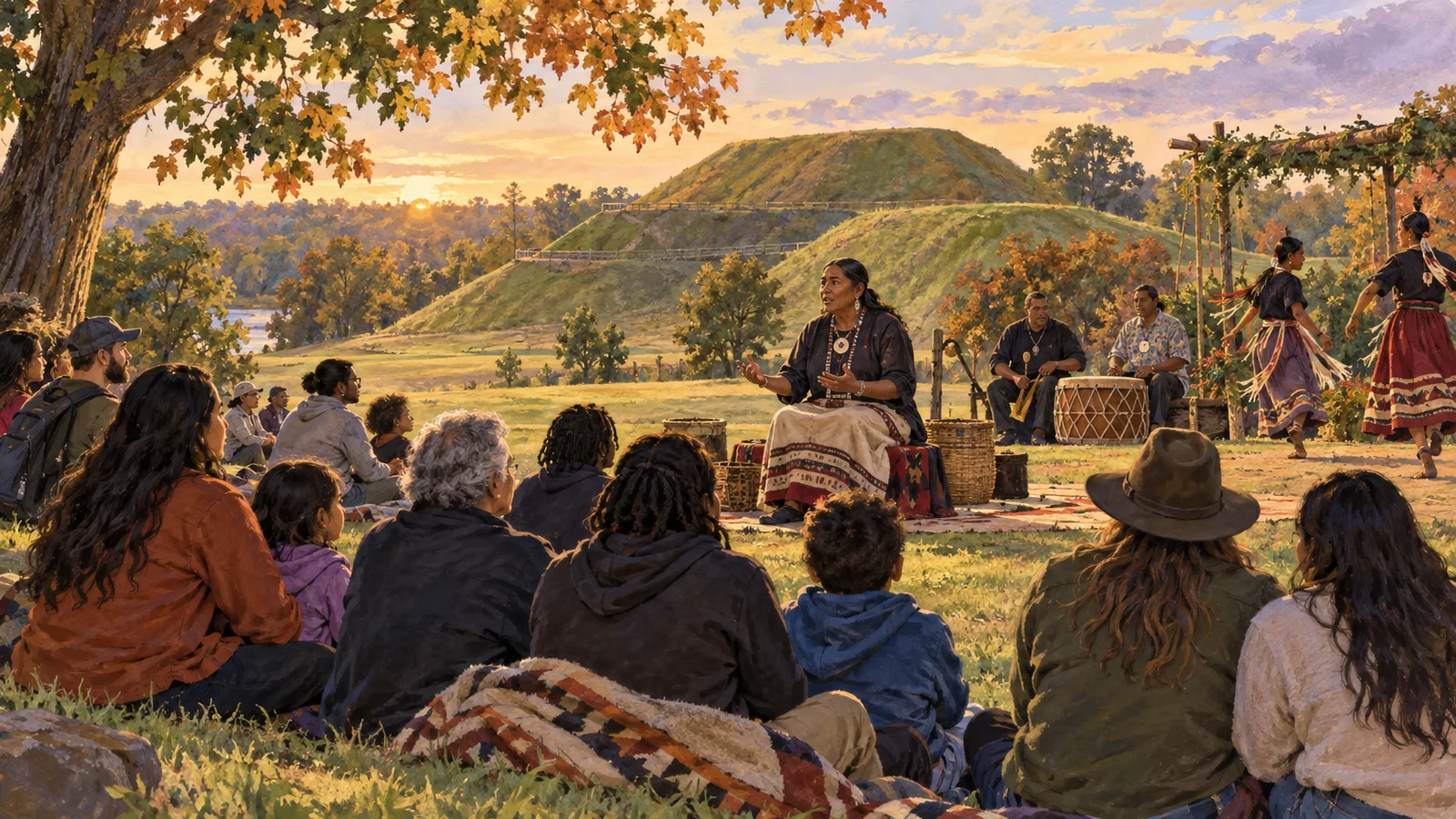
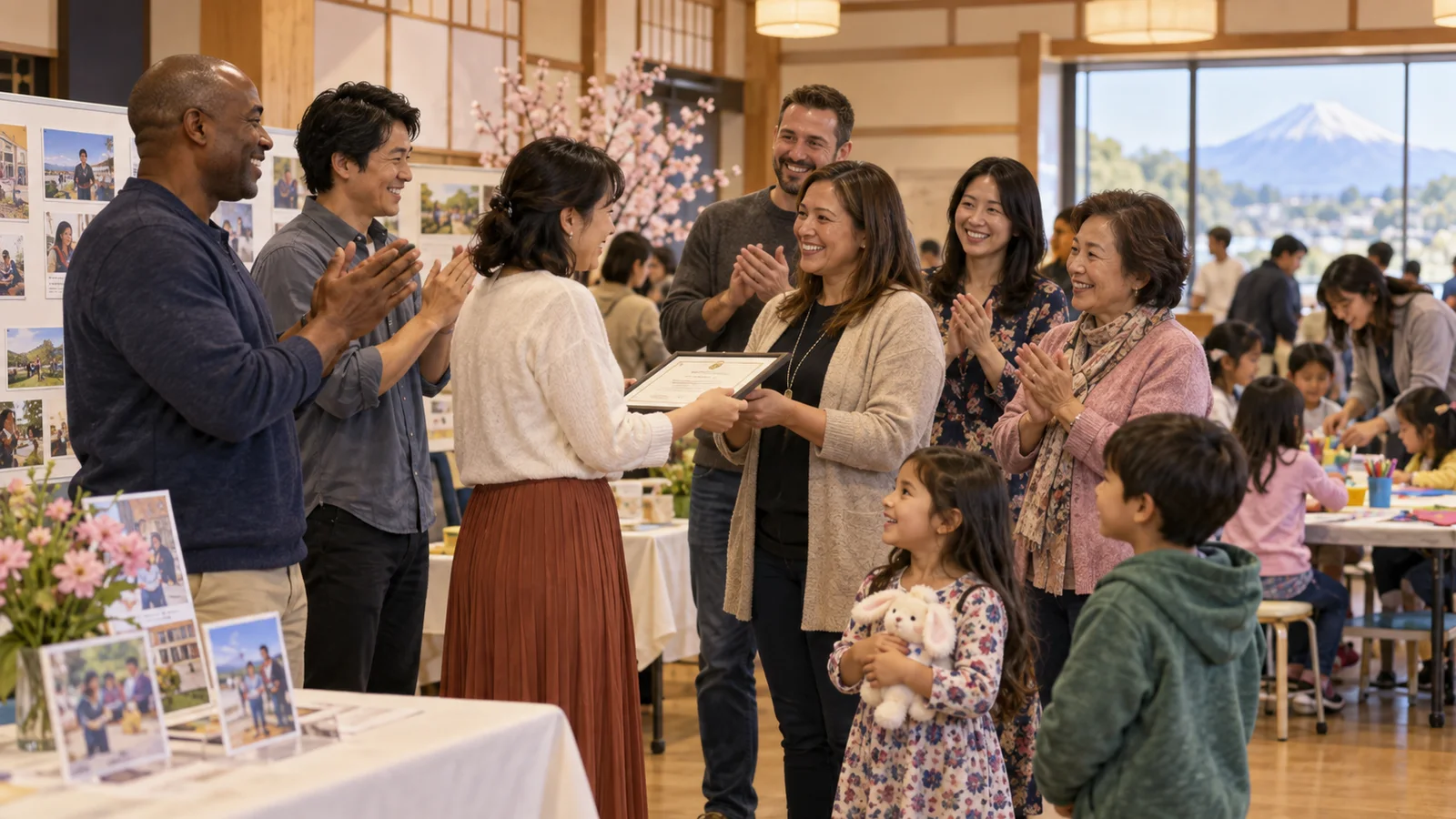
Editorial illustration of the kind of welcoming public storytelling space described in the story; it is not an image of a planned or existing installation.
Smile Across America is a place-led series about verified acts of care and community across the United States. This article is based on National Park Service information; Smile News did not attend Yosemite’s event.
A small July volunteer job at Yosemite National Park carries a thoughtful purpose: pick apples before the fruit becomes an easy snack near busy visitor areas.
The National Park Service scheduled its 2026 Apple Picking Day for July 15 in Yosemite Valley. The agency says the valley’s historic apple orchards can attract bears to non-native food, raising the chance of bear–visitor conflicts in nearby parking areas and campgrounds. Volunteers are invited to harvest the apples, helping remove that temptation.
Editorial illustration, generated for Smile News. It is not a documentary image of Yosemite’s event.
A practical kind of welcome
It is an especially approachable picture of stewardship: a few hours outside, a crate filling up with fruit, and a park made a little less likely to put people and wildlife in the same uncomfortable place. The work is not about feeding bears or getting close to them. It is about reducing an attractant before a bear has a reason to investigate a parking lot or campground.
That distinction matters. The Park Service’s description points to a simple chain of cause and effect: apples ripen in historic orchards, bears are drawn to a calorie-rich non-native food source, and removing the fruit can lower the pull around areas where people are concentrated. The volunteer task is modest, but the aim is shared space with fewer risky surprises.
Editorial illustration, generated for Smile News. It does not depict a specific volunteer.
One local tradition, many hands
Yosemite lists Apple Picking Day alongside other drop-in volunteer opportunities, including seasonal litter cleanups and larger public-service events. For this particular day, the invitation is intentionally direct: come help take ripe apples out of the landscape that bears and people share.
That makes the event feel like a tiny road-trip lesson from the valley. A volunteer does not need to solve every conservation challenge to take part in a useful one. Sometimes care looks like carrying a crate, working under an old fruit tree and leaving a familiar place a little easier for both its human visitors and its wild residents to navigate.
Editorial illustration, generated for Smile News. It is a general visual interpretation, not a record of the event.
What to take from it
For anyone looking for a hopeful, concrete way to think about public lands, Yosemite’s apple-picking tradition offers one: good outcomes often begin with an ordinary task done together. The volunteers are not asked to manufacture a dramatic moment. They are asked to help make room.
For current volunteer opportunities and event details, check Yosemite National Park’s drop-in volunteering and special events page before making plans. Dates and requirements can change.
Brookfield Zoo Chicago has a second tiny reason to celebrate this year: a female white-bellied pangolin pup who has already begun nursing consistently, exploring her nest box and taking rides on her mother’s tail.
The pup was born June 8 to 11-year-old Virginia, the zoo announced on July 14. She is the zoo’s second pangopup of 2026. A male pup born to Rosy in February has moved on to another milestone—starting to wean and eat solid food.
Both young pangolins remain behind the scenes while their care teams monitor them. That means the public update offers a small, welcome window into their progress without turning a sensitive early stage into a spectacle.
A tail ride and a decade of careful work
For a young white-bellied pangolin, riding on mom’s tail is not just an irresistible image. It is a natural way for a pup to travel with its mother. In the new arrival’s case, the behavior joins a practical list of encouraging observations: regular nursing and independent exploration of the nest box.
Original Smile.news editorial illustration of a young white-bellied pangolin exploring a sheltered space; it does not depict the Brookfield Zoo pup.
The birth also lands in a milestone year for Brookfield’s pangolin program. The zoo says it has welcomed 11 pangolin births over 10 years while building knowledge about nutrition, veterinary medicine, reproductive biology and newborn care. Those are unusually important areas of study for a secretive, nocturnal animal that can be difficult to observe in the wild.
“Every pangolin birth is a special moment,” Racquel Ardisana, the zoo’s associate director of carnivore and small mammal care and conservation, said in the announcement. She called two births in one year an extraordinary milestone and credited a decade of work by the animal care team.
What visitors can—and cannot—see
The two pups are not currently on public view. Visitors can instead look for Kara, an adult white-bellied pangolin in Habitat Africa! The Forest. Brookfield says Kara is the only pangolin currently displayed in a North American habitat, and suggests checking around feeding times or watching carefully among the exhibit’s hiding spaces.
White-bellied pangolins are native to forests in Central and West Africa. Their overlapping scales provide a remarkable defense: when threatened, a pangolin can curl into a tight ball. The IUCN SSC Pangolin Specialist Group classifies the white-bellied pangolin as endangered and says all eight pangolin species are threatened with extinction.
Original Smile.news editorial illustration showing a pangolin’s protective curled posture; it is a general species scene, not documentary evidence.
That larger conservation picture gives the happy update some weight, but it does not need to eclipse the good news. The story here is about steady progress: one pup nursing and venturing around her nest, another learning to eat solid food, and a care team turning years of patient observation into information that can help the species.
Two small arrivals, one shared conservation effort
Brookfield leads the Association of Zoos and Aquariums’ SAFE Pangolin program, established in December 2025. According to the AZA, the program brings accredited institutions and field partners together to share data, care practices and conservation strategies across all eight pangolin species.
The new pup may be small enough to hitch a ride, but her update reflects a wide circle of work—animal care specialists watching daily milestones, researchers learning from rare observations and conservation partners sharing what they discover.
For now, the best news is also the simplest: Virginia’s pup is nursing, exploring and holding on for the ride.