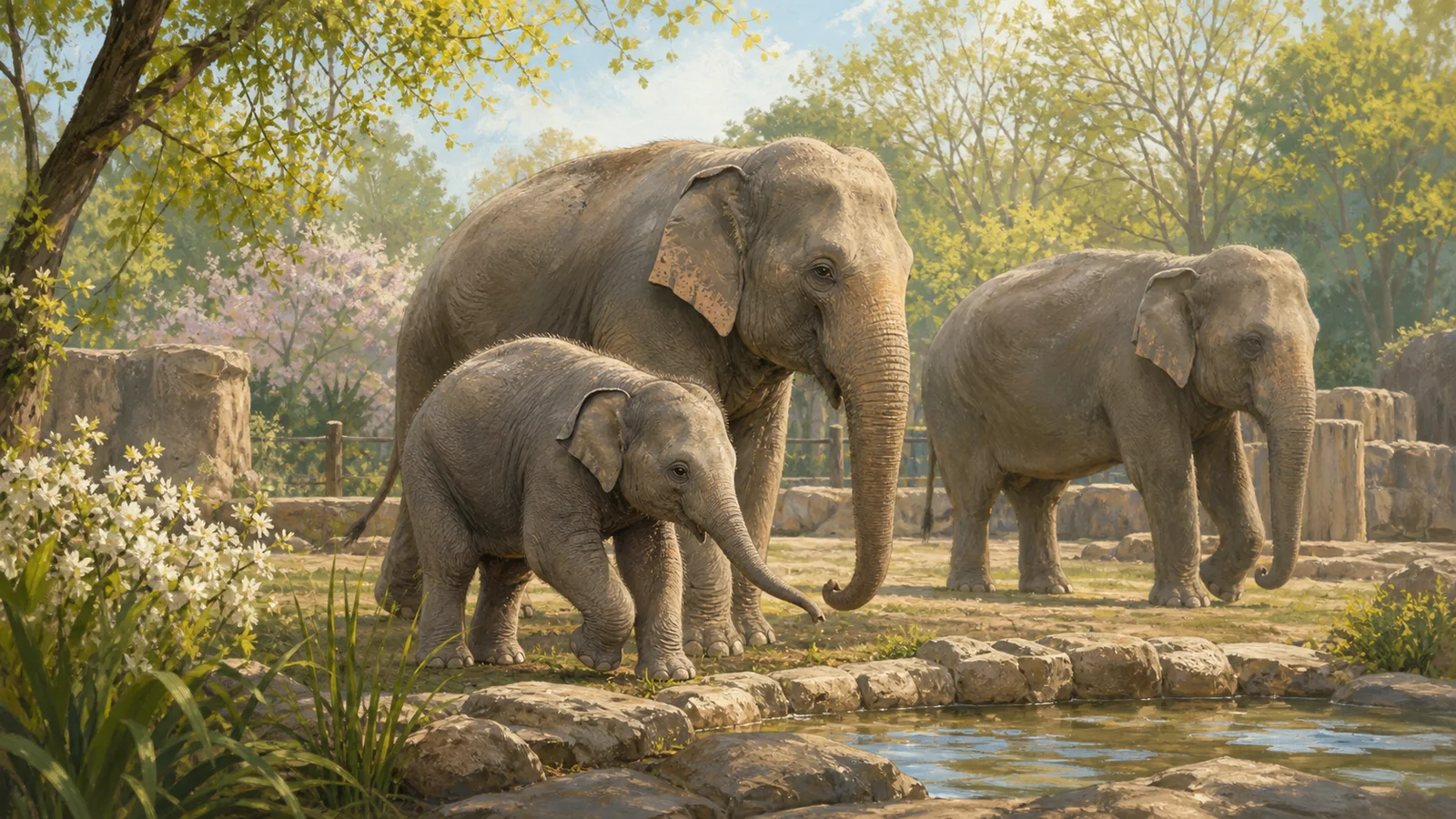
A small elephant made a very big entrance in Washington, D.C., this spring—and her story has already connected animal care, public joy and conservation.
Linh Mai, a female Asian elephant calf at the Smithsonian’s National Zoo and Conservation Biology Institute, stepped into public view on Earth Day, April 22, 2026. At two months old, she became the first Asian elephant calf born at the Zoo in nearly 25 years.
Her debut was also shared online through the Zoo’s Elephant Cam, giving people beyond Washington a chance to watch her explore, socialize and learn.
From a carefully watched pregnancy to a healthy arrival
Linh Mai was born at 1:15 a.m. on February 2 to first-time mother Nhi Linh and father Spike. The Smithsonian said animal care teams had monitored the 21-month pregnancy through voluntary husbandry, blood samples and ultrasound exams.
During her neonatal exam, the calf appeared healthy, alert and bright-eyed. She weighed 308 pounds and stood 38.5 inches tall—tiny by elephant standards, but already an impressive presence.
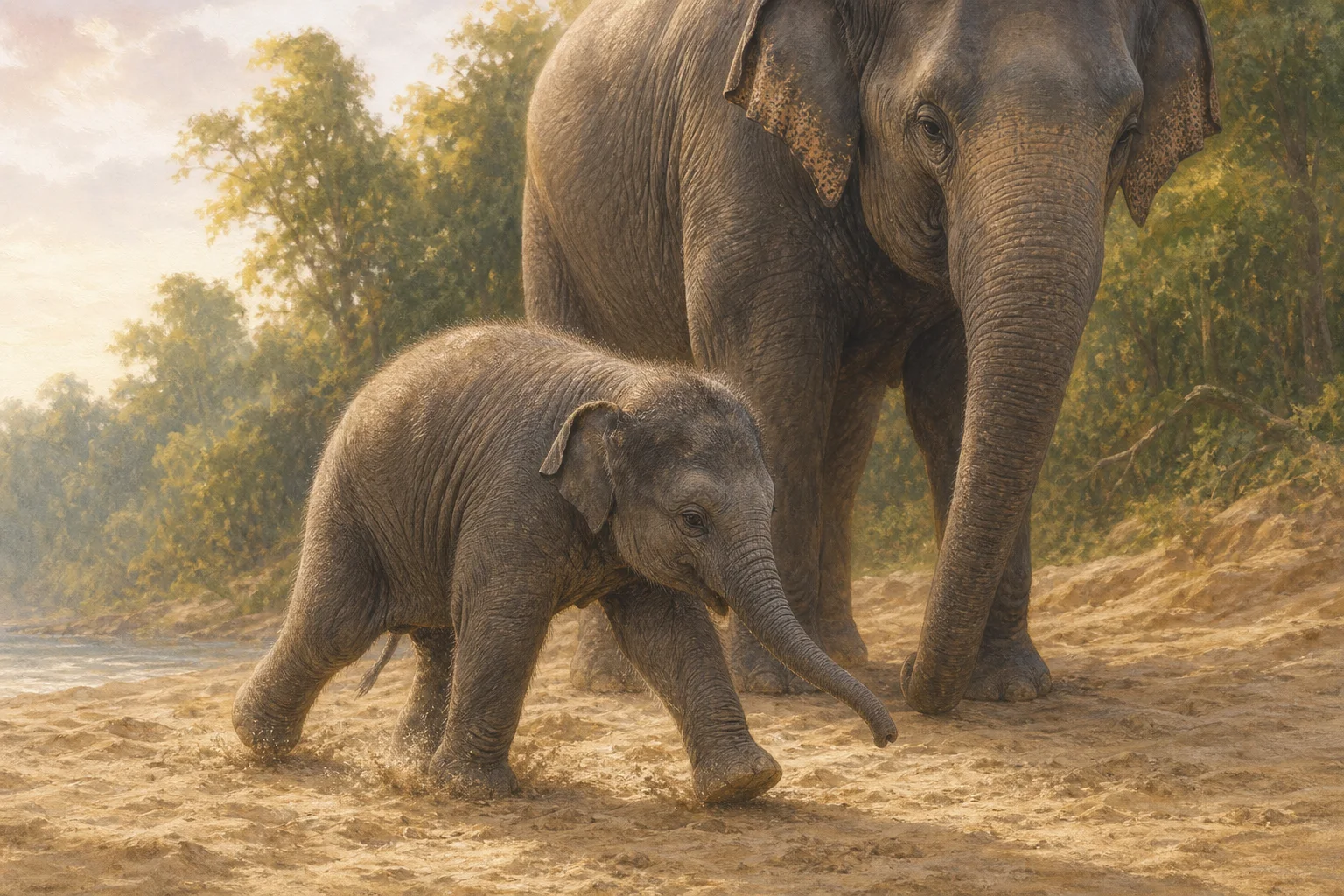
The birth followed a recommendation from the Association of Zoos and Aquariums’ Species Survival Plan. Because the parents’ genes are not well represented in the managed Asian elephant population, Smithsonian officials said the calf adds valuable genetic diversity.
A name chosen by thousands of supporters
For her first 11 days, the calf was known simply as the Zoo’s new arrival. Then the public helped choose a name inspired by her mother’s Vietnamese heritage.
The winning choice was Linh Mai, pronounced “LIN-my.” The Smithsonian explains that Linh can mean spirit or soul, while Mai refers to the apricot blossom associated with Tết, the Vietnamese Lunar New Year.
The 10-day naming campaign raised $58,892.70 for the Zoo’s Asian elephant care and conservation program. That made the vote more than a popularity contest: each ballot also supported the work behind the calf’s future and the Zoo’s wider elephant efforts.
Growing into the herd
Before the public debut, the Elephant Community Center remained closed for a quiet bonding period. The care team gradually helped Linh Mai build relationships with the herd and become comfortable in her surroundings.
Asian elephants are deeply social animals, so those early connections matter. The public debut offered a visible milestone after weeks of careful, mostly behind-the-scenes work by keepers, veterinarians and the elephants themselves.
The Smithsonian links its work with elephants in Washington to conservation programs in Southeast Asia. That makes Linh Mai’s story both immediately joyful and larger than one adorable calf. Her arrival gives visitors a reason to care, while the science and support around her contribute to the long-term work of protecting an endangered species.
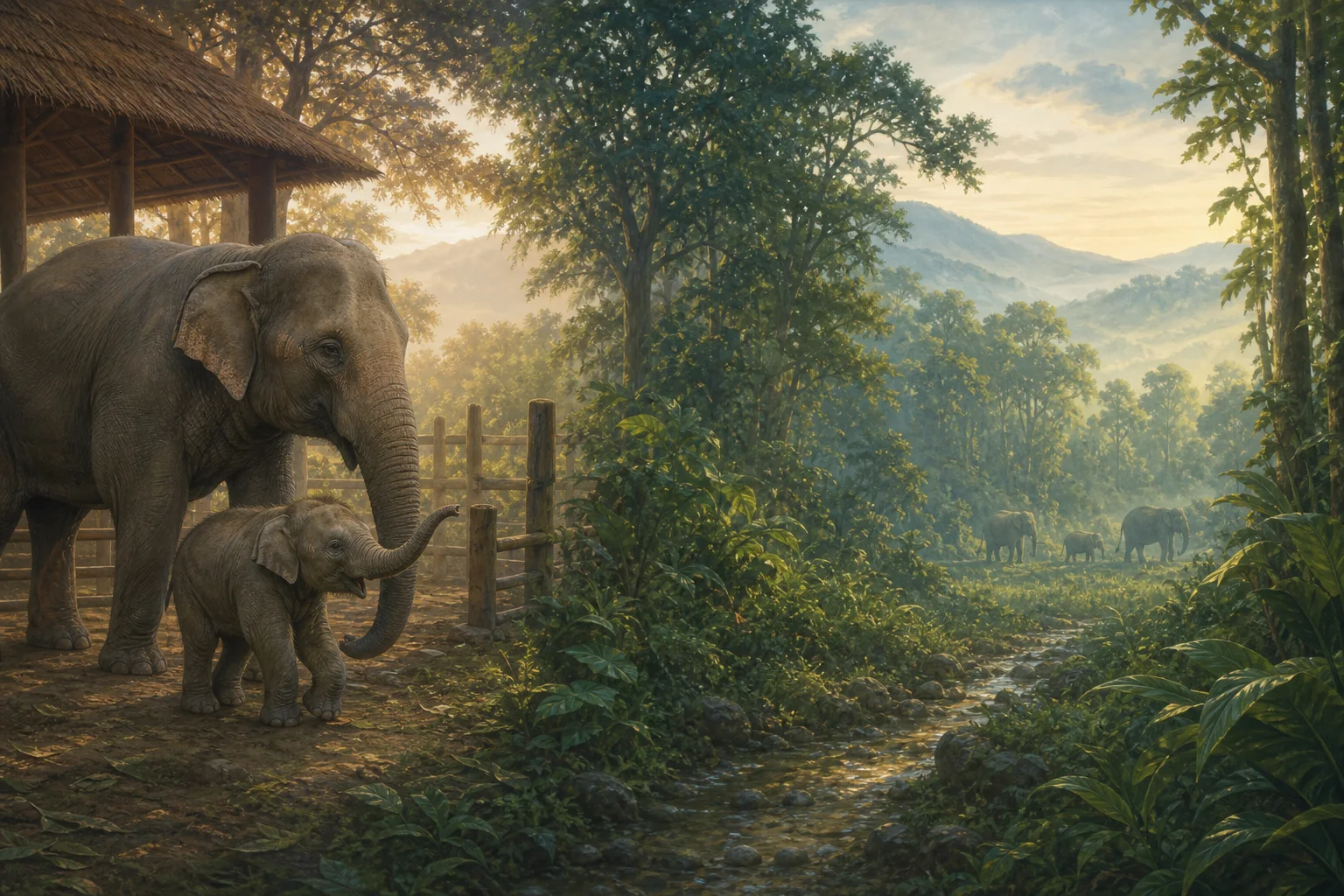
For families who can visit the free National Zoo—and for anyone tuning in online—Linh Mai is now learning the world one step, rumble and trunk-curled discovery at a time.
Sources: Smithsonian National Zoo and Conservation Biology Institute announcements covering Linh Mai’s birth on February 2, her publicly selected name on February 13, and her Earth Day debut on April 22, 2026.
Leave a Reply