Smile Across America
At Mission San Juan in San Antonio, a few small rubber ducks are scheduled to take a short trip through a waterway with a much longer local story.
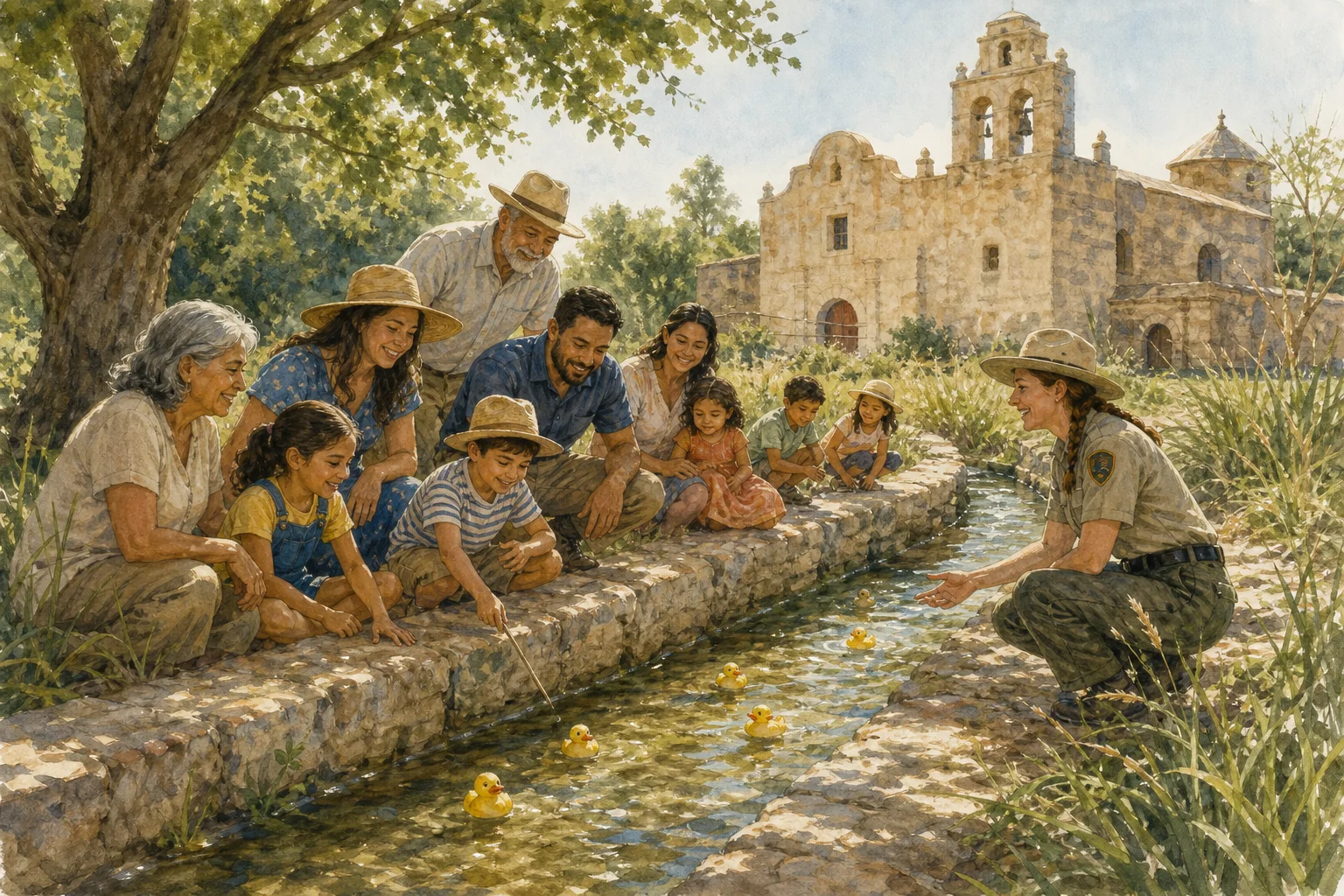
San Antonio Missions National Historical Park has listed a free Rubber Duck Grand Prix at Mission San Juan for August 23 at 10 a.m. The one-hour program invites visitors to watch rubber ducks race down the historic acequia, an irrigation channel that the National Park Service says helped sustain mission communities for centuries.
It is a particularly cheerful way to meet a place that can look quiet at first glance. An acequia is not a decorative stream: it is an irrigation ditch, designed to move water where people needed it. At the San Antonio missions, the Park Service explains, the systems began with water diverted from the San Antonio River and used the natural grade of the land to carry it to farm fields.
A small race with a big conversation starter
The event listing classifies the Grand Prix as a children’s program and says there is no fee. For families, that gives the waterway an approachable role: a child can root for a tiny duck while an adult notices the channel, the gates and the fields around it. The program is scheduled at Mission San Juan, one of the sites within San Antonio Missions National Historical Park.
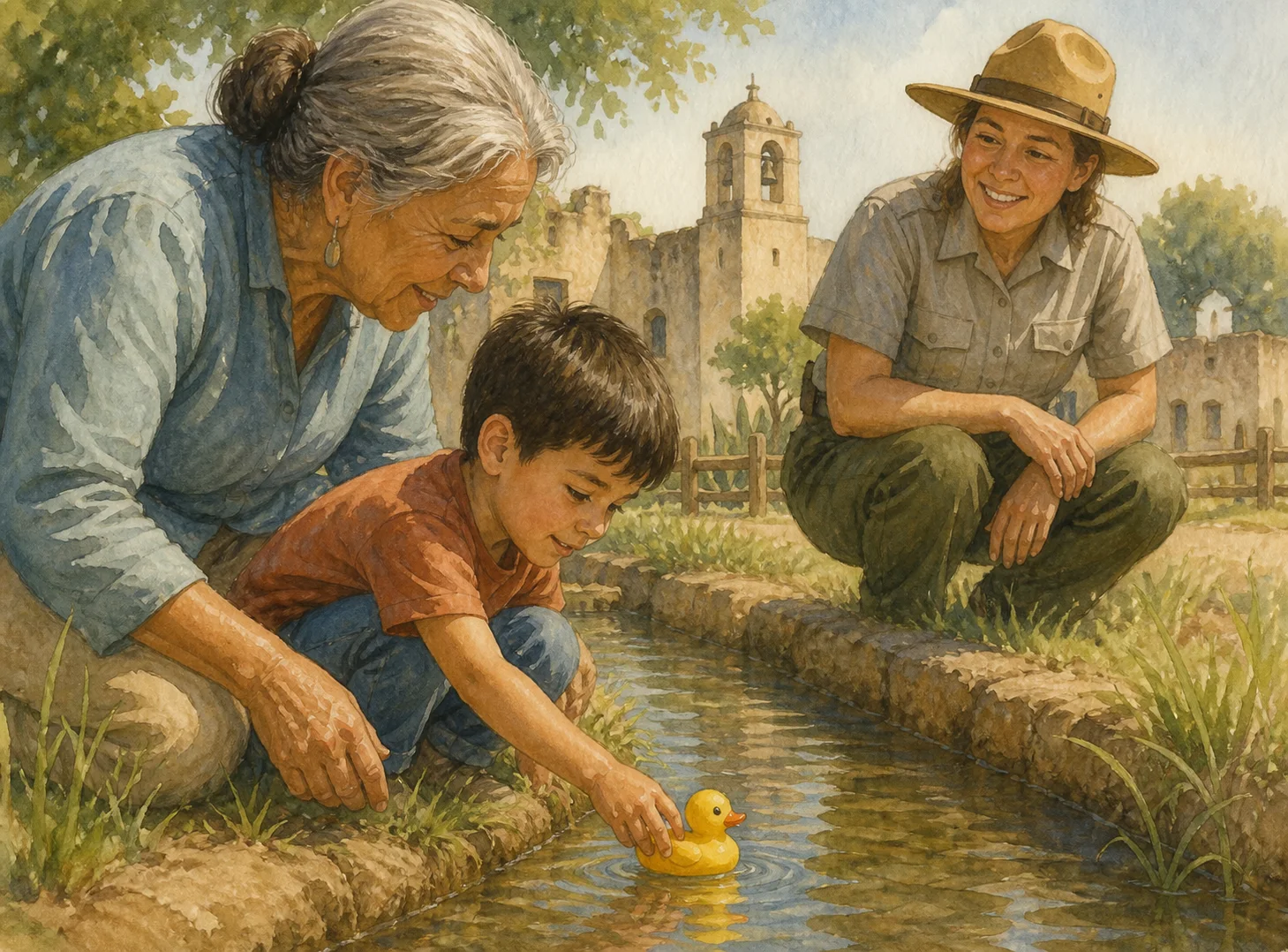
The Park Service’s account of the acequias places their construction in the early 1700s, when mission inhabitants dug channels to irrigate crops. It describes a system that directed river water through ditches and, in places, over an aqueduct. That practical design makes an excellent family-scale question: how can water travel across a landscape without modern pumps?
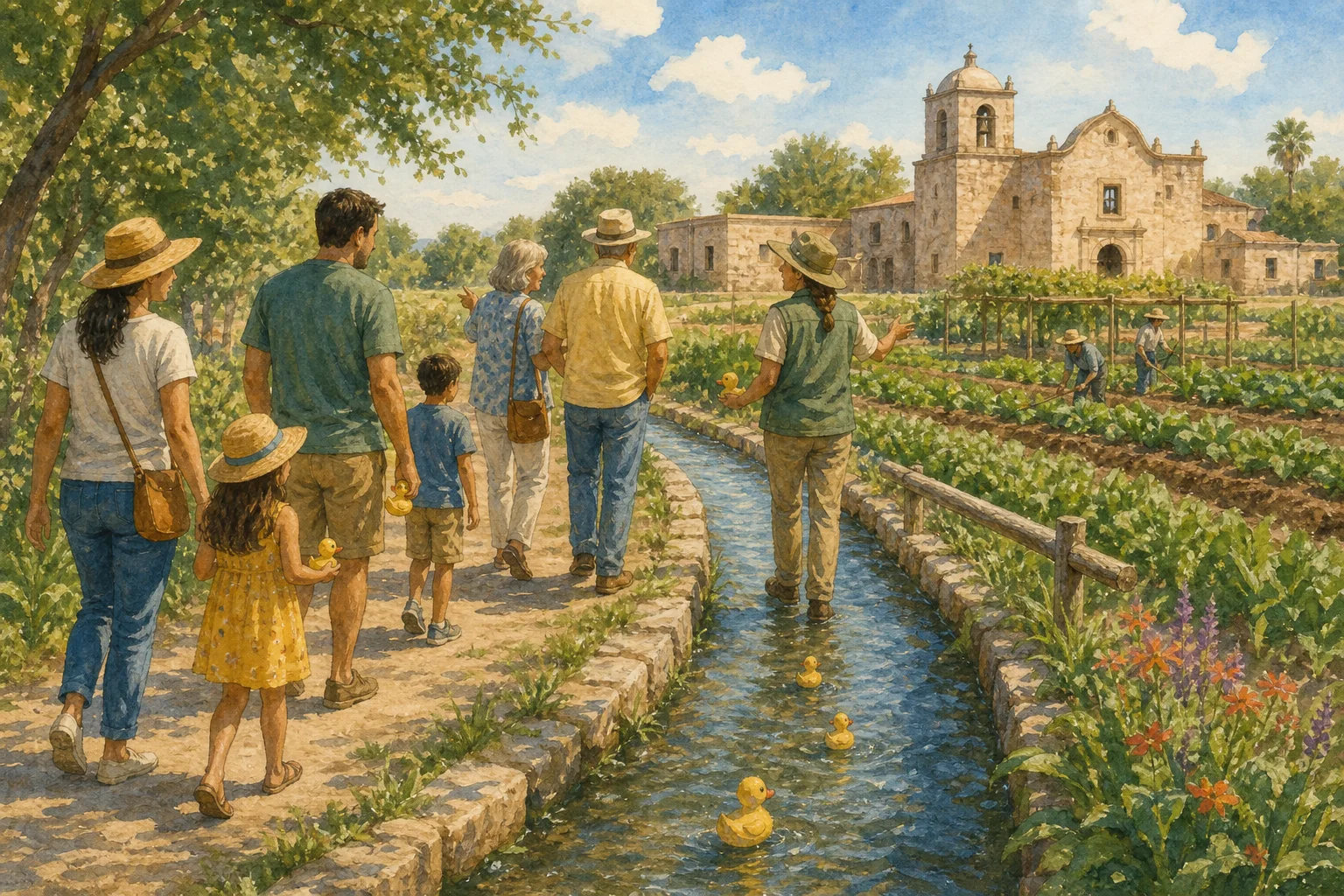
Mission San Juan still makes that history visible. The Park Service says visitors can follow acequias carrying water from the San Antonio River to fields, and describes a small demonstration farm beside the historic system. The irrigation ditches remain in use there: water is used by the San Antonio Food Bank to irrigate crops that are donated to people in the city.
Water, fields and neighbors
That living connection is what gives the planned duck race its charm. The day is not a reenactment of the past, and a rubber duck is obviously a toy. But the simple act of watching something float with the current can make the underlying engineering easier to notice—where the water enters, how the channel follows the land, and why a community once depended on getting that route right.
It also makes room for the kind of low-stakes shared moment that parks do well: children leaning in, relatives comparing guesses, and neighbors gathering around a piece of infrastructure that still has a purpose. The event page does not promise a particular result or provide registration details, so visitors should treat it as a scheduled public program and check the listing before traveling.
Before you go
The National Park Service lists the Rubber Duck Grand Prix for August 23, 2026, at 10 a.m. at Mission San Juan, with a one-hour duration and free admission. This is a preview of a forthcoming event, not a report of one that has already happened. For any changes or visit details, consult the official event listing.
Sources
- National Park Service: Rubber Duck Grand Prix down the Acequia (event listing, accessed August 20, 2026)
- National Park Service: Acequias (background on the historic irrigation system, accessed August 20, 2026)
- National Park Service: Mission San Juan Farm (background on the farm and current irrigation use, accessed August 20, 2026)
Leave a Reply